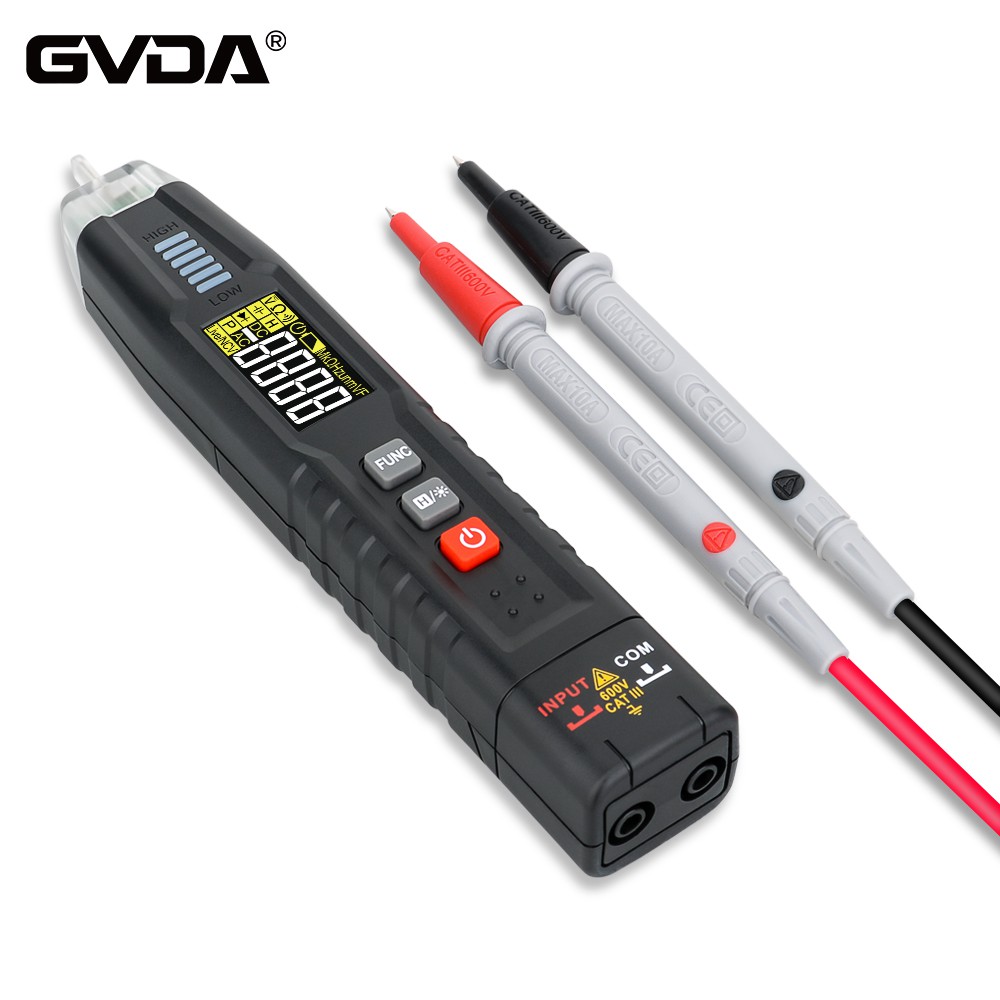
Multimeter instructions and selection
Take the MF30 multimeter as an example of a multimeter reading. The first scale is the resistance value indication, the leftmost end is infinity, the right end is zero, among which the scale is uneven. Resistance file R × 1, R × 10, R × 100, R × 1K, R × 10K files, respectively, the indication of the scale and then multiplied by a multiple of the actual resistance value (in ohms).
For example, R × 100 file to measure a resistance, the pointer indicates that "10", then its resistance value of 10 × 100 = 1000, that is, 1 K. The second scale is 500V file and 500mA file common, it should be noted that the voltage file, the current file of the principle of the indication is different from the resistance file, for example, the 5V file indicates that the grade can only be For example, 5V means that it can only measure the voltage below 5V, and 500mA can only measure the current below 500mA, if it exceeds the range, it will damage the multimeter.
Note: The multimeter should be placed horizontally when used. The red pen is inserted in the + hole, and the black pen is inserted in the - hole. Test the current with the current gear, and can not be mistakenly used voltage gear, resistance block, and other similar, otherwise the light will burn the fuse inside the multimeter, or damage the meter head. If you don't know the range beforehand, try to measure with the maximum range, and then disconnect the measuring circuit and then change the gear, and don't change the range in the case of the line. If the needle of the meter deflects to the bottom quickly, disconnect the circuit and check it immediately.
1, pointer table reading accuracy is poor, but the pointer swing process is more intuitive, the swing speed amplitude can sometimes be more objective to reflect the size of the measured (such as measuring the TV data bus (SDL) in the transmission of data when the slight jitter); digital table readings are intuitive, but the process of the digital change looks very messy, not easy to watch.
2, pointer table generally have two batteries, a low-voltage 1.5V, a high-voltage 9V or 15V, its black pen is positive relative to the red pen. Digital meter is commonly used a 6V or 9V battery. In the resistance file, the pointer meter pen output current relative to the digital table is much larger, with R × 1Ω file can make the speaker emit a loud "da" sound, with R × 10kΩ file can even light up the light-emitting diode (LED).
3, in the voltage file, the pointer table internal resistance is relatively small compared to the digital table, the measurement accuracy is poorer. Some high-voltage micro-current occasions can not even be measured accurately, because of its internal resistance will affect the measured circuit (for example, in the measurement of the accelerated stage voltage of the TV tube when the measured value will be much lower than the actual value). The internal resistance of a digital meter's voltage range is very high, at least on the megohm scale, and has very little effect on the circuit under test. But the very high output impedance makes it susceptible to the influence of induced voltage, in some electromagnetic interference is relatively strong occasions measured data may be false.
4, in short, in relatively high-current, high-voltage analogue circuit measurements in the application of pointer gauge, such as televisions, audio amplifiers. In the low-voltage small-current digital circuit measurements for digital meters, such as beepers, mobile phones and so on. Not absolute, according to the situation can choose pointer meter and digital meter.
Role of multimeter
The three basic functions of a multimeter are to measure resistance, voltage and current, so the old-timers called it a triple meter. Nowadays, the multimeter has added many new functions, especially the digital multimeter, such as measuring capacitance, transistor amplification, diode voltage drop, etc. There is a kind of digital multimeter that can speak, and it can broadcast the measurement results in language.
The most important feature of the multimeter is that it has a range switch, and the functions are switched by this switch. Basically, with A- to indicate the measurement of DC current, general milliamperes and amperes each divided into a few gears. v- indicates the measurement of DC voltage, advanced point of the multimeter has a millivolt gear, voltage gear is also divided into a few gears. v ~ is used to measure the AC voltage. a ~ measurement of the AC current. Ω ohm gear resistance, for the pointer-type multimeter, every time you change the resistance gears and also to do a zeroing. Zeroing is the red and black pens of the multimeter together, and then turn the zero knob, so that the pointer points to the zero position. hFE is the measurement of the current amplification factor of the transistor, as long as the three pins of the transistor inserted into the corresponding holes on the panel of the multimeter, you can measure the value of the hFE. Note that PNP, NPN are different.