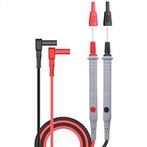
Multimeter-loop resistance tester faults and troubleshooting methods
Regarding the faults and troubleshooting methods of the loop resistance tester, the loop resistance tester is connected to the 220V AC power supply, the fan has no running sound, the ammeter shows no current, the loop resistance tester tests the current normally, and the highest micro-ohm value displays 1. How to deal with such faults .
1. Fault phenomenon: The loop resistance tester is connected to the 220V AC power supply, the fan has no running sound, and the "test switch" is pressed, but the ammeter and microohmmeter have no display.
Reason: The 220V AC power supply is blocked, and the fuse is not installed or blown.
Troubleshooting: Check and eliminate. (The fuse of the 100A instrument should not be less than 6A. If it fuses again, please contact the manufacturer to solve the problem. (Do not connect to DC or 380V AC power supply)
2. Fault phenomenon: Press the "test switch" of the loop resistance tester, the ammeter shows no current, and the highest digit of the microohmmeter shows "1".
Reason: The 100A current loop is not connected properly. The subject's switch was not closed.
Troubleshooting method: Check the test line, reconnect, and re-clamp. Turn on the switch.
3. Fault phenomenon: The test current of the loop resistance tester is normal, and the highest digit of the microohm value displays "1"
Cause: The voltage clamp is in the wrong position. The resistance value of the circuit under test exceeds 2000□□. The voltage signal line is disconnected or not connected.
Troubleshooting method: handle the voltage signal circuit, clamp the voltage clamp correctly and securely. When exceeding the range: You can use a multimeter to measure the voltage values of P1 and P2. The resistance value = voltage value/current value.
4. Fault phenomenon: The output current of the loop resistance tester is dozens of times, less than 100A.
Reason: The power supply voltage is too low, the internal resistance of the power cord is large or the contact is poor, and the voltage drop is too large when there is a DC output and cannot reach 190V. C1 and C2 terminals are loose. The circuit under test and the test clamp are not in good contact.
Troubleshooting method: Use a qualified power supply, use a power cord that is too long and too thin, deal with the circuit under test, and eliminate poor contact. Use appropriate force when twisting the C1, C2, P1, and P2 terminals. (The test current is 30A and the test value is reliable)
Note: Most of the situations that the loop resistance tester may appear in can be found in the above reasons. Just refer to the relevant methods to solve them.