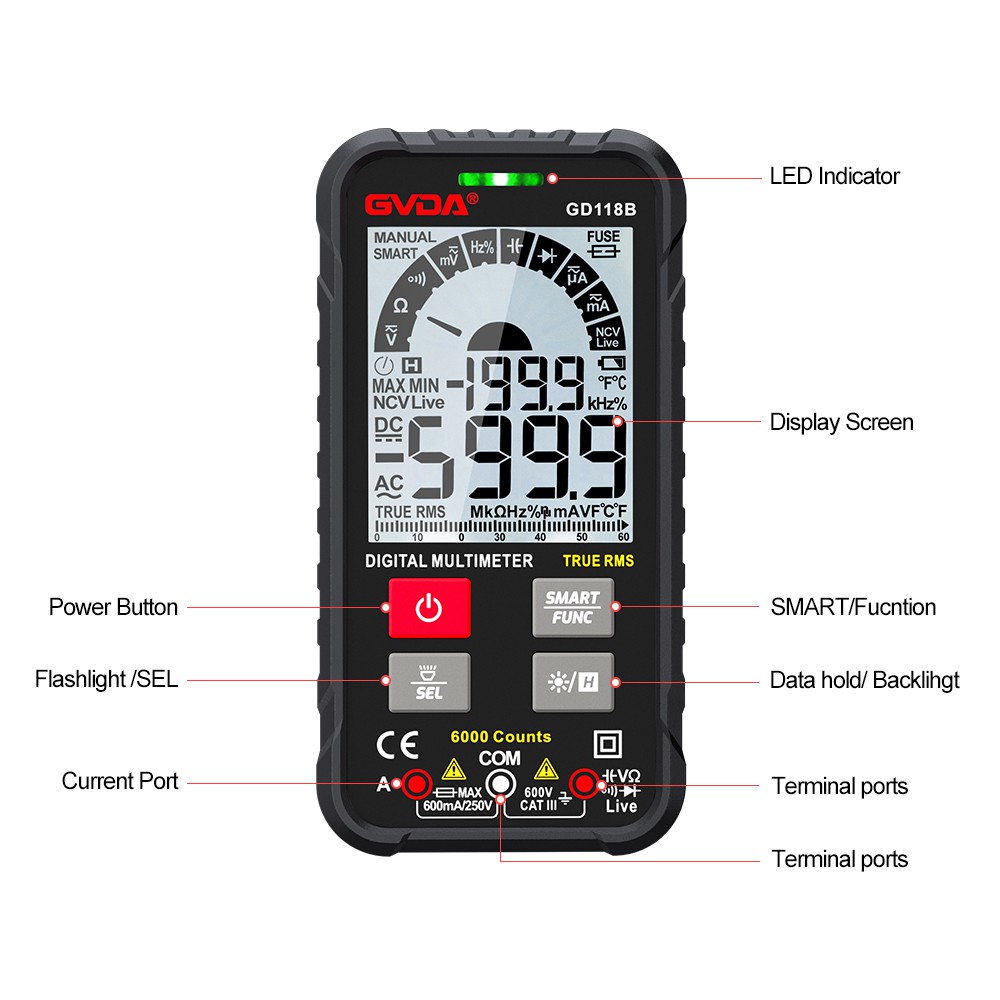
Multimeter uses voltage detection method to test short circuit
① Remove the burnt fuse and disconnect all loads that pass through the fuse power supply (that is, SW1 is disconnected, the relay and the solenoid valve are disconnected).
② Turn the ignition switch to ON or START position. Verify battery voltage at the positive battery side of the fuse terminal (one probe placed on the battery positive terminal side of the fuse box and the other probe placed at a known good ground).
③ Disconnect SW1, and connect the multimeter probe across the two terminals of the fuse to measure the voltage. With voltage, the short is between the fuse box and SW1 (point A); without voltage, the short is further behind SW1.
④ Close SW1, disconnect the relay and solenoid valve, and connect the probes of the multimeter across the fuse port to measure the voltage. With voltage, the short is between SW1 and the relay (point B); without voltage, the short is further behind the relay.
⑤ Close SW1, and measure the voltage across the closed relay with a jumper with a fuse. With voltage present, the short is after the relay wire or between the relay and the solenoid valve that has been disconnected (point C); without voltage, go back to the inspection steps and check power to the fuse box.