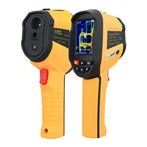
Nine Issues to Pay Attention to in the Use of Infrared Thermometers
The role of infrared thermometers is ubiquitous in the use of electronic weighing scales, as resistance strain infrared thermometers themselves are sturdy, durable, and reliable electromechanical products. However, in order to ensure testing accuracy, what should be noted when using electronic weighing scales? So, what should be noted when using infrared thermometers? Below are nine issues that must be noted when using infrared thermometers:
1. Try to set up some "baffles" around the infrared thermometer, and even cover the thermometer with thin metal plates.
This can prevent impurities from contaminating the thermometer and some movable parts, which often cause discomfort in the movement of the movable parts and affect the weighing accuracy. The following methods can be used to determine whether the system is experiencing discomfort during movement. Add or subtract approximately one thousandth of the rated load on the weighing platform to check if the electronic weighing display shows any response. If there is a response, it indicates that the movable part is not contaminated.
2. All wires leading to or from the display circuit should be shielded cables.
The connection and grounding point of the shielding wire should be reasonable. If it is not grounded through the mechanical frame, it is grounded externally, but the shielding wires are not grounded after being connected to each other, which is floating.
Note: Three thermometers are connected in full parallel. The thermometers themselves are 4-wire, but they are replaced with 6-wire connections inside the junction box. The output signal readout circuit of the thermometer should not be placed in the same box as devices that can cause strong interference (such as silicon control and contactors) and devices that generate considerable heat. If this cannot be guaranteed, barrier isolation should be considered between them, and a fan should be installed inside the box. The electronic circuit used to measure the output signal of the thermometer should be equipped with an independent power supply transformer as much as possible, rather than sharing the same main power supply with devices such as contactors.
Nine Issues to Pay Attention to in the Use of Infrared Thermometers
3. Infrared thermometers should use hinged copper wires (with a cross-sectional area of approximately 50mm2) to form electrical bypasses to protect them from hazards caused by welding currents or lightning strikes. During the use of a thermometer, it is necessary to avoid strong thermal radiation, especially on one side.
4. In terms of electrical connection, preparations should be made (such as the signal cable of the thermometer, which should not be arranged in parallel with the high-voltage power or control line (for example, do not place the thermometer signal line, high-voltage power line, and control line in the same pipeline). If they must be placed in parallel, the distance between them should be maintained at 50CM or more, and the signal lines should be covered with metal tubes.
5. Try to use structural accessories with automatic positioning (reset) function, such as spherical bearings, joint bearings, positioning fasteners, etc.
They can prevent certain lateral forces from acting on the thermometer. It should be noted that some lateral forces are not caused by mechanical installation, such as lateral forces caused by thermal expansion, lateral forces caused by wind, and lateral forces caused by vibration of agitators on certain container scales, which are not caused by mechanical installation. Some scales have attachments that must be connected to the scale body (such as the feeding pipeline of the container scale). We should make them as soft as possible in the direction of the loading spindle of the thermometer to prevent them from "eating" the true load of the thermometer and causing errors.
6. Handle with care, especially small capacity thermometers made of alloy aluminum elastomers. Any impact or drop may cause significant damage to their metrological performance. For high-capacity infrared thermometers, generally speaking, they have a large self weight, so it is required to use appropriate lifting equipment (such as chain hoists, electric hoists, etc.) as much as possible during transportation and installation. The installation surface of the base of the thermometer should be flat, clean, and free of any oil film, adhesive film, etc. The installation base itself should have sufficient strength and rigidity, generally requiring higher strength and rigidity than the thermometer itself.
Nine Issues to Pay Attention to in the Use of Infrared Thermometers
7. Although infrared thermometers have a certain overload capacity, overloading of the thermometer should still be prevented during the installation process of the weighing system. It should be noted that even short-term overloading may cause damage to the thermometer.
During the installation process, if necessary, a cushion block of the same height as the thermometer can be used to replace the thermometer first, and then the thermometer can be replaced. During normal operation, thermometers should generally be equipped with mechanical structural components for overload protection. If a screw is used to fix the thermometer, a certain tightening torque is required, and the screw should have a certain depth of thread insertion. Generally speaking, fixed screws use high-strength screws.
8. In any case, the power and control lines should be twisted together to a degree of 50 revolutions per meter. If the signal line of the thermometer needs to be extended, a specially sealed cable junction box should be used. If this type of junction box is not used and cables are directly connected (soldered ends), special attention should be paid to sealing and moisture-proof. After connection, the insulation resistance should be checked and meet the standard (2000-5000M). If necessary, the thermometer should be recalibrated. If the signal cable is very long and high measurement accuracy needs to be ensured, a cable compensation circuit with a relay amplifier should be considered.
9. Horizontal adjustment
There are two aspects to horizontal adjustment. One is that the installation plane of a single thermometer base should be adjusted horizontally with a spirit level. On the other hand, it means that the installation surface of multiple thermometer bases should be adjusted to the same horizontal plane as much as possible (using a spirit level), especially in weighing systems with more than three thermometers. The main purpose of doing so is to ensure that the load borne by each thermometer is basically consistent. The loading direction of each electronic scale infrared thermometer is determined, and when we use it, we must load the load in this direction. Lateral forces, additional bending moments, and torque forces should be avoided as much as possible.