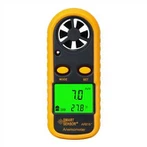
Noise Meter - How to use
Whether the noise meter is used correctly or not directly affects the accuracy of the measurement results. When measuring, the instrument should choose the correct gear according to the situation, and hold the noise with both hands.
For the sound level meter used for measuring noise, the response of the meter head can be divided into four types according to the sensitivity:
1. "Slow". The time constant of the meter head is 1000ms, which is generally used to measure steady-state noise, and the measured value is the effective value.
2, "fast". The time constant of the meter head is 125ms, which is generally used to measure unstable noise and traffic noise with large fluctuations. Fast gear is close to the human ear's response to sound.
3. "Pulse or pulse hold". The rise time of the needle is 35ms, which is used to measure pulse noise with a long duration, such as punches, hammers, etc. The measured value is the maximum effective value.
4. "Peak Hold". The rising time of the needle is less than 20ms. Used to measure short-duration impulse sounds, such as guns, cannons and explosions, the measured value is the peak value. i.e. the maximum value. Distance meter, altimeter, laser line cast meter, flow meter, GPS thickness gauge, level meter, flat meter, waveform recorder, test fixture, voltage and current recorder, data set recorder, graphic recorder, flow totalizer.
Noise Meter - Sensitivity Calibration
In order to ensure the accuracy of the measurement, it should be calibrated before and after use.
Match the sound level calibrator to the microphone, turn on the calibration power, read the value, adjust the sensitivity potentiometer of the noise meter, and complete the calibration.