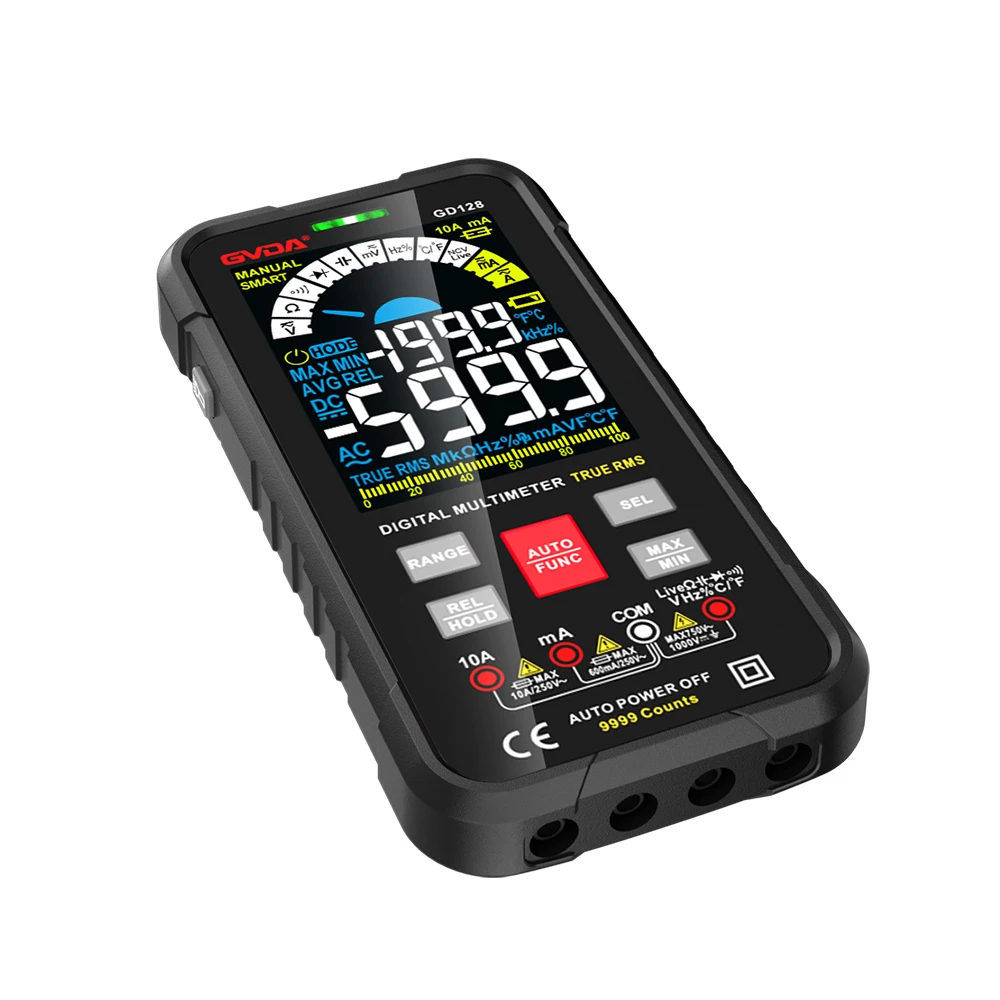
Open Circuit Fault Detection of Lighting Circuits with a Multimeter
When an open circuit occurs in a lighting circuit, there is no voltage in the circuit, the lighting lamps do not light up, and electrical appliances fail to work. Common causes include blown fuses, broken wires, loose wire terminals, damaged switches, etc.
When detecting open-circuit faults of lighting circuits with a multimeter, you may check the circuit continuity with the resistance range of the multimeter after disconnecting the power supply; alternatively, you can locate the fault point by measuring the circuit voltage with the AC voltage range while the power is on.
Open-circuit faults in lighting circuits fall into three types: total open circuit, partial open circuit and individual open circuit.
① Total Open Circuit This type of fault mainly occurs on the main line, inside power distribution and metering devices, and within the service entrance assembly. Normally, check all joints of the above sections in sequence (including fuse terminals). Loose wire terminals are the most frequent fault. Next, inspect the closing and opening status of moving and static contacts of circuit switches.
② Partial Open Circuit This fault usually appears on branch circuits. First check all wire connections, then check branch switches. If the branch wire has a small cross-section, consider the possibility that the inner conductor is broken inside the insulation layer, resulting in a partial open circuit.
③ Individual Open Circuit This fault is generally limited to junction boxes, lamp holders, light switches and the connecting wires between them. Check each wire joint and the contact condition of contacts on lamp holders, light switches and sockets. For fluorescent lamps, check the connection status of each component.