Operating Principle & High-Accuracy Measurement of CO₂ Detectors
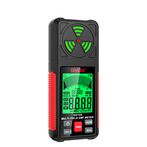
A carbon dioxide detector is a device used to accurately measure the concentration of carbon dioxide gas in the environment. The carbon dioxide detector mainly uses principles such as non dispersive infrared spectroscopy (NDIR) or differential absorption spectroscopy (DOAS) to detect the absorption wavelength of carbon dioxide in the air, thereby accurately calculating the concentration of carbon dioxide. So how much do you know about the technical principles and high-precision measurement of carbon dioxide detectors?
1, Technical principles
The core of a carbon dioxide detector is its ability to measure the concentration of carbon dioxide in a gas using a specific wavelength of infrared light source. Specifically, when infrared radiation passes through a gas containing carbon dioxide, the carbon dioxide molecules absorb some specific wavelengths of infrared radiation, resulting in a decrease in infrared intensity. By measuring the changes in infrared intensity, the detector can accurately calculate the concentration of carbon dioxide.
2, High precision measurement
The high-precision measurement capability of the carbon dioxide detector is attributed to its advanced technological design and precise manufacturing process. The built-in temperature compensation sensor of the instrument can automatically adjust the measurement parameters to eliminate the influence of environmental temperature changes on the measurement results. In addition, the instrument also adopts advanced signal processing technology and algorithms, further improving the accuracy and stability of the measurement.
In practical applications, carbon dioxide detectors can be widely used in industrial, medical, agricultural and other fields. For example, in industrial emission monitoring, it can monitor the concentration of carbon dioxide in real time, helping companies comply with environmental regulations; In the medical field, it can be used to monitor patients' respiratory function and provide important diagnostic basis for doctors; In the field of agriculture, it can be used to monitor the concentration of carbon dioxide in greenhouses and promote crop growth.