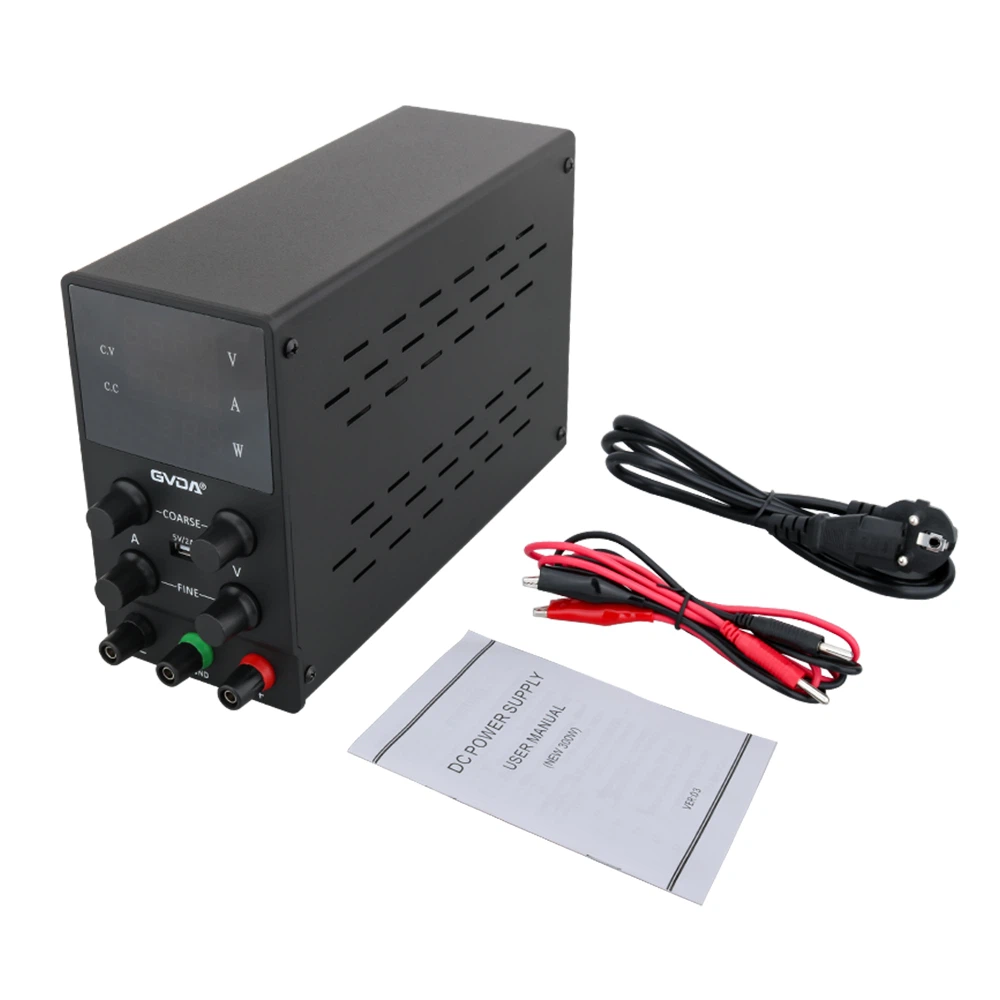
Overview and principle of LED switching power supply
LED switching power supply is a new type of switching power supply controlled by pulse width modulation (PWM) technology, which is controlled by a circuit to achieve high-speed channel on and off. The electronic devices used in LED switching power supply mainly include LED diodes, IGBTs, and MOSFETs.
Overview of LED Switching Power Supply
LED switching power supply converts direct current into high-frequency alternating current to transform the voltage of the converter, generating the required set or multiple sets of voltage. The principle of converting to high-frequency AC power is that the efficiency of high-frequency AC in transformer circuits is higher than that of mains 50Hz or 60Hz. Therefore, the switch power transformer can achieve a very small size, and it will not be very hot when working in the switch power supply. The product price is lower than that of the power frequency DC stabilized power supply. If 50Hz or 60Hz is not converted into high-frequency electricity, the switch power supply will have no meaning. Switching power supplies can generally be divided into two types: isolated and non isolated. Those that are isolated must have a switching power converter, while those that are not isolated may not necessarily have a switching power converter. Compared with traditional DC power supplies, switching power supplies have the advantages of small size, light weight, and high efficiency.
The high-frequency of LED switching power supply is the direction of its development, which miniaturizes the switching power supply and enables it to enter a wider range of applications, especially in the high-tech field, promoting the miniaturization and portability of high-tech products. In addition, the development and application of switching power supplies are of great significance in energy conservation, resource conservation, and environmental protection.
The principle of LED switching power supply
The AC voltage input to the LED switching power supply is rectified and filtered to generate a DC voltage of around 300V. Under the control of a dedicated chip, the transformers and switching devices in the circuit generate high-frequency square wave voltage, which is output with high precision and stability through high-power rectifier tubes.