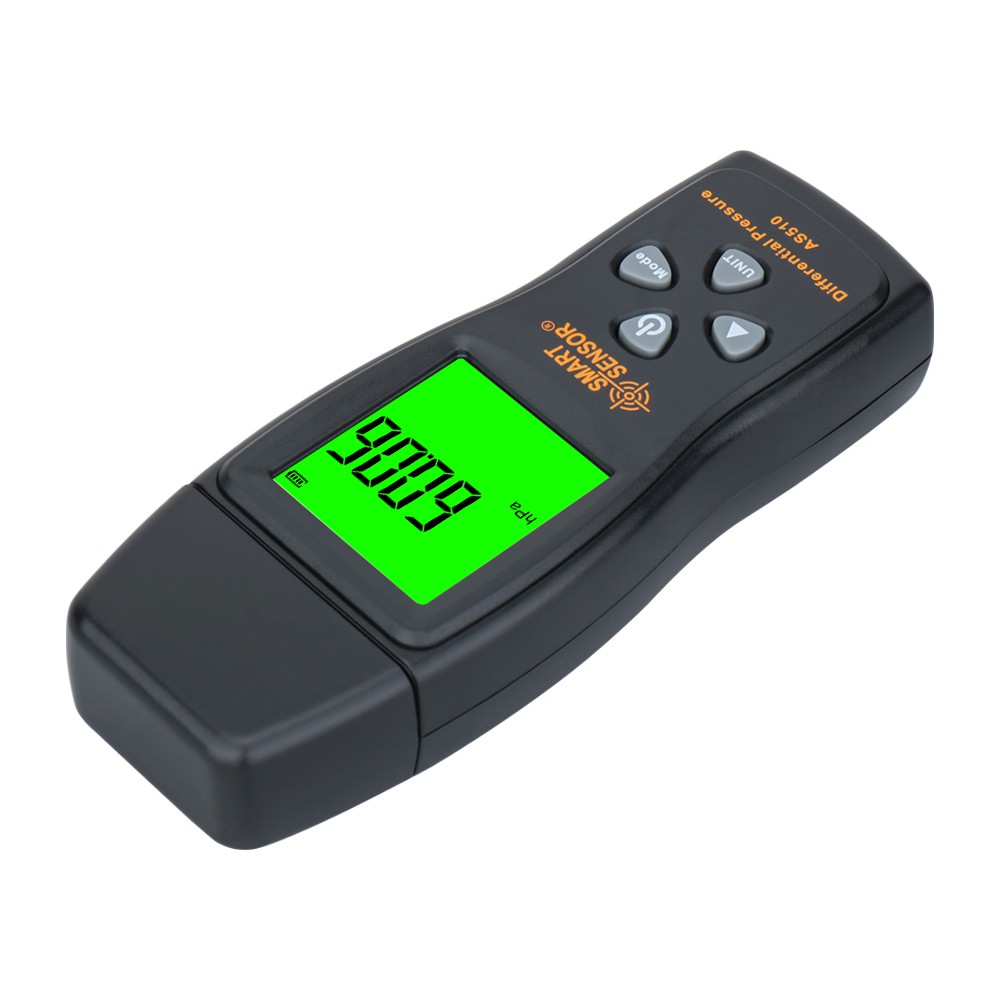
Overview, selection and application of wireless wind differential pressure sensor
XL13AD wireless wind differential pressure sensor is suitable for monitoring indoor and outdoor pressure difference, air pressure monitoring inside and outside exhaust pipes, air conditioning pipes, and supports LoRa upload.
Differential pressure range: 0-1000Pa, optional from -1000Pa to 1000Pa, the upper and lower limits of any range between 0-1000Pa;
Accuracy: 0.5%F, S.;
Working voltage: DC3.6-5V; power consumption ≤0.2W, can be powered by battery;
Equipped with easy-plug connectors and Bluetooth debugging interface, the installation and debugging are simple and convenient;
The LoRa wireless communication method can be configured with communication modules in the corresponding frequency band according to the regulations of different countries and regions; the LoRa transmission distance is relatively long, and the ideal distance can reach 10Km. In a sheltered environment, the transmission distance is about 300m to 1000m.
Selection of wireless wind differential pressure sensor
XL13AD wireless wind differential pressure sensor, mobile phone on-site debugging, configuration parameters, wireless data transmission, more convenient to use;
In the factory and workshop environment, the LoRa transmission distance is between 300m and 1000m;
XL13AD wireless differential pressure sensor must be used with XL9 series gateway or gateway terminal;
The gateway supports Ethernet, RS485, 4G/NB upload, MQTT, Modbus, API, database and other communication protocols.
Application of Wireless Wind Differential Pressure Sensor
SMT workshop, monitoring the differential pressure inside and outside the exhaust pipe of reflow soldering;
Clean workshop, practical (test) laboratory, indoor and outdoor pressure difference monitoring;
Agriculture, breeding pens, houses, indoor and outdoor differential pressure monitoring;
When local centralized monitoring is required on site, XL97 gateway terminal can be configured to read the data uploaded by XL13AD in the area, analyze, process, display, alarm, and forward it to the monitoring center server.
When the site does not need to set up on-site monitoring points, choose the XL9 series gateway as the data receiving end;
The XL9X gateway reads the data of the wireless differential pressure sensor, and uploads the data to the software platform through communication protocols such as Ethernet (Ethernet), 4G, MQTT, Modbus, API, and database;
In agricultural and breeding environments, 4G transmission is generally used to transmit data to the platform through the operator network.