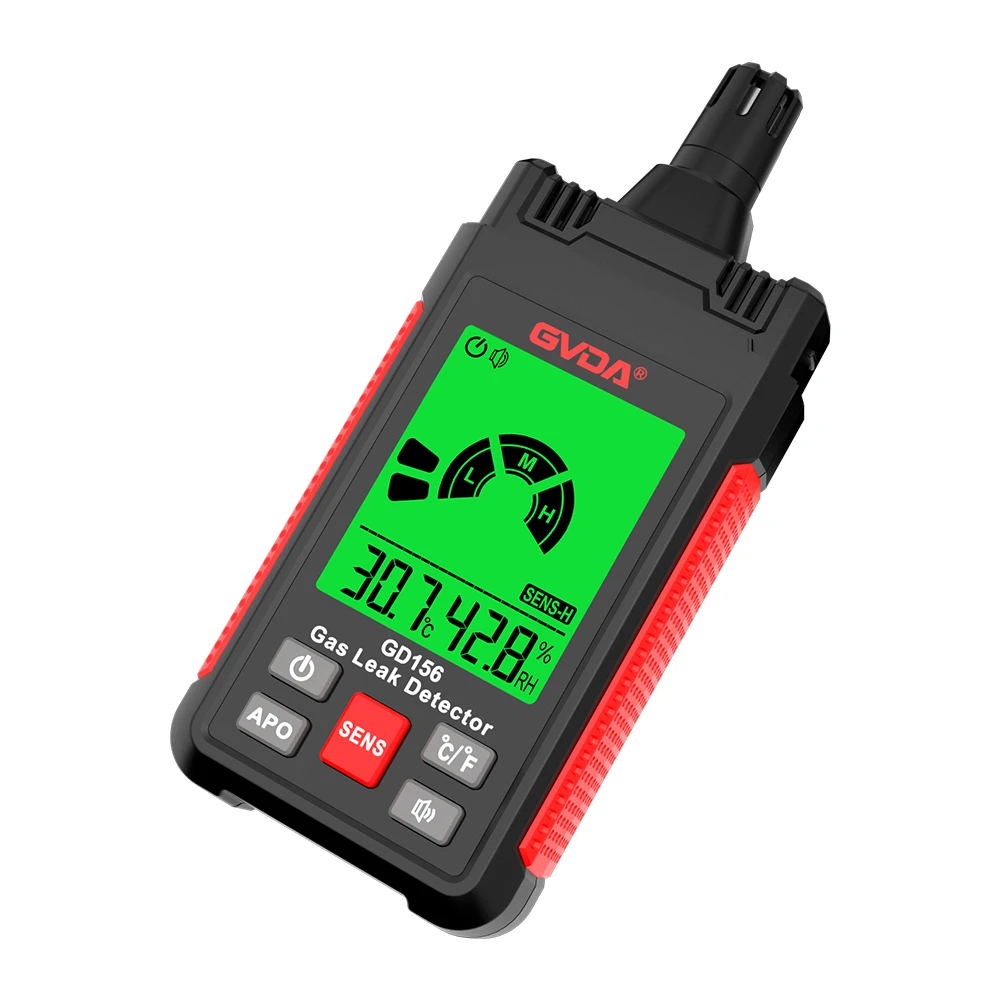
Points to Note for Gas Detectors During Daily Operation
It is generally accepted that gas detectors are classified based on detection objectives. That is to say, any sensor used to detect gas composition and concentration is defined as a gas sensor, regardless of whether physical or chemical methods are adopted. For example, sensors for measuring gas flow are not regarded as gas sensors, while thermal conductivity gas detectors are important gas sensors, even though they sometimes share broadly consistent detection principles. Gas detectors serve as vital tools in daily life and industrial applications. However, the following aspects must be observed during actual installation and operation:
① Installation of Gas Detectors
Wiring: Highly shielded cables shall be used to avoid interference with electrical signals. Route the cables properly and remove the top cover. Gas detectors generally adopt three-wire transmission. Connect the positive power terminal marked "VCC", the signal terminal marked "SIG" and the negative power terminal marked "GND" to the "24V, mA and GND" terminals of the "4-20mA IN" group on the channel module respectively. The chassis earth (shielded mesh of the cable) shall be well grounded. Fasten the chassis after wiring is completed. Start-up: Power on the detector after wiring. Readings will shift from over-range to stable values, which takes approximately 15 minutes.
Mounting: Install the gas detector in areas with potential gas leakage. The detector must be mounted securely, and its location is determined by the specific gravity of the target gas relative to air. If the target gas is lighter than air, mount the detector 30–60 cm below the ceiling. Secure the detector to the wall using Φ8 expansion bolts. For proper operation and fault prevention, do NOT install the detector at the following locations:
Places directly exposed to steam or oil fume;
Positions with strong airflow such as air supply outlets, exhaust fans and doorways;
Areas with abundant water vapor or droplets (relative humidity >90%);
Environments with temperature below -40℃ or above 70℃.
② Factors to Consider Before Using Gas Detectors Assess the site safety classification. Before entering confined spaces and/or containers, verify the safety of the working area and prepare relevant measures such as ventilation equipment if required. Check whether toxic or explosive substances exist on site and identify the substance if present, as well as the oxygen concentration. Proper safety classification assessment can answer these two questions. Even if a container has been fully emptied, risk assessment remains essential to check for gas-releasing contaminants or hazardous substances ingress.
③ Maintenance of Gas Detectors Overall inspection: Inspect the detector regularly. Its signal current in clean air shall be DC 4 mA. Sensor maintenance: Re-inspection and calibration shall be carried out every six months to one year after installation, with an inspection report issued by the testing party. Replace the sensor once it loses sensitivity. Regular calibration can identify sensor failure. The sensor shall be replaced if the calibrated value fails to meet the standard gas value.