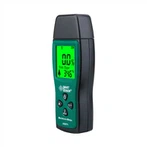
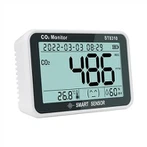
Points to Note When Using Toxic Gas Detectors
① Applicability Professional property management personnel shall identify and evaluate hazardous gases on-site in confined spaces of residences, so as to confirm whether the sensor of the installed toxic gas detector meets application requirements.
② Reliability A longer sensor service life is preferred. Generally, the average service life of combustible gas detectors ranges from 2 to 5 years, and a smaller error value is desirable. Accuracy and precision will decline as the service time increases. The warranty period of such products is normally 2 years.
③ Stability This is an essential factor to consider. The values of zero drift and full-scale drift should be as small as possible. Except for oxygen, all gas detectors will produce more or less cross-interference responses to other gases, which is commonly seen in electrochemical sensors for hydrogen sulfide detection. Therefore, household users need to be familiar with potential toxic gases that may exist in homes.
④ Identifiability Gas detectors are available in digital and analog pointer types. Digital detectors feature easy reading and lower risk of misjudgment. Check whether the display area is sufficiently large with backlight and large fonts for convenient reading. Verify if the alarm sound is loud enough to be distinguished from background noise, and if the alarm flashing light is visible from all angles. It is also important to check whether the detector can continuously display signals according to changes in measured gas concentration and stop alarming only after confirmation or corresponding measures are taken.
⑤ Portability For field operations, portability is another vital factor on the premise of guaranteed stability: light weight, compact size, comfortable and convenient wearing, as well as simple maintenance.