Portable thermometer knowledge encyclopedia
Performance characteristics of portable infrared thermometer
1. Convenience! Infrared thermometers provide quick temperature measurements, and in the time it takes to read one leaky junction with a thermocouple, nearly all junctions can be read with an infrared thermometer. In addition, because the infrared thermometer is solid. Lightweight. (All lighter than 10 ounces), and easy to put in the leather case when not in use. So you can carry it when you are doing factory inspections and daily inspections.
2. Another advanced feature of the infrared thermometer is its accuracy, usually within 1 degree. This capability is especially important when you are doing preventive maintenance, such as monitoring severe production conditions and special events that will cause equipment damage or downtime. Since most equipment and plants operate 365 days, downtime equates to lost revenue. Prevent such losses by scanning all field electronics - circuit breakers. transformers. fuses. switches. buses and switchboards for hot spots. With an infrared thermometer, you can quickly detect even small changes in operating temperature, allowing problems to be fixed in the bud, reducing the expense and scope of repairs due to equipment failure.
3. The most important benefits of using an infrared thermometer. Unlike contact thermometers, infrared thermometers can accurately read inaccessible or inaccessible target temperatures, and you can read the target temperature within the range allowed by the instrument. Non-contact temperature measurement can also be performed in areas where contact temperature measurement is difficult, like near steam valves or heating furnaces, they do not need to risk inadvertent fingers during contact temperature measurement. Measuring supply/return air temperatures up to 25 feet overhead is as easy as having it close at hand.
Correct use of portable infrared thermometer
Now portable infrared thermometers should be quite extensive, but how to use infrared thermometers correctly, the following introduces them one by one:
When the portable infrared thermometer measures the temperature of the object to be measured, the infrared thermometer should be aimed at the object to be measured, and ensure that the ratio of the measurement distance to the spot size meets the field of view requirements, not too close or too far. Then press the trigger button, and the measured temperature data can be read out on the LCD display of the instrument. There are five important things to keep in mind when using a portable infrared thermometer.
1. Ambient temperature. If the infrared thermometer is suddenly exposed to an ambient temperature difference of 20°C or higher, allow the instrument to adjust to the new ambient temperature within 20 minutes.
2. Only measure the surface temperature of the object. Portable infrared thermometers cannot measure the internal temperature of objects
3. Pay attention to environmental conditions. Steam, dust, smoke, etc. will block the optical system of the instrument and affect the temperature measurement.
4. Locate hotspots. To find a hot spot, first use the instrument to aim at the target, and then scan up and down on the target until the hot spot is identified.
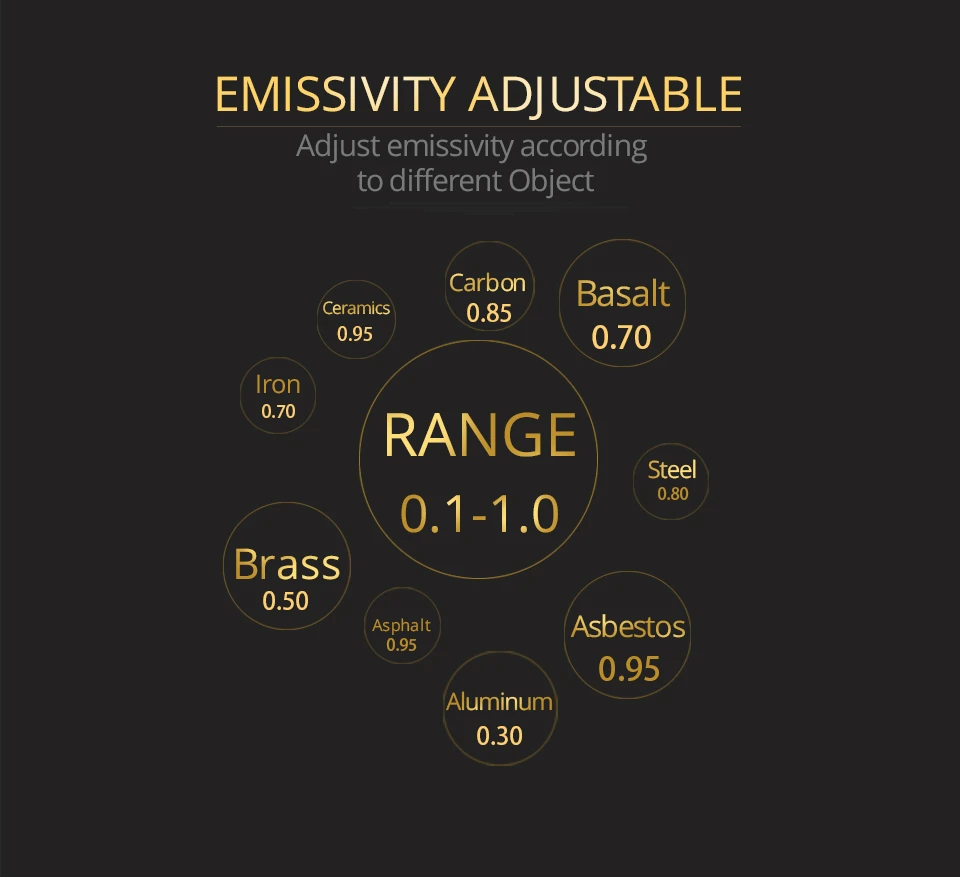
5. The portable infrared thermometer cannot measure temperature through glass. Glass has very specific reflective and transmissive properties that prevent temperature readings, but can be measured through the infrared window. Infrared thermometers are best not used for temperature measurement on bright or polished metal surfaces (stainless steel, aluminum, etc.).