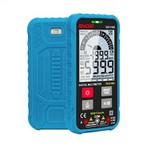
(1) Select an appropriate magnification gear, and make the pointer as close to the center of the scale as possible to ensure accurate readings. During measurement, the indicated value of the pointer on the scale is multiplied by the magnification, which is the resistance value of the measured resistance.
(2) Before measuring the resistance, or after changing the different magnification gears, the two test pens should be short-circuited, and the zero adjustment knob should be used to adjust the zero position. If the zero position is not adjusted, the battery should be replaced. After the measurement is completed, the transfer switch should be set to the highest or neutral position of the AC voltage to prevent the test leads from being short-circuited, resulting in short-circuit discharge of the battery. At the same time, it also prevents forgetting to shift the gear to measure the voltage during the next measurement, which will burn the meter head.
(3) Do not measure the resistance with electricity, otherwise not only will you not get the correct reading, but also the meter head may be damaged.
(4) When measuring the forward and reverse resistance of semiconductor components with a multimeter, use the R*100 file, and do not use the high resistance file to avoid damaging the semiconductor components.
(5) It is strictly forbidden to use the resistance gear of the multimeter to directly measure the internal resistance of instruments such as microammeters, galvanometers, and standard batteries.