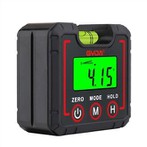
Principle and usage tips of clamp ammeter
Generally, when an ordinary ammeter detects a line, it is necessary to disconnect the line and intervene in the instrument test. This is not feasible for equipment that is running and cannot disconnect the line. Therefore, the research and development of clamp ammeter measurement lacks the essential targeted ammeter. It can directly clamp the path to test line current, leakage current, etc.
Principle and structure of clamp ammeter:
The clamp ammeter uses a combination of split iron core and Hall element (hole element). When the measured current I passes through the sensor, the Hall element senses and outputs a Hall voltage VH. The Hall voltage VH can be detected to calculate the measured value. The current I and Hall voltage VH are proportional to the tested current I, and the wire passing through the iron core becomes the primary coil of the current transformer, and the current in the line induces a current in the secondary coil. You can test the line current. The clamp meter is fully automatic, has high accuracy and is easy to carry. It can test the total line current, ground leakage current, line current, etc.
Tips on how to use clamp ammeter:
(1) Before testing the circuit, check whether the insulation shell of the clamp meter core is intact. Are the jaws closed securely?
(2) Turn on the instrument, and if "OL" is displayed, it means that the instrument is normal and can be tested by itself.
(3) When measuring, try to pass the wire under test through the center of the clamp. You can test several times and read the value to make the reading accurate.
(4) When measuring a smaller current, if conditions permit, you can wind the wire a few more times and then clamp it with jaws. The value tested in this way is a multiple of the number of conductor coils, and the value is more accurate.
(5) After the test is completed, close the meter and clean the jaws so that the meter will be in good condition when used next time.