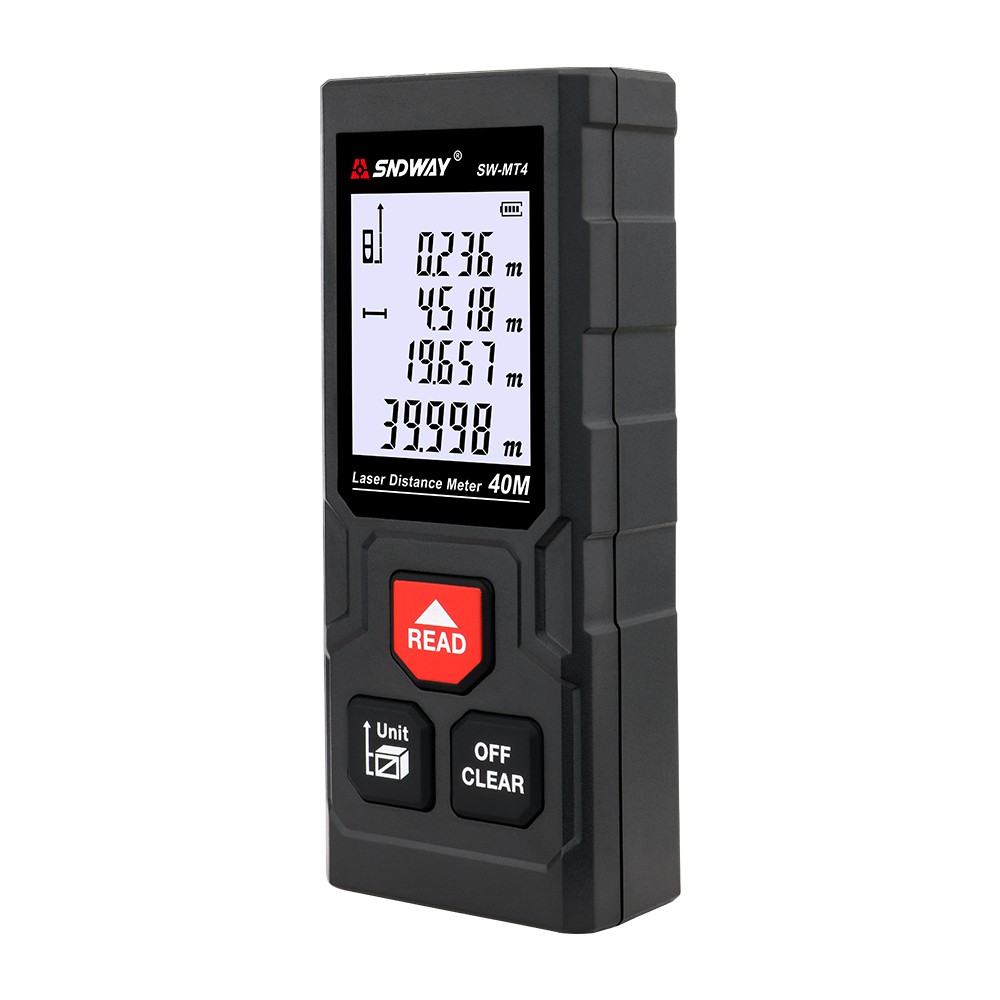
Principles and Applications of Handheld Laser Rangefinders
A laser rangefinder is an instrument that accurately measures the distance to a target by means of laser beams. During operation, it emits a fine laser beam toward the target. A photoelectric sensor receives the reflected laser signal, while a timer records the round‑trip travel time of the laser to calculate the distance between the observer and the target.
For continuously emitted laser beams, the measuring range can reach approximately 40 kilometers, enabling day‑and‑night operation. Pulsed laser output generally delivers lower absolute precision yet offers excellent relative accuracy for long‑distance measurement.
The world's first laser was successfully developed in 1960 by scientist Theodore Maiman at Hughes Aircraft Company in the United States. The U.S. military promptly launched research on military laser devices based on this breakthrough. In 1961, the first military laser rangefinder passed military verification tests, accelerating the practical application of laser ranging technology.
Lightweight, compact, easy to operate, fast and highly accurate, laser rangefinders feature measurement errors ranging from one‑fifth to a fraction of a percent compared with other optical ranging devices. They are widely adopted in topographic surveying, battlefield reconnaissance, target ranging for tanks, aircraft, warships and artillery, as well as altitude measurement for clouds, aircraft, missiles and artificial satellites. They serve as essential technical equipment for improving the strike precision of armored vehicles, aerospace assets, naval vessels and artillery systems.
With the continuous decline in costs, laser rangefinders have gradually been adopted across industrial sectors. A new generation of compact rangefinders-boasting rapid response, miniaturized design and stable performance-has emerged both domestically and internationally, finding extensive use in industrial monitoring, mining, port operations and other fields.