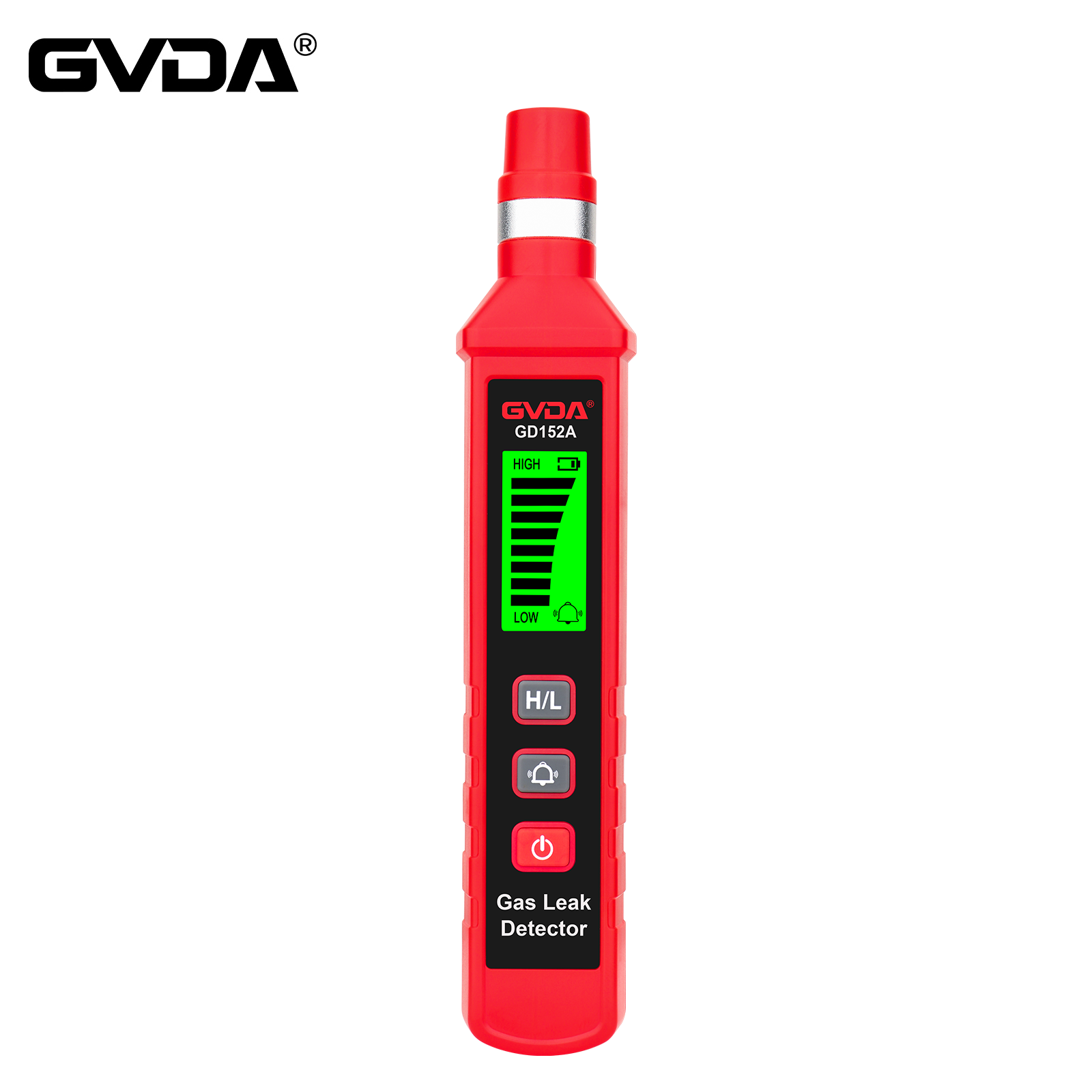
Principles and Service Life of Combustible Gas Detector Sensors
1, The service life of combustible gas detectors is three years, because currently, some combustible gas detectors have sensors that detect catalytic combustion. The service life of such sensors is three years, and it is recommended to replace them after three years.
Explosion proof casing, sturdy and durable;
High reliability and accuracy, good anti-interference ability;
Good performance price ratio.
2, Catalytic combustion gas sensor
This type of sensor is prepared with a high-temperature resistant catalyst layer on the surface of a platinum resistor. At a certain temperature, combustible gases catalyze combustion on its surface. Combustion is a function of the concentration of combustible gases as the temperature of the platinum resistor increases and the resistance changes.
Catalytic combustion gas sensors selectively detect flammable gases: anything that can burn can be detected; Anything that cannot burn has no response from the sensor. Of course, there are many exceptions to the statement 'anything that can burn can be detected', but overall, the above selectivity is valid.
Catalytic combustion gas sensors have accurate measurement, fast response, and long lifespan. The output of sensors is directly related to the explosion hazard of the environment and is a dominant type of sensor in the field of safety detection.
Disadvantage: No selectivity within the flammable gas range. Working in a dark environment poses a risk of ignition and explosion. Most organic vapors have a toxic effect on sensors.
At present, the main suppliers of this type of sensor are in China, Japan, and the United Kingdom (the country of invention)! At present, China is the largest user of this type of sensor (coal mine) and also has excellent sensor production technology. Although various agents constantly interfere with society's understanding of this sensor in their promotion, after all, the mainstream manufacturers of catalytic combustion gas sensors are in China.
Application areas: electronics, petroleum, petrochemical, chemical, metallurgical, power, boiler rooms, hotels and restaurants, as well as various other industrial and civilian environments.
With the advancement of technology, electronic scales made from weighing sensors have been widely used in various industries, achieving fast and accurate weighing of materials. Especially with the emergence of microprocessors and the continuous improvement of industrial production process automation, weighing sensors have become a necessary device in process control. From weight measurement of large tanks, hoppers, crane scales, car scales, etc. that could not be weighed in the past, to automatic detection and powder feeding control in batching systems for mixing and distributing multiple raw materials, production processes, etc., weighing sensors have been applied. Currently, weighing sensors are almost used in all weighing fields.