Principles, Detection Ranges and Operating Procedures of Toxic Gas Detectors
With the development of industrial society, many enterprises may produce a large amount of toxic gases during production, which can cause significant harm to human health. Therefore, it is necessary to regularly check the content indicators of these gases to ensure the safety of construction personnel and reduce the occurrence of accidents.
Some people may be curious about how this toxic gas detector is used to test for toxic gases? Let me explain the working principle to you.
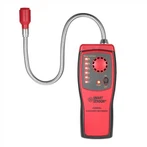
Since it is used to detect the composition indicators of toxic gases, generally speaking, this instrument will be equipped with a detector, which can effectively detect the types and breadth of toxic gases. Relying solely on this detector is not enough. Since the measured data needs to be fed back to the staff, it also has a corresponding sensor, which is mainly used to transmit data, making it more convenient for people to carry out monitoring work.
When working, this detector can automatically recognize ITM and break through the previous seamless connection on site. And the operation method of the toxic gas detector is very simple, as long as the staff can work through a magnetic rod on it. After measurement, the data results will be displayed through LED, and other related operations can be carried out according to the operation. In addition, when choosing a toxic gas detector, you should also choose according to the type and concentration range of the gas you want to detect.
Purpose and detection range of toxic gas detector:
The detectable gases include C2H3O; Acetylene C2H2; Acrylonitrile C3H3N; Ammonia gas NH3; Arsine AsH3; Bromine gas Br2; Butadiene C4H6; Carbon disulfide CS2; Carbon monoxide CO; Carbon oxysulfide COS; Chlorine gas Cl2; Chlorine dioxide ClO2; Diborane B2H6; Dimethyl sulfide C2H6S; Ethanol C2H5OH; Ethylene mercaptan C2H5SH; Ethylene C2H4; Ethylene oxide C2H4O; Fluorine gas F2; Formaldehyde CH2O; Germane GeH4; Hydrazine N2H4; Hydrogen H2 (ppm); Hydrogen bromide HBr; Hydrogen chloride HCl; Hydrocyanic acid HCN; Hydrogen fluoride HF; Hydrogen sulfide H2S; Methanol CH3OH; Methyl mercaptan CH3SH; Nitric oxide NO; Nitrogen dioxide NO2; Ozone O3; Phosgene COCl2;
Phosphine PH3; Silane SiH4; Sulfur dioxide SO2; Tetrahydrophene C4H8S; Thiophene C4hH4S; Toluene C6H5CH3; Vinyl acetate C4H6O2; More than 60 conventional toxic gases, including vinyl chloride C2H3Cl.
Toxic gas detectors are widely used in various petroleum, petrochemical, and chemical production facilities; Places with toxic and harmful gases such as municipal, fire, gas, telecommunications, coal, metallurgy, electricity, medicine, food processing, etc.