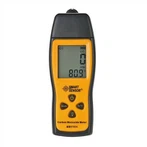
Reasons for negative gas detector readings
Gas detector is a kind of equipment with high sensitivity sensor, which can keenly feel the small amount of harmful gases, combustible gases, etc. prevailing in the air, and it is a kind of equipment that needs to be assembled in various fields of many industrial production at present. The use of sophisticated gas detector, you can always remind the gas exceeds the standard risk, to protect the safety of the operating personnel. But in the use of gas detectors, sometimes there will be a negative reading, so what is the reason for the gas detector reading is negative?
Gas detector readings are negative for the following reasons:
1, in the polluted atmosphere readings to zero:
Negative sensor readings are more often the case is that when in the polluted atmosphere, the presence of a small amount of the sensor's target gas, the instrument is "zeroed". When the instrument is later placed in clean air, the sensor will show a negative reading, corresponding to the pollutant concentration at the time the unit was zeroed. For example, if the carbon monoxide concentration is 5 PPM when the sensor is zeroed, the reading will be -5 PPM when the sensor is returned to clean air.
2. Negative cross-talk:
Negative readings can also occur when the sensor is placed in a gas that produces negative cross-talk. If the sulfur dioxide sensor usually has -100% cross-talk to nitrogen dioxide, placed in 2 PPM of nitrogen dioxide, then the sulfur dioxide reading on the instrument will be -2 PPM.
3. Pressure changes:
If the pressure changes dramatically (e.g., when passing a gas plug), the gas detector reading may have temporary ups and downs that may cause the detector to sound an alarm. When the percentage of oxygen by volume is maintained steadily at about 20.8%, and the whole pressure drop is very large, then the environment for breathing oxygen may become cause danger.
4, humidity changes:
If the humidity changes significantly (such as from a dry environment with air conditioning into the humid air environment outside), the water vapor in the air will drive away the oxygen, resulting in oxygen readings may cause a drop of up to 0.5%. Gas detectors are equipped with specialized filters to eliminate the effect of humidity changes on gas readings. This effect will not be noticed immediately, but will slowly affect the oxygen reading over a period of hours.
5. Temperature variations:
The gas detector is temperature compensated, however, if the temperature fluctuates dramatically, the gas detector reading may drift. The instrument should be zeroed at the work site to minimize the effect of temperature changes on the readings.