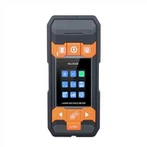
Regulations to be observed in the use of coating thickness gauges
a Base metal properties
For the magnetic method, the magnetic properties and surface roughness of the base metal of the standard piece shall be similar to those of the test piece base metal.
For the eddy current method, the electrical properties of the base metal of the standard sheet shall be similar to those of the test piece base metal.
b base metal thickness
Check whether the base metal thickness exceeds the critical thickness, if not, use one of the methods in 3.3 to calibrate.
c edge effect
Measurements should not be made close to sudden changes in the test piece, such as edges, holes and inner corners.
d Curvature
Measurements shall not be made on curved surfaces of test pieces.
e Number of readings
Often several readings must be taken within each measurement area since each reading from the instrument is not identical. Local variations in cover thickness also require multiple measurements in any given area, especially when the surface is rough.
f surface cleanliness
Before measurement, remove any attached substances on the surface, such as dust, grease and corrosion products, but do not remove any covering substances.
Coating Thickness Gauge Features
Principle of magnetic eddy current dual-purpose coating thickness gauge
F/N magnetic and non-magnetic dual-purpose coating thickness gauge, equipped with N\F probe, cleverly combines the eddy current thickness gauge and the magnetic coating thickness gauge. Users can choose ferromagnetic thickness measuring probe or eddy current thickness measuring probe to measure the coating thickness on magnetic metal or non-magnetic metal according to the needs of the site. Greatly increased the scope of application of the instrument. This type of coating thickness gauge can conveniently and non-destructively measure the thickness of non-magnetic coatings on ferromagnetic materials, such as zinc, copper, chromium and other coatings on steel surfaces or coatings such as paint, enamel, fiberglass, plastic spraying, asphalt, etc. thickness of. It can also conveniently and non-destructively measure the thickness of the non-conductive covering layer on the non-magnetic metal substrate, such as paint, rubber, plastic, oxide film, etc. on copper, aluminum, zinc, tin and other metals. The instrument is widely used in machinery, automobile, shipbuilding, petroleum, chemical industry, electroplating, plastic spraying, enamel, plastic and other industries. This type of coating thickness gauge adopts the minimum deviation automatic tracking technology to make the measurement value more accurate. The probe is processed by German technology standards, and the use of new alloy materials greatly improves the service life and reliability of the probe.