Research on the Comparison Method of Self Calibration Error for Infrared Thermometers
Blackbody radiation and infrared temperature measurement principles
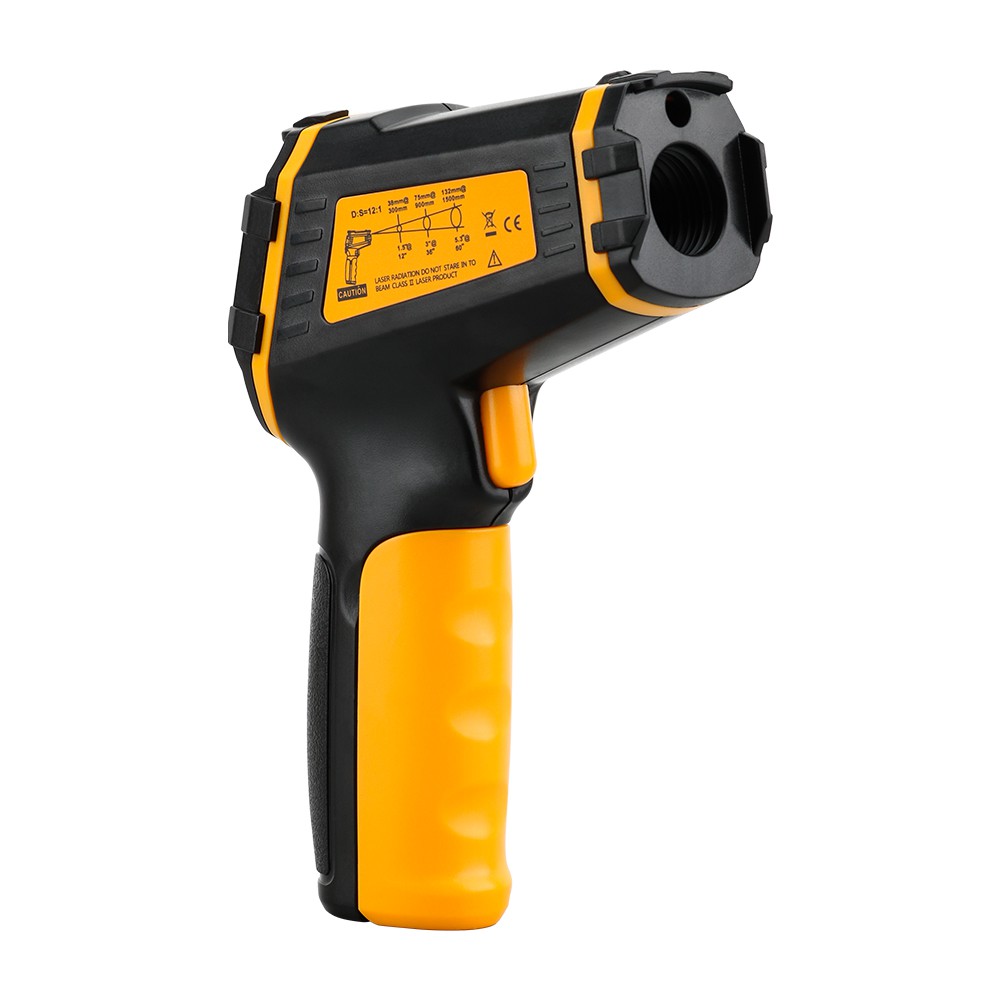
All objects with temperatures above absolute zero are constantly emitting infrared radiation energy into the surrounding space. The size and wavelength distribution of infrared radiation energy of an object are closely related to its surface temperature. Therefore, by measuring the infrared energy emitted by the object itself, the optical system of the thermometer converts it into an electrical signal on the detector and displays the surface temperature of the measured object through the display part of the infrared thermometer, enabling accurate measurement of its surface temperature, This is the objective basis for infrared radiation temperature measurement.
Characteristics of infrared thermometer: non-contact measurement, wide temperature measurement range, fast response speed, and high sensitivity. However, due to the influence of the emissivity of the measured object, it is almost impossible to measure the true temperature of the measured object, and the surface temperature is measured.
The standardized calibration method for infrared thermometers is to use a blackbody furnace calibration. Blackbody refers to an object with an absorption rate equal to 1 for all wavelengths of incident radiation under any circumstances. Blackbody is an idealized object model, therefore introducing a radiation coefficient that varies with material properties and surface state, namely emissivity. Its definition is the ratio of the radiation performance of the actual object to that of a blackbody at the same temperature. The radiation and absorption of infrared radiation of an object comply with Kirchhoff's law. When a beam of radiation is projected onto the surface of any object, according to the principle of energy conservation, the sum of the absorption, reflectance, and transmittance of the incident radiation of the object must be equal to 1. Generally, the emissivity is not easy to measure, and can usually be determined by measuring the absorption rate. Therefore, blackbody radiation sources are used as radiation standards to verify the radiation intensity of various infrared radiation sources.
The infrared thermometer consists of an optical system, a photodetector, a signal amplifier, signal processing, display output, and other components. The radiation lines of the tested object and reflection source are demodulated by a modulator and input into the infrared detector. The difference between the two signals is amplified by a reverse amplifier and the temperature of the feedback source is controlled, so that the spectral radiance of the feedback source is the same as the spectral radiance of the object. The display indicates the brightness and temperature of the measured object. The temperature measured by an infrared thermometer is the radiation temperature of an object rather than the actual temperature of the object. Since absolute blackbody does not exist, the total thermal radiation of the actual object is always smaller than the total absolute blackbody radiation at the same temperature. Therefore, the temperature measured by an infrared thermometer should definitely be smaller than the actual temperature of the object. When measuring temperature, the emissivity of the infrared thermometer should be set as much as possible (for infrared thermometers with adjustable emissivity) to the same emissivity value as the measured material, and the measured value should be consistent with the true temperature of the measured object as much as possible.
Introduction to the Self Calibration Method of Infrared Thermometer
The most important factors to ensure the accuracy of infrared thermometers are emissivity, distance to the spot, position of the spot, and field of view. Through communication and consultation with infrared temperature measurement experts and technical personnel from equipment manufacturers, and through multiple methods of repeated practice, a set of calibration equipment was self-made based on the principle of blackbody furnace. The feasibility of self calibration and comparison of this method was verified through comparison. Complete the comparison of basic errors, the influence of measurement distance changes, and the determination of the range of emissivity in self calibration on time. Before testing, adjust the infrared thermometer to its optimal state before using it for on-site testing.