Selection and Operation of Hazardous Gas Detectors
1. Reference factors for selecting gas detectors:
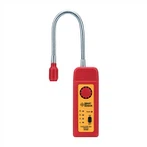
Confirm the type and concentration range of the gas to be detected: The gas types encountered by each production department are different. When choosing a gas detector, all possible scenarios should be considered. If methane and other less toxic hydrocarbons are predominant, choosing a methane detection alarm is undoubtedly more appropriate. This is not only because the methane detection alarm is easy to use and widely applicable, but also because it has the characteristics of convenient maintenance and calibration. If there are toxic gases such as carbon monoxide and hydrogen sulfide, a specific gas detector should be prioritized to ensure the safety of workers, such as carbon monoxide detectors, hydrogen sulfide detection alarms, etc. A composite gas detector may achieve twice the result with half the effort, such as a methane oxygen dual parameter alarm.
The most popular choice in the coal mining industry nowadays should be portable gas detectors. Due to their easy operation, compact size, and portability to different production sites, electrochemical detectors are powered by alkaline batteries and can be used continuously for 1000 hours; The new LEL detectors, PID and composite instruments use rechargeable batteries (some have already adopted memory free nickel hydrogen or lithium-ion batteries), which allow them to work continuously for nearly 12 hours. Therefore, as such instruments are increasingly being used in various factories and health departments.
If this type of instrument is used as a safety alarm in an open environment, such as an open workshop, a portable gas detector can be used because it can continuously, real-time, and accurately display the concentration of toxic and harmful gases on site. Some of these new instruments are also equipped with vibration alarm attachments - to avoid audible alarms in noisy environments, and computer chips are installed to record peak values, STEL (15 minute short-term exposure level), and TWA (8-hour statistical weighted average) - providing specific guidance for worker health and safety.
If entering a confined space, such as reaction tanks, storage tanks or containers, sewers or other underground pipelines, underground facilities, agricultural enclosed grain warehouses, railway tankers, shipping cargo holds, tunnels, etc., personnel must undergo testing before entering, and testing must be conducted outside the confined space. At this point, it is necessary to choose a multi gas detector. Because there are significant differences in gas distribution and types in different parts (upper, middle, and lower) of a confined space. For example, generally speaking, combustible gases have a lighter density and are mostly distributed in the upper part of enclosed spaces; Carbon monoxide has a similar specific gravity to air and is generally distributed in the middle of enclosed spaces; Heavier gases such as hydrogen sulfide exist in the lower part of enclosed spaces. Meanwhile, oxygen concentration is also one of the types that must be detected. In addition, considering the possible volatilization and leakage of organic substances inside the tank, a detector that can detect organic gases is also necessary. Therefore, a complete enclosed space gas detector should have a built-in pump suction function - so that it can perform non-contact and segmented detection; Equipped with multi gas detection function - to detect hazardous gases with different spatial distributions, including inorganic gases and organic gases; Equipped with oxygen detection function - to prevent hypoxia or oxygen enrichment; A portable instrument with a small size that does not affect workers' work. Only in this way can the absolute safety of personnel entering confined spaces be guaranteed.