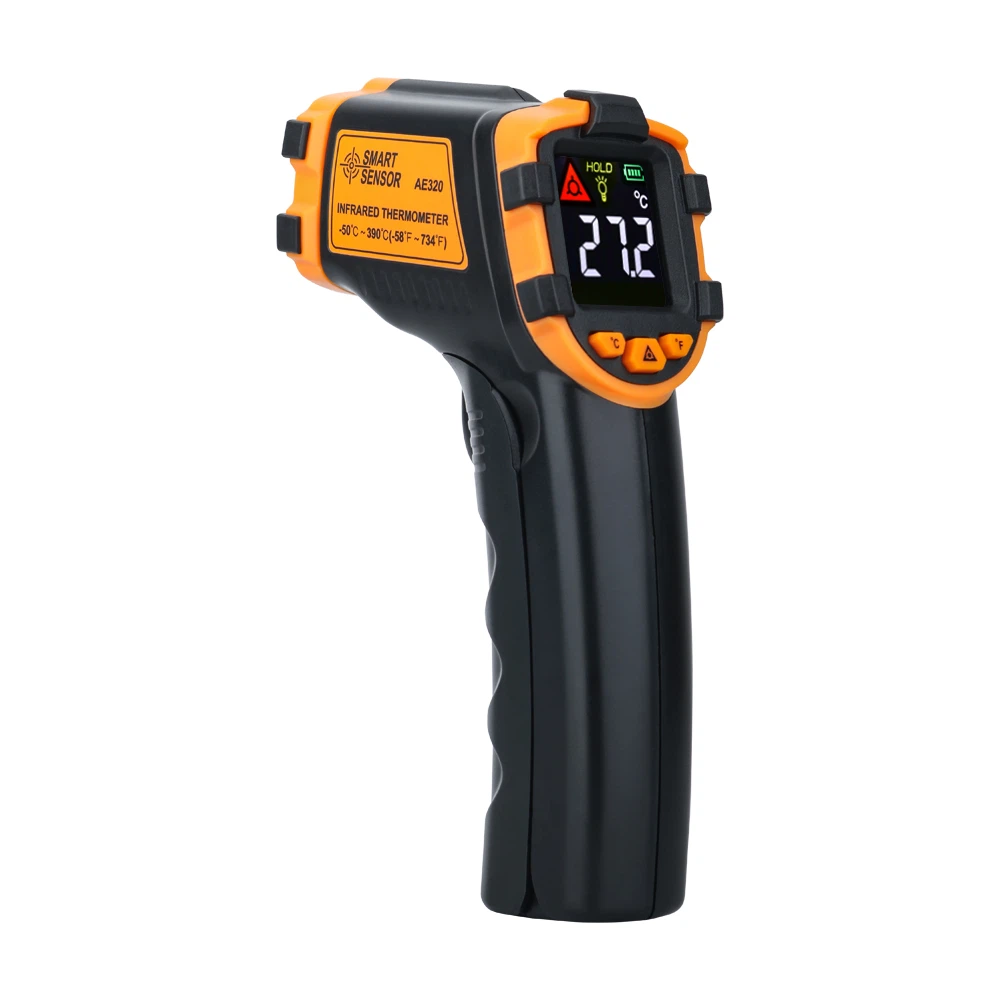
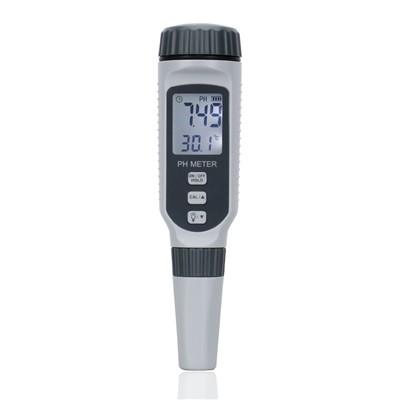
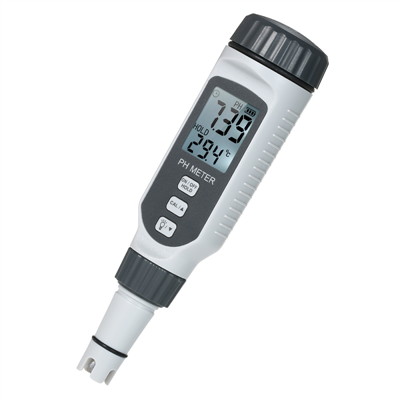
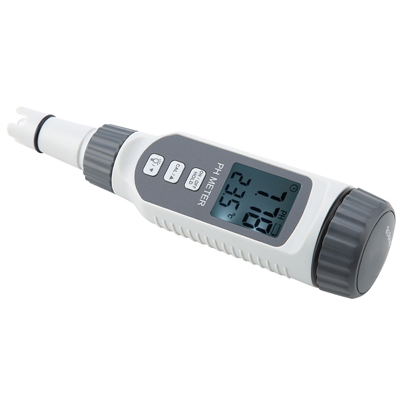
Several considerations for choosing a thermometer
When performing a temperature calibration, selecting the correct pyrometer for the reference probe and the device under test is critical. The following factors need to be considered: Accuracy Many thermometers for resistance thermometers provide ppm, ohms, and/or temperature specifications. The conversion from ohms or ppm to temperature depends on the thermometer used. For a probe that is 100Ω at 0°C, 0.001Ω (1mΩ) equals 0.0025°C or 2.5mK. 1ppm is also equivalent to 0.1mΩ or 0.25mK. Also note whether the specification is "reading" or "range".
For example, "1ppm reading" is 0.1mΩ at 100Ω, while "1ppm span" is 0.4mΩ when the full scale is 400Ω. The difference is huge! When examining accuracy specifications, keep in mind that the uncertainty in reading contributes very little to the overall uncertainty of the calibration system, and it does not always make economic sense to purchase the thermometer with the lowest uncertainty. The "Bridge-Super Resistance Thermometer" analysis method is a good example. A 0.1-ppm bridge can cost more than $40,000, while a 1-ppm super resistance thermometer can cost less than $20,000. Looking at the total system uncertainty, it is clear that the bridge improves performance only slightly -- in this case, 0.000006°C -- at a very high cost.
0
When performing a temperature calibration, selecting the correct pyrometer for the reference probe and the device under test is critical. The following factors need to be considered: Accuracy Many thermometers for resistance thermometers provide ppm, ohms, and/or temperature specifications. The conversion from ohms or ppm to temperature depends on the thermometer used. For a probe that is 100Ω at 0°C, 0.001Ω (1mΩ) equals 0.0025°C or 2.5mK. 1ppm is also equivalent to 0.1mΩ or 0.25mK. Also note whether the specification is "reading" or "range".
For example, "1ppm reading" is 0.1mΩ at 100Ω, while "1ppm span" is 0.4mΩ when the full scale is 400Ω. The difference is huge! When examining accuracy specifications, keep in mind that the uncertainty in reading contributes very little to the overall uncertainty of the calibration system, and it does not always make economic sense to purchase the thermometer with the lowest uncertainty. The "Bridge-Super Resistance Thermometer" analysis method is a good example. A 0.1-ppm bridge can cost more than $40,000, while a 1-ppm super resistance thermometer can cost less than $20,000. Looking at the total system uncertainty, it is clear that the bridge improves performance only slightly -- in this case, 0.000006°C -- at a very high cost.
Measurement error
When making high-accuracy resistance measurements, it is important to ensure that the thermometer can eliminate thermal EMF errors generated at the junction of dissimilar metals in the measurement system. A common technique for canceling thermal EMF errors is to use a switched DC or low frequency AC current source.
resolution
Be careful with this indicator. Some thermometer manufacturers confuse resolution with accuracy. A resolution of 0.001°C does not mean an accuracy of 0.001°C. In general, a thermometer that is accurate to 0.001°C should have a resolution of at least 0.001°C. Display resolution is very important when detecting small temperature changes—for example, when monitoring the freezing curve of a fixed-point vessel, or when checking the stability of a calibration bath.
Linearity
Most thermometer manufacturers provide accuracy specifications at one temperature (typically 0°C). This is useful, but you'll usually be measuring a wide range of temperatures, so it's important to know how accurate your thermometer is over its operating range. If a thermometer is very linear, its accuracy specification is the same over its entire temperature range. However, all pyrometers have some degree of nonlinearity and are not perfectly linear. Make sure the manufacturer provides an accuracy specification over the operating range, or the linearity specification you used when calculating the uncertainty.
stability
Reading stability is very important because measurements are made over a wide range of environmental conditions and over various lengths of time. Make sure to check the temperature coefficient and long-term stability specifications. Make sure that changes in environmental conditions do not affect the accuracy of the thermometer. Reputable manufacturers provide temperature coefficient indicators. Long-term stability specifications are sometimes combined with accuracy specifications—for example, "1ppm, 1 year" or "0.01°C, 90 days". Calibration every 90 days is difficult, so a 1-year indicator is calculated and used for uncertainty analysis. Beware of providers who offer "0 drift" metrics. Every thermometer will have at least one drift component.
calibration
Some thermometers are technically specified as "no recalibration required". However, according to the latest edition of the ISO guidelines, all measuring equipment needs to be calibrated. Some thermometers are easier to recalibrate than others. To use a thermometer that can be calibrated through its front panel without special software. Some older thermometers store calibration data in EPROM memory, programmed with custom software. This means that the thermometer has to be sent to the factory for recalibration - perhaps abroad! Because recalibration is very time-consuming and expensive, avoid using thermometers that still use manual potentiometer adjustments. Most DC thermometers are calibrated using a set of high stability DC standard resistors. Calibrating an ac thermometer or bridge is more complicated, requiring a reference sense divider and precision ac standard resistors.
Traceability
Measurement traceability is another concept. Traceability of DC thermometers is very simple with a good DC resistance standard. The traceability of AC thermometers and bridges is more complicated. Many countries still do not have established traceability of AC resistance. Many other countries with traceable ac standards rely on ac resistors calibrated by thermometers or bridges that are ten times more precise in uncertainty, adding significantly to the measurement uncertainty of the bridge itself.
convenience
The efforts to increase productivity are never-ending. Therefore, you need a thermometer that saves you as much time as possible.