Signal Processing and Ambient Conditions for Infrared Thermometers
Signal Processing Functions of Infrared Thermometers
The measurement of discrete processes (such as parts production) differs from that of continuous processes, requiring infrared thermometers to be equipped with signal processing functions, including peak hold, valley hold and average value calculation. For instance, peak hold is required when measuring the temperature of glass on a conveyor belt, and the temperature output signal is transmitted to the controller.
Consideration of Environmental Conditions for Infrared Thermometers
The ambient conditions where an infrared thermometer operates exert a significant impact on measurement results, which must be fully considered and properly addressed. Otherwise, the temperature measurement accuracy will be compromised, and the thermometer may even be damaged.In high ambient temperature environments with dust, smoke and steam, optional accessories provided by manufacturers such as protective sleeves, water cooling systems, air cooling systems and air purging devices are recommended. These accessories can effectively eliminate environmental interference, protect the thermometer and ensure accurate temperature measurement. Standardized accessories should be prioritized to reduce installation costs.When smoke, dust or other particles attenuate the measured energy signal, a two-color thermometer is the optimal choice. For harsh working conditions with noise, electromagnetic fields, vibration or limited access, fiber-optic two-color infrared thermometers deliver the best performance.
In sealed or hazardous material applications (such as containers and vacuum chambers), temperature measurement is conducted through an observation window. The window material must feature sufficient mechanical strength and high transmittance within the operating wavelength range of the thermometer. It is also necessary to confirm whether operators need visual observation through the window, so as to select a reasonable installation position and window material to avoid mutual interference.For low-temperature measurement scenarios, germanium (Ge) or silicon (Si) are commonly used as window materials. These materials block visible light and prevent manual visual inspection of measured targets. If operator observation through the window is required, optical materials transparent to both infrared radiation and visible light, such as zinc selenide (ZnSe) or barium fluoride (BaF₂), shall be adopted.
Simple Operation and Easy Application
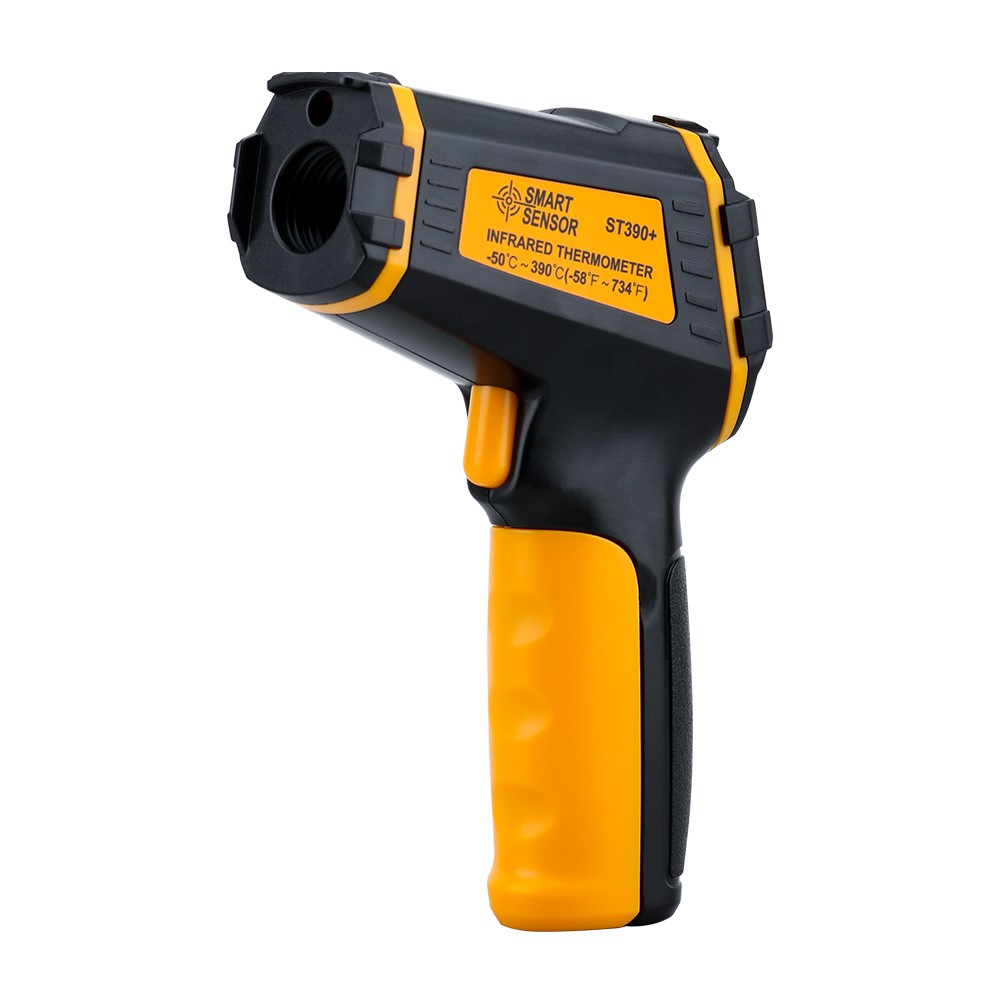
Infrared thermometers are designed with intuitive interfaces and simple operations for user-friendly application.Portable infrared thermometers are compact, lightweight handheld devices integrating temperature measurement, display and signal output. The display panel can show real-time temperature and various temperature data. Some models support remote control and computer software operation.
For harsh and complex environments, split systems with separate measuring probes and displays are available for flexible installation and configuration. Multiple signal output types are compatible with mainstream control equipment.
Calibration of Infrared Radiation Thermometers
Infrared thermometers must be calibrated to ensure accurate temperature indication of measured targets. If measurement errors occur during operation, the equipment shall be returned to the manufacturer or maintenance center for recalibration.