Standardized use of explosion protected night vision
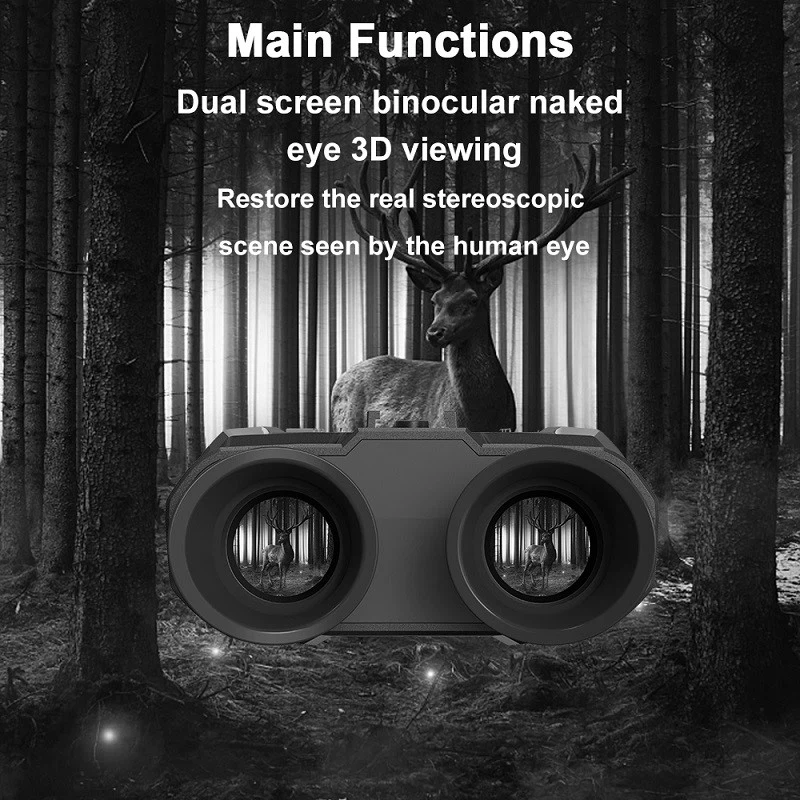
Explosion-proof night vision device is a precision optoelectronic instrument for observing targets at night and under low-light conditions. Mainly developed to work under extremely low illumination and equipped with infrared emitter. It is a night detection and observation technology based on the principle of photoelectric imaging. Its detection function is limited and affected by the surrounding environment.
Standardized use of explosion-proof night vision devices
1. It is prohibited to open during the day without a protective cover.
2. When checking the working performance in a illuminated room, it should be done with the night vision device covered and should not face a strong light source. Strong light entering an explosion-proof night vision device may damage it or shorten the life of the night vision device.
3. When using night vision equipment with lens covers to observe objects, avoid strong flashes.
4. When strong light enters the explosion-proof night vision device, its visibility will decrease or even disappear. At this time, the night vision device should be immediately removed from the strong light source. After 1-2 minutes, functionality will be restored. Particularly strong light sources can damage night vision equipment.
Strong flash and flash are allowed within 5.1 minutes. The light spots observed in the field of view are not caused by defects in the night vision device, but by the flicker of the external light source. When working in the standard way, no light spots will appear, and there are a small number of black spots and bright spots in the field of view. This is not a quality defect, but meets the quality standards of night vision equipment.
Application areas of explosion-proof night vision devices:
1. Direct other customs inspections and maritime patrols.
2. During emergency rescue, traffic command and highway management departments must observe and take photos from a distance.
3. Long-distance night observation and photos of fire protection, forestry management, geological exploration, oil production units, airport management, large assembly management units/railways, and ports
4. Environmental protection, production safety supervision, and remote photography monitoring.