Status and Research of Carbon Dioxide Detector on Indoor Carbon Dioxide Content
According to the requirements of the national environmental sanitation standard formulation and revision work, we collected the monitoring results of carbon dioxide concentration in the indoor air of each city in the province from 2004 to 2008, and randomly selected offices and residential buildings in cities between Jiangnan and Jianghuai, towns in Jiangnan, Jianghuai and Huaibei Conduct investigations and studies on residential buildings to understand the current trend and current situation of the concentration of carbon dioxide in the indoor air, and provide a basis for the revision of the "Health Standards for Carbon Dioxide in Indoor Air".
1 Content and method
1.1 Data collection
Formulate a report form for the monitoring results of carbon dioxide concentration in the air of different living rooms from 2004 to 2008. The reporting requirements include non-productive places, residential buildings (distributed in different areas, undecorated or decorated to varying degrees); offices (including centralized air-conditioning and non-centralized air-conditioned offices); and the monitoring results of carbon dioxide concentration in indoor air of various public places. The contents of the report are the monitoring time, monitoring place, monitoring location, monitoring method, measurement frequency, measurement range, average concentration, standard deviation, etc. of each year. The Provincial Center for Disease Control and Prevention issued a document to arrange this work, and the city's Center for Disease Control and Prevention engaged in environmental health professionals were responsible for collecting and filling in the report, and required the report to be submitted before September 20, 2008.
1.2 On-site monitoring
1.2.1 Formulate a unified on-site survey plan and survey form for the concentration of carbon dioxide in urban indoor air. Wuhu City in the south of the Yangtze River and Hefei City between Jianghuai and Huaihe River were selected as the on-site monitoring points, and urban offices and residential buildings were randomly selected in each of the two cities for investigation and monitoring. Hefei City is undertaken by the Provincial Center for Disease Control and Prevention, with assistance from the Hefei Baohe District Center for Disease Control and Prevention.
A total of 30 offices and 30 residential houses were investigated on September 18, 2008. Wuhu City was undertaken by the Wuhu City Center for Disease Control and Prevention, and a total of 58 offices and 60 residential households were investigated from September 10 to 11, 2008.
1.2.2 Formulate on-site monitoring survey plans and survey forms for the concentration of carbon dioxide in urban residential air. Liulang Town, Wuhu County, Wuhu City in the south of the Yangtze River, Daxingji Town, Baohe District, Hefei City between Jiangnan and Huaibei, and Wangdian Town, Yingzhou District, Fuyang City, Huaibei Region were selected as on-site monitoring points. Wuhu City in the south of the Yangtze River was undertaken by the Wuhu Center for Disease Control and Prevention, and a total of 30 residential houses were investigated on September 16, 2008. Hefei City between the Jianghuai River and the Huaihe River was undertaken by the Provincial Center for Disease Control and Prevention, with the assistance of Hefei Baohe District Center for Disease Control and Prevention. A total of 30 residential houses were investigated on September 10, 2008. Fuyang City, Huaibei Region was undertaken by the Provincial Center for Disease Control and Prevention, and assisted by the Center for Disease Control and Prevention of Yingzhou District, Fuyang City. On September 16, 2008, a total of 30 households were surveyed.
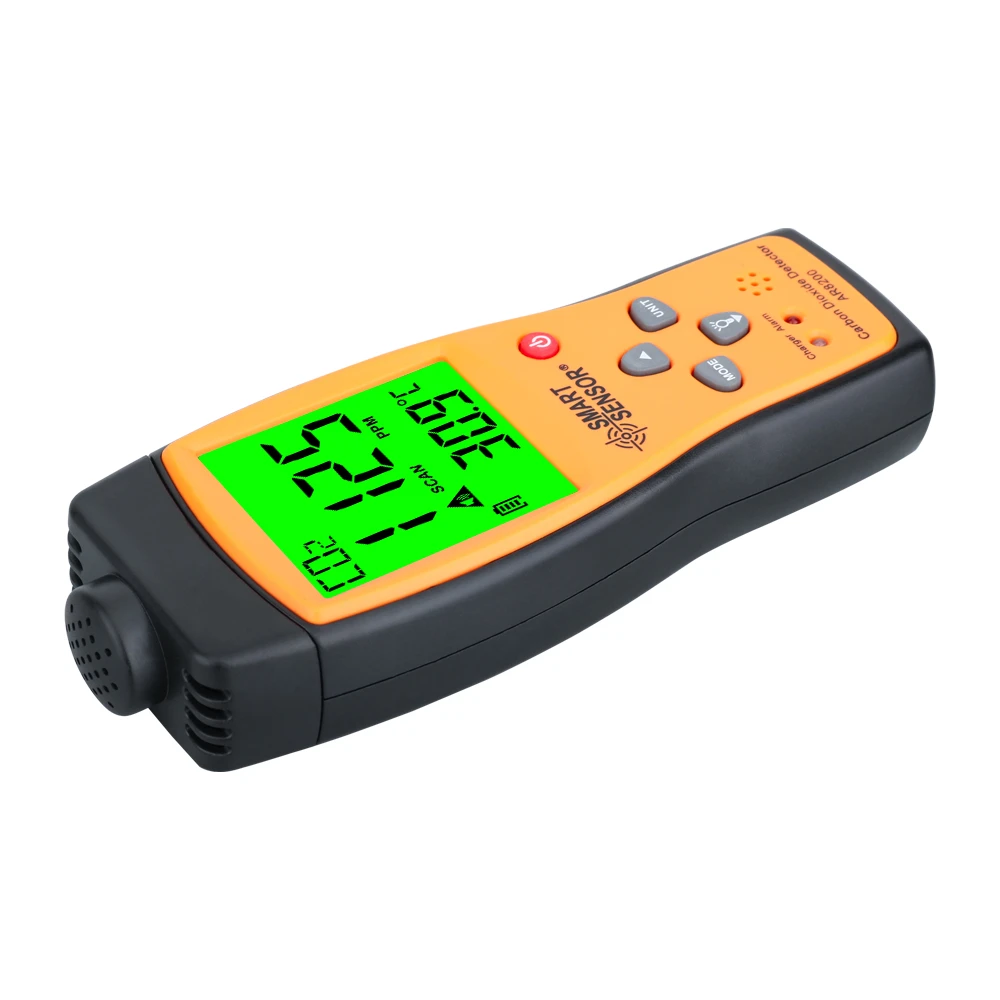
1.2.3 Select the national standard GB/T18204.24 "Measurement Method of Carbon Dioxide in the Air of Public Places", use a carbon dioxide recorder to record and measure the gas, and conduct on-site measurement directly after on-site calibration.
1.3 Statistical analysis and evaluation: Excel is used for statistical analysis, and GB/T17094 "Health Standard for Carbon Dioxide in Indoor Air" is used for evaluation.
2 Results and analysis
2.1 Indoor carbon dioxide concentration in urban dwellings
From 2004 to 2008, a total of 2,521 times of monitoring the concentration of carbon dioxide in the indoor air of various cities, the measurement range was between 0.010% and 1.47%, the arithmetic mean was 0.066%, the geometric mean was 0.064%, the standard deviation was 0.009, 38 cases exceeded the standard, and the rate of exceeding the standard was 1.51 %. (Table 1). The hotel industry has a total of 1208 monitoring times, with an average value of 0.057% and a standard deviation of 0.004; other public places have a total of 1752 monitoring times, with an average value of 0.071% and a standard deviation of 0.012. Other public places are higher than hotels, and the difference is significant (P<0.05).
2.2 Carbon dioxide concentration in indoor air of urban offices
The carbon dioxide detector monitored the carbon dioxide concentration in the air of 90 urban offices on site, and measured 270 times in total. The measurement range is between 0.040% and 0.088%, the arithmetic mean is 0.057%, the geometric mean is 0.055%, and the standard deviation is 0.009. 2 cities Comparing the on-site monitoring results of carbon dioxide concentration in the air of 90 offices, Hefei (0.064%) is higher than Wuhu (0.049%).
2.3 Concentration of carbon dioxide in the air of urban residential buildings
This time, the concentration of carbon dioxide in the air of 88 urban residential houses was monitored on the spot. The measurement range of the carbon dioxide concentration in the air of 88 urban residential houses in 2 cities was between 0.042% and 0.084%. The geometric mean is slightly higher than that of the kitchen, but the difference between the two is not significant (P>0.05).
2.4 Concentration of carbon dioxide in the air of urban residential buildings
This time, 90 households of urban residents were monitored on the spot. The measurement range of carbon dioxide concentration in the air of 90 households of urban residents in 3 places was between 0.028% and 0.090%.
3 Discussion
3.1 Anhui Province is located in the southeastern part of China, in the transition zone between the warm temperate zone and the subtropical zone. The Huaihe River and the Yangtze River run through the whole area from west to east, dividing the province from north to south into three natural topographical regions: Huaibei Plain, Jianghuai Hills, and Southern Anhui Mountains. Therefore, the revision of health standards for carbon dioxide in indoor air is representative in our province. According to the requirements of the scientific research assistance group for the formulation and revision of national environmental sanitation standards, we completed the monitoring data collection and on-site investigation of the revised GB/T17094 "Health Standards for Carbon Dioxide in Indoor Air" on time. The average value of carbon dioxide concentration in monitoring data is 0.066%, and the average value of different places in the field survey results is 0.057% in office space, 0.056% in urban residents' living room, and 0.052% in urban residential area. From the perspective of exceeding the standard rate, the statistical results of the annual monitoring data show that the carbon dioxide concentration was measured 2,521 times, 38 of which exceeded the standard, and the exceeding standard rate was 1.51%. The main reason for exceeding the standard is that some public places exceed the standard. On-the-spot monitoring of office space, urban residents' living rooms, and urban residents' living rooms did not exceed the standard.
3.2 The on-site monitoring of the concentration of carbon dioxide in the air of urban residents is lower than the survey results in the 1980s, and the concentration of carbon dioxide in the air of urban residents is lower than that of the three pilot towns of Bixi, Sanshui and Qilitang in the 1990s by Xu Dongfang and others. The survey results in summer are also lower than those of Xu Yelin et al. in the 1980s, which may be related to the increase in the volume of modern living rooms and the change in fuel structure. The Hygienic Standard for Carbon Dioxide in Indoor Air was formulated in the 1990s and has been in use for more than ten years. As a unit participating in standard revision, it is very necessary and timely for the Environmental Sanitation Standards Subcommittee of the National Sanitation Standards Technical Committee to propose the revision of the Hygienic Standards for Carbon Dioxide in Indoor Air.
3.3 The source of indoor carbon dioxide is the complete combustion of fuel and the gas exhaled by people, and the latter is the main one. When the indoor air carbon dioxide concentration is 0.07%, the human body feels good; when the carbon dioxide concentration reaches 0.1%, some sensitive people feel uncomfortable. People who live in such a room for a long time will feel uncomfortable, lack of energy, and even affect their health. When it reaches 0.15%, the discomfort is obvious, and when it reaches 0.2%, the indoor hygiene situation is obviously deteriorated. Carbon dioxide is a comprehensive indicator that indirectly indicates the concentration of indoor pollutants. Its rise indicates that the volume of the living room is small, poorly ventilated and overcrowded. Therefore, indoor carbon dioxide levels are affected by factors such as per capita occupied area, volume, smoking and fuel combustion. With the improvement of people's living standards, the housing area has generally increased substantially, and the fuel structure has also undergone great changes. For this reason, it is suggested that the newly revised "Health Standards for Carbon Dioxide in Indoor Air" for review should be combined with the feasibility of the actual situation in our country to increase the maximum allowable concentration per hour, and the daily average maximum allowable concentration of carbon dioxide in the original standard indoor air (0.10% ) remain unchanged or appropriately reduced to 0.09%. For approval by the Environmental Sanitation Standards Subcommittee of the National Sanitation Standards Technical Committee.