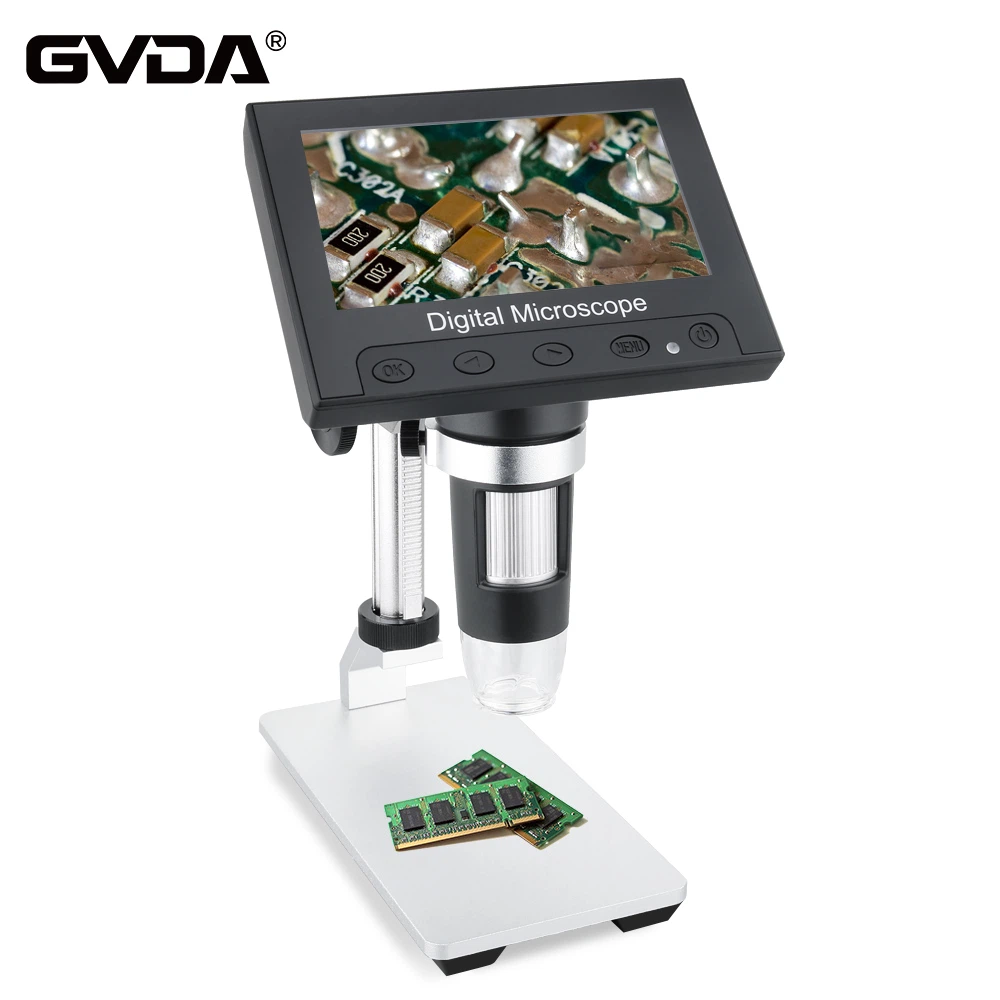
Stereo microscope common problems and solutions
1. The field of view is blurry or dirty. There may be dirt on the specimen, dirt on the surface of the eyepiece, dirt on the surface of the objective lens, and dirt on the surface of the work plate. The dirt on the surface of the specimen, eyepiece, objective lens and work plate can be cleaned according to the situation.
2. The reason why the two images do not overlap may be that the interpupillary distance is incorrectly adjusted. Interpupillary distance can be corrected. If the two images do not overlap, it may be that the diopter adjustment is incorrect. You can re-adjust the diopter. It may also be that the left and right eyepieces have different magnifications. You can check the eyepieces and reinstall eyepieces with the same magnification.
3. If the image is not clear, there may be dirt on the surface of the objective lens. Please clean the objective lens.
4. If the image is not clear when zooming, it may be that the diopter adjustment and focus are incorrect. You can adjust the diopter and focus again.
5. If the bulb often burns out and the light flickers, it may be that the local line voltage is too high, the bulb is about to burn out and the wire connection is safe, please carefully check whether the voltage and the wire connection of the microscope are firm, if not, it may be If the light bulb is about to burn out, replace it.
How to adjust a stereomicroscope
1. Adjust the hinge of the binocular tube so that the distance between the eyepieces matches the interpupillary distance of the eyes.
2. Adjust the zero point on the eyepiece scale to correspond to the white point on the eyepiece (if an eyepiece micrometer is used, adjust the eyepiece with the eyepiece micrometer until the eye can clearly see the image of the eyepiece micrometer) .
3. Place the sample on the stage and illuminate it.
4. Adjust the magnification changer to the maximum magnification and focus on the sample details.
5. Adjust the magnification changer to the minimum magnification and adjust the diopter compensator on both eyepieces. If an eyepiece micrometer is already placed in one of the eyepieces, then only the other eyepiece needs to be adjusted.
After adjustment, the details of the sample remain in focus throughout the entire zoom range without the need for adjustment.