Structure and Characteristics of Analog Multimeters
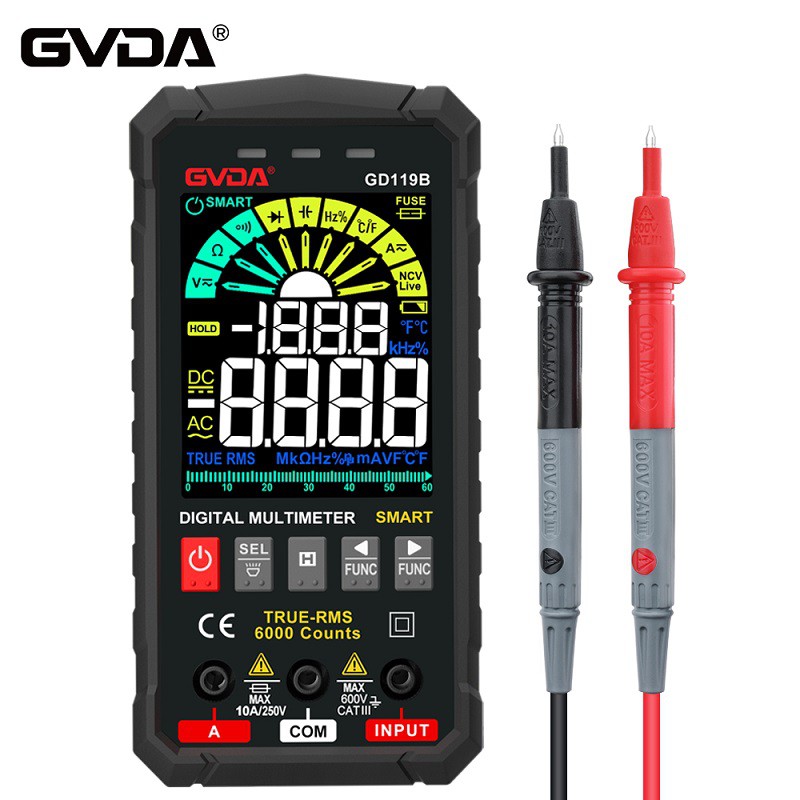
A multimeter, also known as an analog multimeter, uses a sensitive electromagnetic DC ammeter (microampere meter) as its dial. When measuring, different measurement items and gears are set through the function knob, and the measurement results are directly displayed on the dial through the dial pointer. Its biggest feature is that it can intuitively detect the values, changes, and directions of parameters such as current and voltage. Although multimeters with different pointers can detect slightly different items, their structural composition is basically the same. A typical pointer multimeter is mainly composed of a dial, function knobs, zero ohm calibration knob, probe sockets, and probes. The dial is used to display the measurement results, the function knobs are used to select the measurement items and gears, the zero ohm calibration knob is used to adjust the resistance measurement accuracy, the probe sockets are used to plug in the probes for measurement, and the probes are used to link the tested device or circuit. Due to the wide range of applications of pointer multimeters, a handle is usually installed above the pointer multimeter for easy portability. The function knob can be rotated 360 ° to the corresponding gear according to the different measurements and items being measured. The pointer multimeter comes with two probes, red and black. When in use, insert each probe into the probe socket of the pointer multimeter to test the tested device or circuit. The pointer multimeter can be roughly divided into two parts in terms of structural composition: the upper part is the header part of the pointer multimeter, mainly used to display measurement information. The dial and pointer of the pointer multimeter are located in the header part. The dial is located at the top of the pointer multimeter and consists of multiple fox lines, used to display measurement results. Due to the many functions of the pointer multimeter, there are usually many scale lines and values on the dial. The dial of a pointer multimeter is composed of six concentric arcs, and each scale line also represents the scale value corresponding to the range selection knob. 2. The lower part of the pointer multimeter is the control panel, which has multiple knobs and sockets, such as head calibration screws, function knobs, zero ohm calibration knobs, and probe sockets.