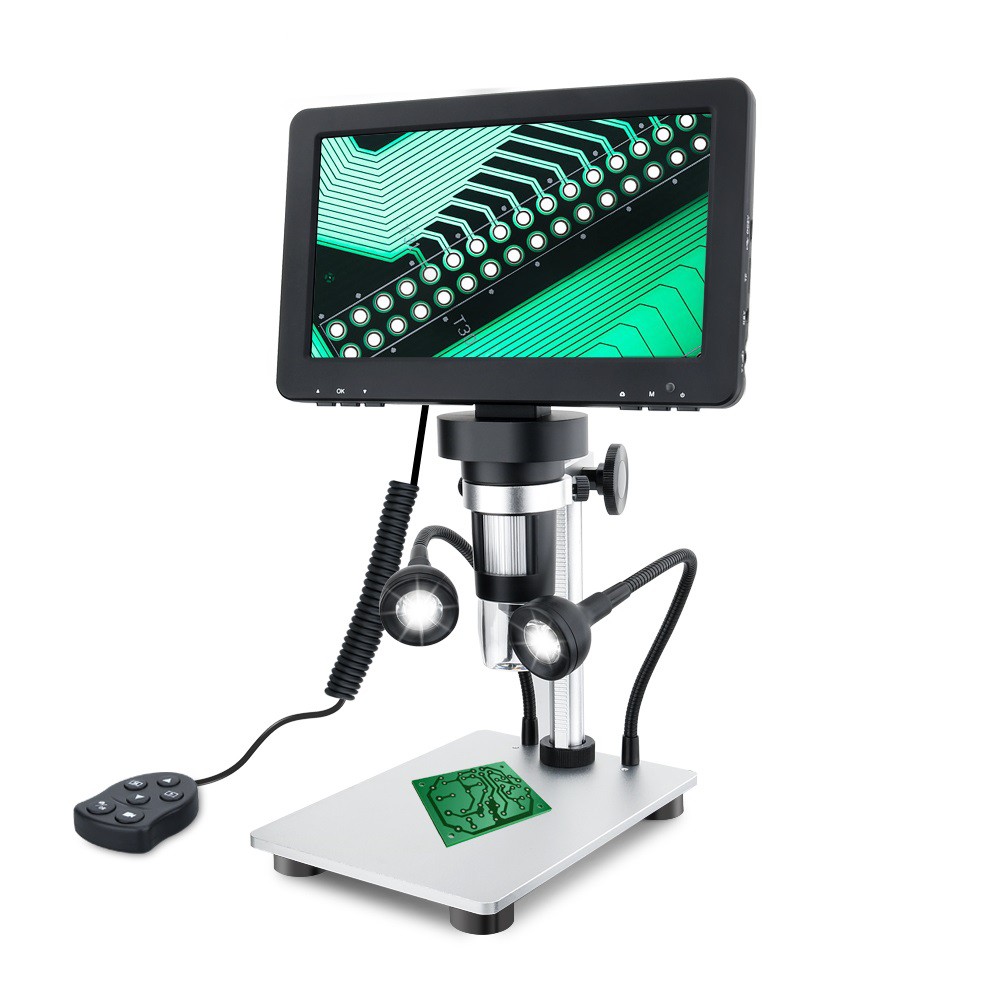
Structure and operation methods of the microscope
Structure of microscope
1. Bracket: The bracket of the microscope is the foundation of the entire microscope system. It ensures the stability of the microscope by supporting and fixing various parts.
2. Lens system: The lens system of a microscope consists of glasses and an objective lens. Glasses are a set of lenses placed at the end of the eyepiece tube, mainly responsible for magnifying the image observed by the observer. The objective lens is located at the bottom of the object tube and is a set of lenses placed on the focusing mechanism, mainly used to magnify the sample to be observed.
3. Light source system: The light source system of the microscope is mainly used to illuminate the sample to be observed. According to different types of microscopes, the light source can be natural light or incandescent or fluorescent lamps with adjustable brightness.
4. Focusing mechanism: The focusing mechanism allows us to focus the sample up and down to obtain clearer images. The focusing mechanism usually consists of a coarse focus wheel and a fine focus wheel, which can be rotated to change the distance between the objective lens and the sample.
5. Sample stage: The sample stage is a platform used to place the sample to be observed. The sample stage usually has adjustable height and tilt to facilitate observation of samples at different angles and positions.
6. Disclaimer: The lens on the microscope system is enclosed by a sealed housing to maintain cleanliness and prevent dust and contaminants from entering.
Instructions for using a microscope
1. Preparation: Before using the microscope, it is necessary to first place the microscope on a stable platform and ensure that the light source is working properly. At the same time, it is necessary to check whether the sample to be observed has been placed on the sample table.
2. Adjust the light source: Adjust the brightness and direction of the light source as needed to ensure that the sample receives sufficient light.
3. Focusing sample: Use the coarse focus wheel to roughly adjust the distance between the objective lens and the sample, and then use the fine focus wheel to gradually adjust until a clear image is obtained.
4. Observing the image: Use glasses to observe the sample under the objective lens. You can obtain clearer images by adjusting the position of your glasses. Attention should be paid during observation to avoid excessive eye fatigue and to take regular breaks to protect vision.
5. Change magnification: The magnification can be changed by replacing the objective lens with a different magnification. Usually, microscopes are equipped with multiple objectives, such as 4x, 10x, 40x, and 100x. Be careful when replacing the objective lens to avoid touching the sample.
6. Take or record images: If you need to save observed images, you can use a camera or other image recording device to take pictures. In addition, the observation results can be manually recorded using paper and pencil.
7. Cleaning and Storage of Microscope: After use, the microscope should be cleaned of stains and dust to avoid damaging the lens and other components. Then place the microscope in a safe location to prevent dust and moisture from affecting it.