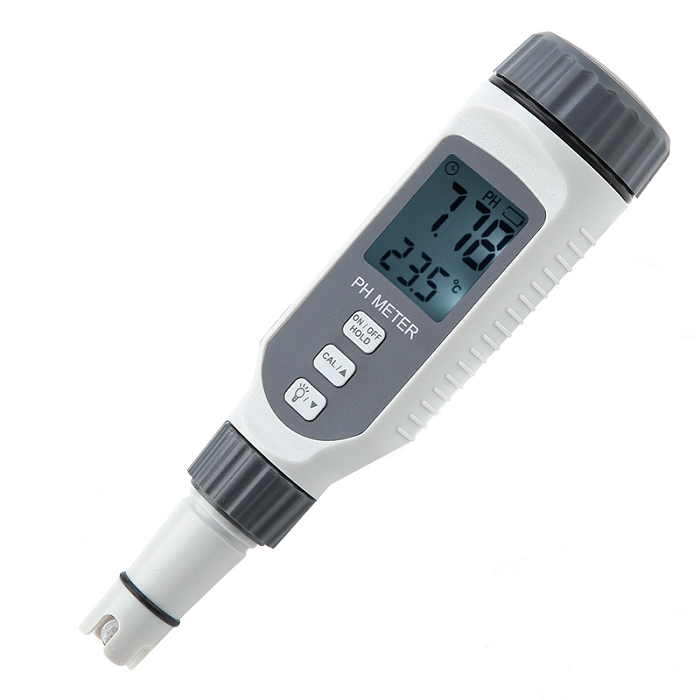
Summary of the reasons for the digital instability of the pH meter:
① Check whether the electrode is damaged;
②It should be that the electrode has been used for too long, first calibrate to see if it is effective;
③ You can try soaking the probe with 2.5mmoL/L KCL solution;
④ Clean the glass ball, is it a long time, some organic matter is attached to it, resulting in insensitive reaction;
⑤There is a chemical level CO2+H2O→H++HCO3- in water, and the pH will always rise because the balance moves to the positive reaction direction due to the weak alkaline of ordinary pure water or surface water;
⑥Add a neutral salt (such as KCl) to the water sample to be tested as an ionic strength regulator to change the total ionic strength in the solution, increase the conductivity, and make the measurement fast and stable. The national standard GB/T6P04.3-93 of this method stipulates: "In order to reduce the influence of liquid junction potential and quickly achieve stability when measuring water samples, add a drop of neutral 0.1moL/L KCl solution to every 50mL water sample." Although this The method changes the ionic strength in the water sample, which causes the change of its pH value to a certain extent, but the experiment proves that this change only changes about 0.01pH in value, which is completely acceptable. However, when using this method, it must be noted that the added KCL solution should not contain any alkaline or acidic impurities. Therefore, the KCl reagent should be of high purity, and the water quality of the solution should also be high-purity neutral water.
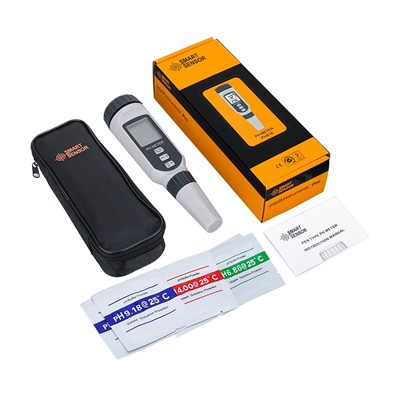
The only reliable and easiest way is to test with pH standard buffer solution. Take three pH standard buffer solutions: pH6.86, pH4.00, pH9.18 (preferably freshly prepared and at the same temperature), use pH6.86 for positioning calibration, pH4.00 for slope calibration, and then test pH9. 18. Check whether the pH meter is accurate, and see whether it is qualified or not. If the accuracy is unqualified, you can further judge whether there is a problem with the pH meter or the pH electrode.