Technical application of programmable DC regulated power supply
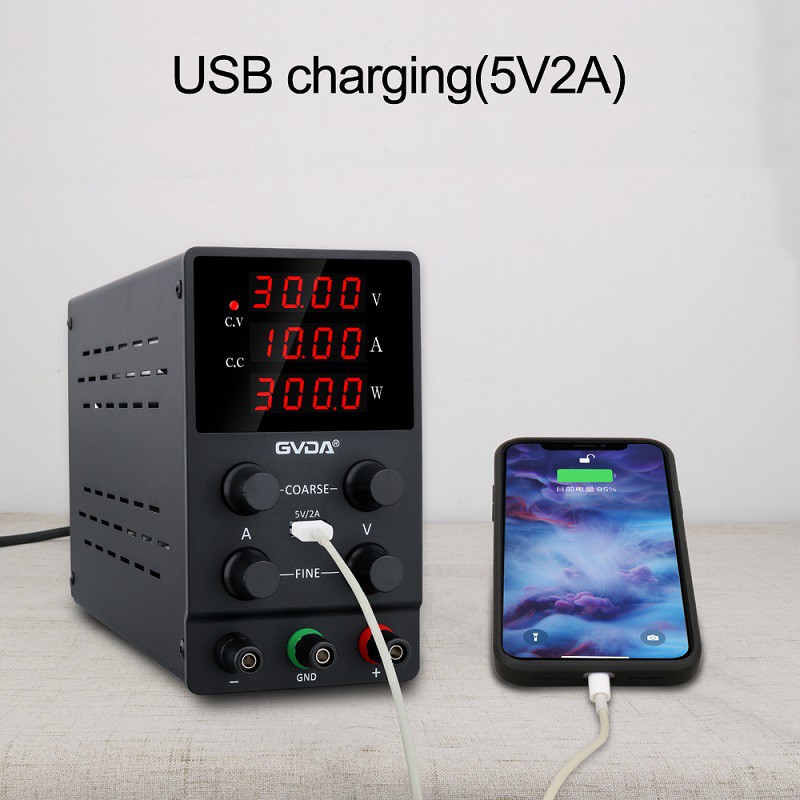
High efficiency, a broad operating temperature range, strong anti-interference capabilities, strong grid adaptation, quick dynamic response, high stability, low noise ripple, and a robust protective function are some of the features of programmable DC stable power supplies. Many different fields make use of the benefits of constantly adjustable voltage and current (rated value of 0) and full protective functions (short circuit, overcurrent, overheating, and overvoltage).
The advanced direct digital frequency synthesizer waveform generating technology, which has high frequency stability, good continuity, and high measurement precision, is used by the programmable DC stable power supply. Testing current sine half waves and other comparable waveforms with DC components is appropriate. To further increase module efficiency and lower harmonics, the programmable DC stable power supply uses full-bridge phase-shifted pulse width modulation soft switching control technology. The power module has a balanced 380VAC three-phase three-wire input that does not require phase sequence and does not lose neutral current. Advanced peak suppression technology and an electromagnetic interference filter circuit are used in the AC input terminal.
Through the full-bridge rectifier circuit, the programmable DC stable power supply converts the three-phase alternating current to direct current. The DC/DC high-frequency converter circuit inverts the received direct current into a stable and controllable direct current output after passive power factor adjustment, ensuring that the output voltage and current remain stable under all permitted conditions. In addition to performing a number of fundamental tasks on a single machine, the programmable DC stable power supply can also operate in parallel with good parallel current sharing results.
Using the bus sampling master-slave current sharing control method, the programmable DC stable power supply can realize four remote functions: "telemetry, remote signaling, remote control, and remote adjustment." It also has comprehensive protection functions to guarantee the safety and stability of the system under independent operation of modules or module groups and microcomputer monitoring. When operating in parallel, the main module has the ability to analyze external parameters like current and voltage collected by the shunt, automatically pick from the group of programmable DC regulated power supply modules, and centrally manage the output voltage and current of each module.
Two categories exist for the technical indicators of programmable DC regulated power supplies: the first is quality indicators, which represent the intrinsic features of the DC regulated power supply, such as input voltage, output voltage, output current, and output voltage adjustment range. The benefits and drawbacks of programmable DC stable power supplies are reflected in the indicators. These include power supply voltage fluctuations and stability when the equivalent internal resistance current varies, which can have an impact on the front stage and create a positive feedback path that causes self-oscillation and improper operation.
noise in the power supply's effect. For instance, power supply noise significantly affects communication quality, and communication noise interference during conversations makes it difficult to distinguish between long-distance and short-distance calls. For instance, the audio-visual impression is immediately impacted by the amplifier's hum, the TV's uneven picture lines, and black horizontal channels. overvoltage's impact on the output. For instance, an integrated circuit may sustain significant damage if the output voltage of a programmable DC regulated power supply is 30% higher than the integrated circuit's rated voltage.