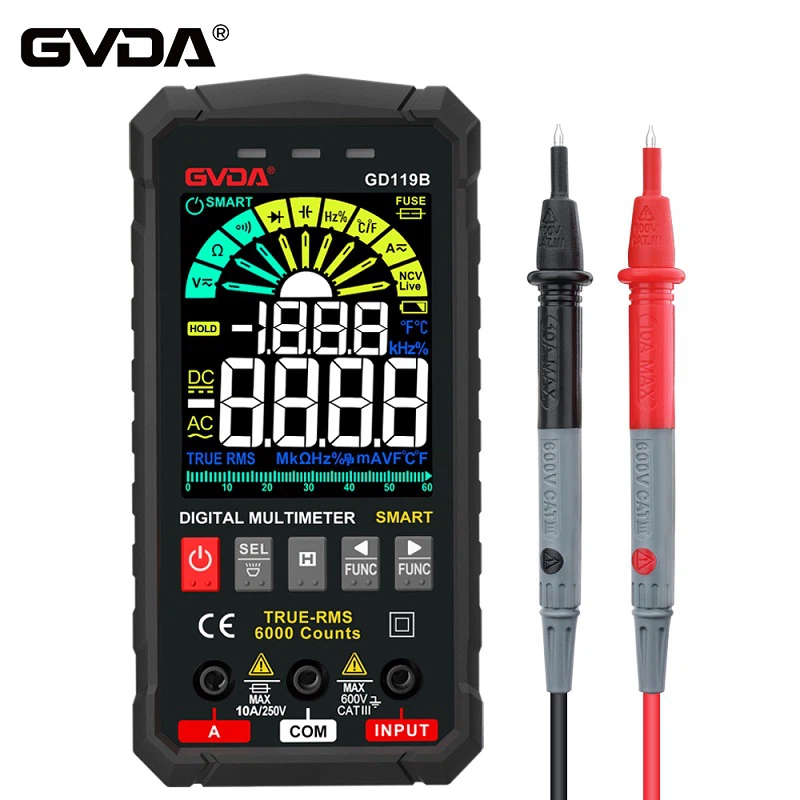
Testing if a Ground Wire Is Effective with a Multimeter
A multimeter is a commonly used tool for electrical engineers and electricians to measure various electrical parameters such as voltage, current, and resistance. When checking whether the ground wire is effective, a multimeter is mainly used to measure resistance to determine whether the ground wire is well grounded, that is, to check whether the resistance between the ground wire and the real grounding body (such as the earth, building grounding network, etc.) is low enough to ensure that the current can quickly flow through the ground wire to the earth in case of electrical faults, thereby protecting the safety of personnel and equipment.
The following are the basic steps for using a multimeter to check if the ground wire is valid:
Turn off power: Before conducting any electrical measurements, ensure that the relevant power supply has been turned off to prevent the risk of electric shock.
Select measurement mode: Set the multimeter to the resistance measurement mode (Ω mode) and select the appropriate range. If possible, choose automatic range to simplify the measurement process.
Connect the test leads: Connect the red and black probes of the multimeter to both ends of the ground wire. If the ground wire is an exposed conductor, it can be directly clamped onto the conductor; If the ground wire is buried in a wall or floor, special clamps or probes may be required for testing.
Read the measurement result: Observe the reading on the multimeter display screen. In an ideal situation, the resistance between the ground wire and the grounding body should be very small, usually less than 4 ohms (this value may vary depending on different countries and standards). If the resistance value is high or the multimeter displays infinity (OL), it may indicate poor ground connection or no grounding at all.