The application of gas detector in different environments
Recent incidents involving dangerous gas have drawn a lot of attention from all parties. In particular, the 12.4 major accident in the Chongqing Yongchuan Coal Mine has once again brought "dangerous gas detection" into the public's consciousness. Strict regulations regarding the workplace detection of hazardous gases have always been in place in my nation. But there are still many environmental risks that are out of control because of the various priorities of businesses and the state of the economy.
The corporation can provide workers with multi-functional gas detectors that can be carried with them for personal gas detection or deployed in locations with gas hazards for regional detection in order to secure the personal safety of manufacturing workers while saving money. The gas detector's built-in sound and light alarm automatically sounds to remind users to take the necessary precautions for their coworkers' safety.
The principle and classification of gas detectors
A gas detector is a device that can identify the type and quantity of gases present in the environment. Gas detectors come in a wide variety of brands and classifications at the moment. The business should compare more options and select the best gas when selecting a gas detector. Gas detectors can be broadly categorized as either fixed or portable gas detectors. Sensor technology is at the heart of gas detectors. The classification of gas detectors varies depending on the various gas sensor detection technologies.
Gas sensors can be divided into four categories in principle:
(1) There are two types of electrical gas sensors: resistive and non-resistive. These sensors rely on the electrical properties of the material to change in response to changes in gas concentration. Non-resistive gas sensors typically use the current or voltage of the material to change with the gas content. Examples of resistive gas sensors include contact combustion, thermal conductivity, and semiconductor gas sensors (also known as metal oxide semiconductor gas sensors and organic semiconductor gas sensors), among others.
(2) Optical gas sensors are further broken down into the following categories: chemiluminescence type, test paper photoelectricity type, infrared absorption type, visible light absorption photometry type, optical interference type, and photoionization type Wait. These sensors use the optical properties of gases to detect gas components and concentrations.
(3) Electrochemical gas sensors make use of those characteristics.
(4) Polymer gas-sensing materials are used to make gas sensors, which are further broken down into types like polymer resistive, polymer dielectric, concentration battery, surface acoustic wave, quartz oscillator, etc.
Commonly used gas detectors
Due to its ability to simultaneously detect different gases, multifunctional gas detectors are a common type of gas detector.
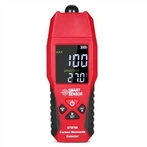
The multifunctional gas detector, as its name suggests, is a device used to find the presence of one or more gases in the surrounding area. Gas is detected by the detector using electrochemical and combustion gas sensors in addition to natural diffusion. Both its sensitivity and performance are outstanding. The multi-function gas detector has repeatability, and it can store up to 130,000 pieces of detection data. It can detect four gases: oxygen, combustible gas, carbon monoxide, and hydrogen sulfide. You can always view historical data using software.
When utilizing a gas detector, regardless of whether it has many functions, the following things need to be taken into consideration:
1. When using, avoid abrupt impact and extrusion;
2. Charging should only be carried out in a secure location; doing so in a volatile or explosive environment is strongly prohibited;
3. It has to be updated by institutions or specialists. The models, specifications, and parameters of the original circuit components shall not be altered during maintenance;
4. When charging, kindly utilize the unique charger supplied by the manufacturer;
5. Avoid using your hands to squeeze the screen;
6. When the gas concentration is too high, the instrument's electrochemical sensor will be negatively impacted or damaged;
7. The buzzer will automatically shut off and make the sound "beep, beep" when the battery power is too low; thus, please charge it before using it.
The gas detector offers superb reproducibility and sensitivity. It can be applied to a variety of fields, including agriculture, the chemical industry, environmental protection, metallurgy, refining, gas transmission, and distribution. real-time detection of gases like oxygen, hydrogen sulfide, and carbon monoxide in the environment. Safety is not a trivial issue in a dangerous environment, but it must be avoided before it occurs. To prevent any harmful gas leaks on site and achieve safe production, we must put in a lot of effort.