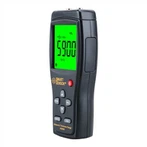
The calibration method of PH meter adopts two-point calibration method.
Although there are many kinds of pH meters, their calibration methods all adopt two-point calibration method, that is, two standard buffers are selected: one is quasi-buffered pH7 standard solution, and the first is buffered pH9 standard solution or pH4 standard solution. Firstly, locate the ammeter with standard buffer of pH7, and then select the second standard buffer according to the acidity and alkalinity of the solution to be tested. If the solution to be tested is acidic, select a standard buffer of pH4; If the solution to be tested is alkaline, choose standard buffer solution of pH9. If the pH meter is manually adjusted, it should be repeatedly operated between the two standard buffers for several times until the pH meter can accurately display the pH values of the two standard buffers without adjusting its zero point and positioning (slope) knob. The calibration process ends. After that, the zero point and positioning knob should not be moved during the measurement. If it is an intelligent pH meter, it does not need to be adjusted repeatedly, because the pH values of several standard buffers have been stored in it to choose from, and it can be automatically identified and calibrated. However, attention should be paid to the selection of standard buffer and the accuracy of its preparation. Generally, there are three to five standard buffers in the intelligent 0.01 pH meter.
Secondly, special attention should be paid to the temperature of the solution to be measured before calibration. So as to correctly select the standard buffer solution, and adjust the temperature compensation knob on the ammeter panel to make it consistent with the temperature of the solution to be measured. At different temperatures, the pH value of standard buffer solution is different. As shown in Table 2:

After the calibration, the pH meter which is frequently used generally does not need to be calibrated again within 48 hours. In case of any of the following situations, the instrument needs to be recalibrated:
(1) When there is a big difference between the solution temperature and the calibration temperature.
⑵ The electrode is exposed to air for too long, such as more than half an hour.
(3) positioning or slope regulator is misoperation;
(4) After measuring the solution of peracid (pH < 2) or overbased (pH > 12);
5] After changing the electrode;
[6] When the pH value of the measured solution is not in the middle of the selected solution at the time of two-point calibration, and it is far away from 7 pH..
When calibrating the PH meter, the standard buffer solution of PH7 should be used to locate the PH meter, and then the PH value of the standard buffer solution should be determined according to the acidity and alkalinity of the solution to be measured by the PH meter. If the solution to be tested is acidic, the standard buffer solution of PH4 should be selected, and if the solution to be tested is alkaline, the standard buffer solution of PH9 should be selected.