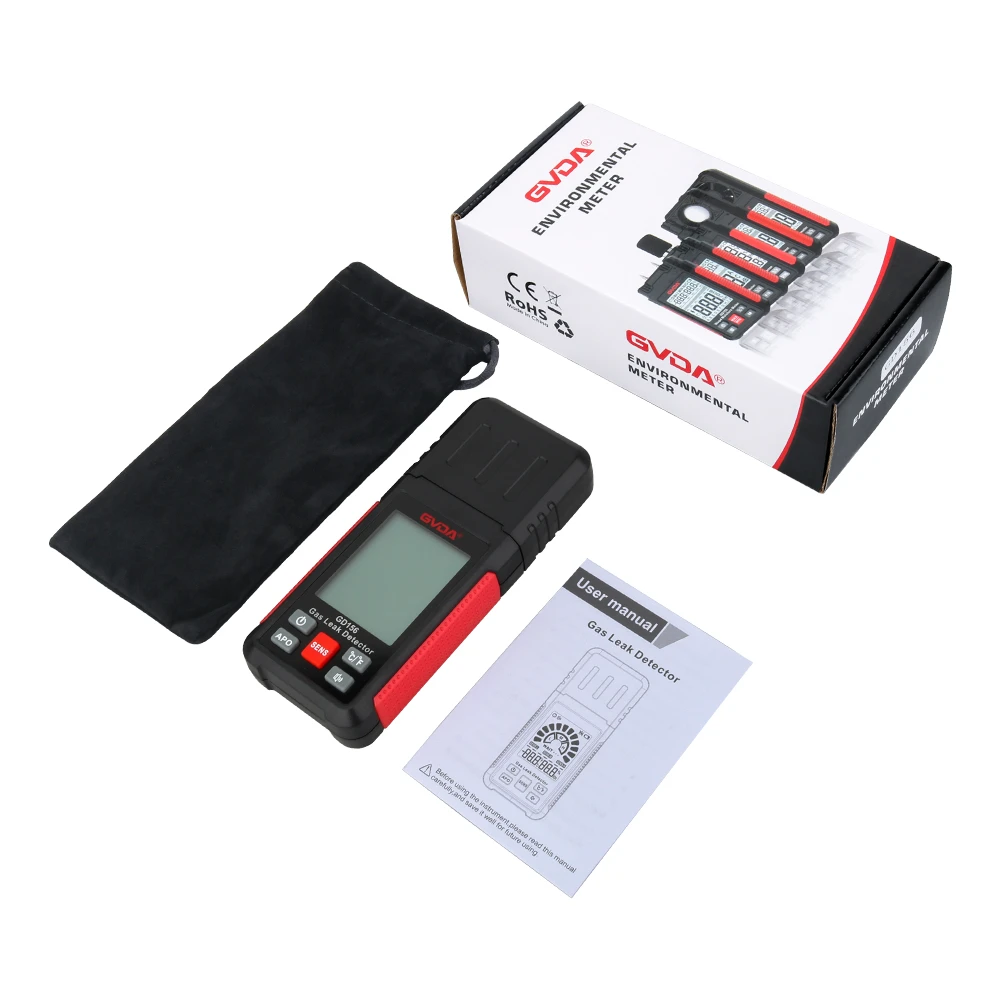
The combustible gas detector consists of two parts: detection and detection
There are many flammable gases in our life, such as hydrogen, carbon monoxide, methane, ethane, propane, butane, ethylene, propylene, butene, acetylene, propyne, butyne, hydrogen sulfide, phosphine, etc. ...and many flammable gases themselves are toxic and harmful gases, such as CO, H2S, Cl2 and so on.
Combustible gases occur in many industries. Once these flammable gases exceed a certain concentration, large-scale accidents such as explosions or fires may occur. Therefore, their detection is very important.
The flammable gas detector is a device installed and used in industrial and civil buildings that responds to single or multiple flammable gases. It is divided into two parts: detection and detection. The detection part is divided into two categories according to the sensor type: catalytic combustion type and semiconductor type.
1. Catalytic combustion type combustible gas sensor uses the resistance change of refractory metal platinum wire after heating to measure the concentration of combustible gas.
When the flammable gas enters the detector, it causes an oxidation reaction (flameless combustion) on the surface of the platinum wire, and the heat generated increases the temperature of the platinum wire. After the temperature changes, the resistance value of the platinum wire also changes, and the detector The concentration value of the test gas is determined by collecting the change rate of the resistance value of the platinum wire.
2. The semiconductor type combustible gas sensor uses the change of the surface resistance of the semiconductor to measure the concentration of combustible gas.
When the combustible gas contacts the surface of the semiconductor and is adsorbed, the adsorbed molecules freely diffuse on the surface of the object, so that the resistance of the semiconductor changes, and the detector determines the concentration of the combustible gas according to the change of the resistance value of the semiconductor.
The principle of the detection part of the combustible gas detector is that the sensor of the instrument uses a detection element, a fixed resistor and a zero-adjusting potentiometer to form a detection bridge. The bridge circuit uses platinum wire as the carrier catalytic element. After electrification, the temperature of the platinum wire rises to the working temperature, and the air reaches the surface of the element by means of natural diffusion or suction pump.
When there is no flammable gas in the air, the output of the bridge circuit is zero. When the air contains flammable gas and diffuses to the detection element, flameless combustion occurs due to the catalytic action, which increases the temperature of the detection element and increases the resistance of the platinum wire. , the bridge circuit is out of balance, so there is a voltage signal output. The magnitude of this voltage is proportional to the concentration of the combustible gas. The signal is amplified and converted by analog to digital, and the concentration value of the combustible gas is displayed through the display panel.