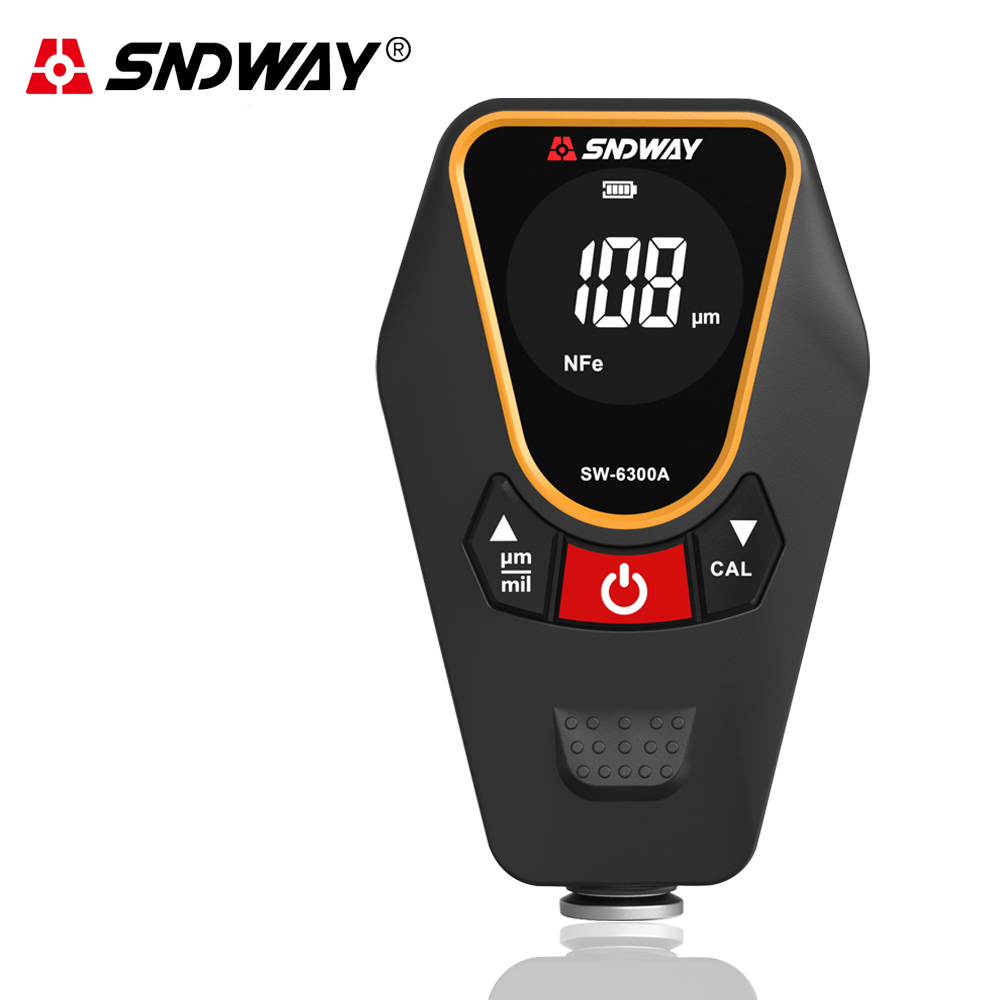
The difference between F, N, and FN in the Coating Thickness Gauge is as follows
F stands for ferrous ferromagnetic substrate. The F-type coating thickness gauge uses the principle of electromagnetic induction to measure non-ferromagnetic coatings and coatings on ferromagnetic metal substrates such as steel and iron, such as paint, powder, plastic, and rubber. , synthetic materials, phosphate layer, chromium, zinc, lead, aluminum, tin, cadmium, porcelain, enamel, oxide layer, etc.
N stands for Non-ferrous non-ferrous substrate. The N-type coating thickness gauge adopts the principle of eddy current; it uses eddy current sensors to measure enamel, rubber, paint, plastic layers, etc. on copper, aluminum, zinc, tin and other substrates.
The FN type coating thickness gauge adopts both the electromagnetic induction principle and the eddy current principle. It is a two-in-one coating thickness gauge of F type and N type.
Function: Measure the thickness of non-magnetic coatings on magnetically permeable objects and non-conductive coatings on non-magnetic metal substrates
Application: Use magnetic sensors to measure non-ferromagnetic coatings and coatings on steel, iron and other ferromagnetic metal substrates, such as: paint, powder, plastic, rubber, synthetic materials, phosphating layers, chromium, zinc, lead, aluminum, Tin, cadmium, porcelain, enamel, oxide layer, etc. Use eddy current sensors to measure enamel, rubber, paint, plastic layers, etc. on copper, aluminum, zinc, tin and other substrates. It is widely used in manufacturing, metal processing industry, chemical industry, commodity inspection and other testing fields.
5 things to note when using coating thickness gauge
1. Do not use inferior batteries to avoid leakage and corrosion of the host motherboard. Once leakage is found, please send it for repair immediately. If it is too late, the host will be scrapped directly. If not used for a long time, please remove the battery.
2. When plugging or unplugging the probe, you must first turn off the power of the host before plugging or unplugging. Otherwise, it is easy to cause the integrated block inside the probe to burn.
3. When measuring, the probe should be placed stably, and the force should not be too strong, and the probe should not be touched very quickly; when testing, the probe should not be scratched back and forth on the surface to be measured, as this may easily cause damage to the probe.
4. It is very important not to measure when the coating is not dry. Many customers often measure when the coating is not dry. After the probe is stained with paint, use banana water or xylene to clean it off before use. . If you do this, the most serious probe will be scrapped directly. Even if it is not scrapped, the sensitivity of the probe will be reduced, and the service life of the probe will also be reduced.
5. When choosing a coating thickness gauge, try to choose a split-type instrument. Since the probe is a wearing part and has a certain service life, it is also a consumable. The probe of the all-in-one machine cannot be repaired, and the price of replacing the probe is very high, close to the price of a new machine. The split machine only needs to replace the probe.