The lives of people are directly tied to illumination. Having enough light can help people avoid accidents. Contrarily, too little light might make people feel tired more than the eyes themselves. As a result, one of the major factors contributing to accidents and weariness is uncomfortable or insufficient illumination. According to data currently available, inadequate lighting is either a direct or indirect cause of around 30% of all occupational work accidents. There are highly rigorous lighting regulations for stadiums (and halls). The impact of the game will be impacted by excessively bright or dim lighting.
What then are the hygiene standards for residential interior spaces? A crucial indicator in hygiene is illumination. The sense that can result when light reaches the eye is known as vision, and light is the electromagnetic energy that can make the human eye seem brilliant. The visible light that humans perceive has a wavelength between 380 and 760 nm (nanometers).
There are two types of lighting: natural lighting and artificial lighting. Natural lighting, also known as daylighting coefficient and natural illuminance, is the term used to describe the natural illumination of interior and regional spaces, including scattered light from direct sunshine and reflected light from nearby objects. The ratio of the effective area of the daylighting opening to the indoor floor area is known as the daylighting coefficient. The living area ratio (the ratio of window area to indoor floor area) for a typical home is between 1/8 and 1/10, and the daylighting coefficient ranges from 1/5 to 1/15. The amount of illuminance provided by natural light is measured using the natural illuminance coefficient.It illustrates the link between exposure to indoor and outdoor light. Additionally, it depicts the mild local climate (the sum of natural light energy and solar illuminance indicators for the climate).
My nation has established hygiene requirements for indoor (including public place) illumination to guarantee that people live in adequate light. For instance, the hygiene standard for lighting in public shopping malls (stores) is 100 Lx; the standard for lighting in libraries, museums, art galleries, and exhibition halls is 100 Lx; the standard for lighting in public restrooms (showers, pools, tub baths) is 50 Lx; and the standard for bathrooms (saunas) is 30 Lx.In factories, the illuminance requirements for visual work on production lines are 1000Lx; 200Lx for hotels and public rooms; 200Lx for reception points and cashiers; 1500-2000Lx for shop windows; 150-200Lx for hospital wards and 500Lx for emergency treatment areas; 400-700Lx for schools and childcare centers; and 150-200Lx for hospital wards and 500Lx for hospital emergency rooms. and so forth, for 300Lx.
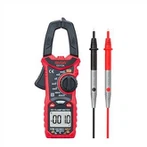
Illuminance is typically measured with an illuminometer for this measurement method. The illuminometer can accurately measure the intensity of various wavelengths (such as the measurement of visible light and ultraviolet wavelengths).