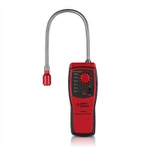
The latest and most complete electrical formula: Test pen and lamp inspection
1. The correct grip when using the low-voltage test pen. The low-voltage test pen is commonly used to master the two grips for testing. Pen-type test pen, the palm touches the metal clip. Thumb index finger and middle finger, pinch the middle of the pencil holder. Rotary chisel-type test pen, the index finger presses the metal cap on the tail. Thumb, middle finger, ring finger, pinch the middle of the plastic rod. The neon tube small window is backlit, and you can observe it towards yourself.
2. What you should know when using a low-voltage test pen There are eight items you should know when using a low-voltage test pen. Take a ballpoint pen to test the electric pen, and pinch the handle with a metal hoop. Assembled in a fine test pen, the resistor must be behind the neon tube. Periodically check the resistance value, which must be greater than one megohm. Rotary chisel type electric test pen, the chisel rod is covered with an insulating tube. There is electricity forecast before use to check whether the performance is good. The test operation should be accurate, and be careful not to touch the double line with the pen tip. The electrical inspection is performed on the insulating mat, and the human body must be grounded. Tested under bright light, the neon tube glow is not clear.
3. Test and judge whether any two wires in the AC circuit are in phase or out of phase. Measure and judge whether the two wires are the same or different. Hold an electric pen in each hand, and the feet are insulated from the ground. Each of the two pens touches a wire and looks at one with both eyes. The pen, the same is not the same as the bright is different.
4. The electric test pen distinguishes between alternating current and direct current. The electric pen measures alternating and direct current, and the alternating current is bright and the direct current is dark. The AC neon tube is bright throughout, and the DC neon tube is bright on one side.
5. The test pen distinguishes between the positive and negative electrodes of the DC current. Measure the positive and negative electrodes of the DC current. Look carefully at the neon tube of the electric pen. The front bright is negative, the rear bright is positive.
6. Test and judge the positive and negative poles of the direct current system and the direct current system of the substation, and the electric pen does not light up when touched. If the light is close to the tip of the pen, the positive pole has a ground fault. If the light is close to the hand-held end, the ground fault is at the negative pole.
7. Judging the single-phase grounding fault of the 380/220V three-phase three-wire power supply line, the star-connected three-phase wire, the electric pen touches two bright, the remaining one is weak, and the phase wire is softly grounded. If there is almost no light, metal ground fault.
8. Determine the neutral point of the three-phase electric furnace for star-connected three-phase resistance furnace phase failure, and the load balance is not charged. When the electric pen touches the neon tube, it lights up, and the fault is determined to be out of phase.
9. Judging that the neutral line of the lamp line is open and the lighting circuit switch is closed, and the lamp does not light up. The neutral line of the phase line is bright, and the neutral line of the power supply is disconnected.
10. Detect the quality and polarity of the high-voltage silicon stack; Hold either end of the silicon stack and touch the metal clip of the stylus. If the neon tube inside the pen is bright, hold the negative end of the silicon stack in your hand. The neon tube inside the pen does not shine, and the silicon stack is held at the positive extreme. Swap the silicon stack end by hand, and observe the positive and negative measurements carefully. Both neon tubes were lit, and the high-voltage silicon stack was short-circuited. The neon tube did not light up twice, and the high-voltage silicon stack was open.
11. Correctly use the digital display induction test pen and the digital display induction test pen, and correctly grasp the test method. The index finger presses the top of the pen tail, the thumb, middle finger and ring finger, pinch the middle and upper part of the plastic rod, and the thumb also presses the electrode. The numerical display is backlit, so you can look towards yourself. Press the thumb directly to test and touch the bare conductor under test. Press the induction breakpoint test to touch the sheathed wire. Distinguish the neutral line of the phase line and find the broken core point of the phase line.
12. Inspection lamp verification lighting installation project After the lighting project is completed, the inspection lamp verification is commonly used. Disconnect all light switches and pull out the phase line melt tube. The upper and lower pile heads of the fuse are connected across the high-power inspection lamp. Turn on the main power switch and check the lamp in the series circuit. When the line is normal, the light is not on, and the light must be short-circuited. Troubleshoot and re-calibrate until there is no short circuit in the line. Check each lamp of the branch circuit and close the lamp switch respectively. The branch circuit short circuit inspection light is on, and the disconnection fault light is not on. The inspection light emits dim light, and the inspection light is on, it is normal. Turn off the lights to check the second one, and do the same with all the lights in the law school.
13. Inspection lamp calibration single-phase socket single-phase two hundred and two sockets, often divided into two holes and three holes. The left, middle and right of the two holes are the phase, and the left, middle and right phase are the ground. Single-phase 220 sockets, cross-connected inspection lights for verification. The left, middle and right are connected to the inspection light, if the light is normal, it is correct. The open circuit fault light is off, and the bad contact light flashes. The three-hole socket is tested, and the upper ground light of the right phase is also on, and the left middle and upper ground light is not on, otherwise the wiring is incorrect.
14. Check the single-phase electric energy meter with the 100-watt inspection lamp. Check the single-phase electric energy meter, and the 100-watt light bulb will go around. The constant removes 36,000, the theoretical unit of time is seconds. The measured theoretical time difference, the error of 2% is good. Real more reason, less words, less words, less reason, more words and more words.
15. Check the three-phase four-wire electric energy meter by the light bulb nuclear phase method, check the wiring of the three-phase four-wire electric energy meter, and check the wiring by the nuclear phase method. Two inspection lamps are connected in series, and the two lead wires are across the contacts: the voltage terminal of a certain component, and the current power line of the phase. If the light is on, it means that the wiring is wrong, and the voltage and current are out of phase. If the wiring is correct, the light does not light up, and the voltage and current are in the same phase.
16. The inspection lamp detects the phase line and neutral line of the single-phase electric energy meter. The domestic single-phase electric energy meter is reversed, and the wiring is one in and one out. Check the two outgoing wires of the lamp, one wire end is grounded first, the other end touches the meter terminal, and the incoming and outgoing wires on the right side. If the wiring is correct, the light will not light, and the neutral line will be reversed when the light appears.
17. The inspection lamp detects the quality of the fluorescent tube. The quality of the fluorescent tube is determined by the inspection lamp. The end of the lamp tube is connected to the inspection lamp, and the 222 power supply is connected across it. The lamp is on and the tube glows again, and the end of the tube under test is still good. The tube has no glow tube end, and the filament electrons are exhausted. Repeated touch and so on does not light, the tube end filament has been broken.
18. Check the lamp to detect the quality of the ballast of the fluorescent lamp. If the fluorescent lamp is not normal, check the quality of the ballast. Ballast string inspection lights, jumper two hundred and two power supply. The lights are dim reddish-orange and there is no fault in the ballast. Lights near normal, there is a short circuit, no disconnection or desoldering.
19. The inspection lamp detects and judges that the winding of the power transformer has an inter-turn short circuit, and it is difficult to judge the inter-turn short circuit. The secondary winding is disconnected from the load, and the primary winding is connected to the lamp. Connect the two hundred and two power supply across the turn, and the inter-turn short circuit light will be brighter. The filament is reddish and does not shine, and the winding is normal without short-circuit.
20. The inspection lamp detects the insulation condition of the low-voltage motor. The insulation of the low-voltage motor is roughly inspected by the inspection lamp. Control the motor contactor, and the inspection lamp touches the upper and lower sides. The bulbs don't light up at all, and the motor is well insulated. The filament is slightly red and slightly damaged, and the brightness is normal and seriously bad.
21. The inspection lamp detects the phase-off operation of the low-voltage three-phase motor power supply. The phase-off operation of the motor is performed, and the inspection lamp is detected phase by phase. Turn on the power contactor, or the upper and lower sides of the fuse. The test light does not light up across the touch light, and the phase of the power supply under test is normal. The filament glows red and dim light, and the contact singeing fuse is broken.
22. Inspection lamp monitoring closed three-phase electric heater resistance wire blown fault Closed three-phase electric heater, resistance wire blown monitoring. The neutral point of the star connection method, and the ground wire is used to check the lamp directly. The three-phase resistance wire is normal, and the inspection light is not bright at all. The filament glowed red and dimly bright, and the first-phase resistance wire was blown. The brightness of the bulb is normal, and the two-phase resistance wire is blown.
23. The inspection lamp is used to distinguish static electricity and leakage equipment shells. The neon tube is bright and has voltage. Between the live parts and the earth, the test lamp is connected to judge. If the inspection light is off, it is static electricity, and if the light does not go out, it is leakage.