The main principles of gas detectors
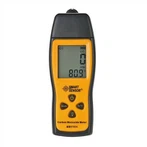
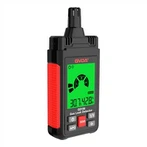
Gas detector is an instrument tool for detecting gas leakage concentration, mainly referring to handheld/fixed gas detectors. Mainly using gas sensors to detect the types of gases present in the environment.
0-100% LEL and 0-n PPM in gas detectors
"LEL" refers to the lower explosive limit. The minimum concentration at which a combustible gas can explode when exposed to a flame in the air is called the lower explosive limit, also known as% LEL. English: Lower Explosion Limited. The maximum concentration at which a combustible gas can explode when exposed to a flame in the air is called the upper explosive limit, also known as% UEL. English: Upper Explosion Limited. So what is the lower explosive limit? If the concentration of a combustible gas is too low or too high, it is not dangerous. It only burns or explodes when it mixes with air to form a mixture or, more precisely, when it meets oxygen to form a certain proportion of mixture. Combustion is an intense oxidation reaction accompanied by luminescence and heat, and it must have three elements: a. Combustible () "Gas); b, combustion aids (oxygen); c, ignition source (temperature). The combustion of combustible gas can be divided into two types. One type is diffusion combustion, which means that volatile or leaked combustible gas is mixed and burned when encountering an ignition source. Another type of combustion is the ignition and combustion of combustible gas mixed with air. This type of combustion reaction is intense and fast, usually producing huge pressure and sound, also known as explosion. There is no strict distinction between combustion and explosion. Authoritative departments and experts have conducted combustion and explosion analysis on the currently discovered combustible gases, and established the explosive limit for combustible gases, which is divided into upper explosive limit (UEL) and lower explosive limit (LEL). Below the lower explosive limit, the combustible gas content in the mixture is insufficient to cause combustion or explosion, and above the upper limit, the oxygen content in the mixture is insufficient to cause combustion or explosion. In addition, the combustion and explosion of combustible gas are also related to factors such as gas pressure, temperature, ignition energy, etc. The explosion limit is generally expressed as a volume percentage concentration. The explosive limit is a general term for the lower and upper explosive limits, and the concentration of combustible gases in the air will only explode between the lower and upper explosive limits. No explosion will occur below or above the lower explosive limit. Therefore, when conducting explosion measurements, the alarm concentration is generally set below 25% LEL of the lower explosive limit. The measurement range of various combustible gas detectors is 0-100% LEL. Fixed combustible gas detectors usually have two alarm points (depending on the model of the alarm host): 10% LEL is a first level alarm, and 25% LEL is a second level alarm. Portable combustible gas detectors usually have an alarm point: 25% LEL is the alarm point. For example, the lower explosive limit of methane is 5% by volume ratio. That is to say, divide this 5% by volume ratio into 100 equal parts, so that the 5% by volume ratio corresponds to 100% LEL. That is to say, when the detector value reaches the 10% LEL alarm point, it is equivalent to a methane content of 0.5% by volume ratio at this time. When the value of the detector reaches the 25% LEL alarm point, it is equivalent to a methane content of 1.25% by volume at this time. So, you don't have to worry about whether there is any danger at any time after the alarm. At this point, it is a reminder to take corresponding measures immediately, such as turning on the exhaust fan or cutting off some valves. There is still a long way to go from the lower limit of the explosion that may truly cause danger, so as to have the effect of an alarm prompt.