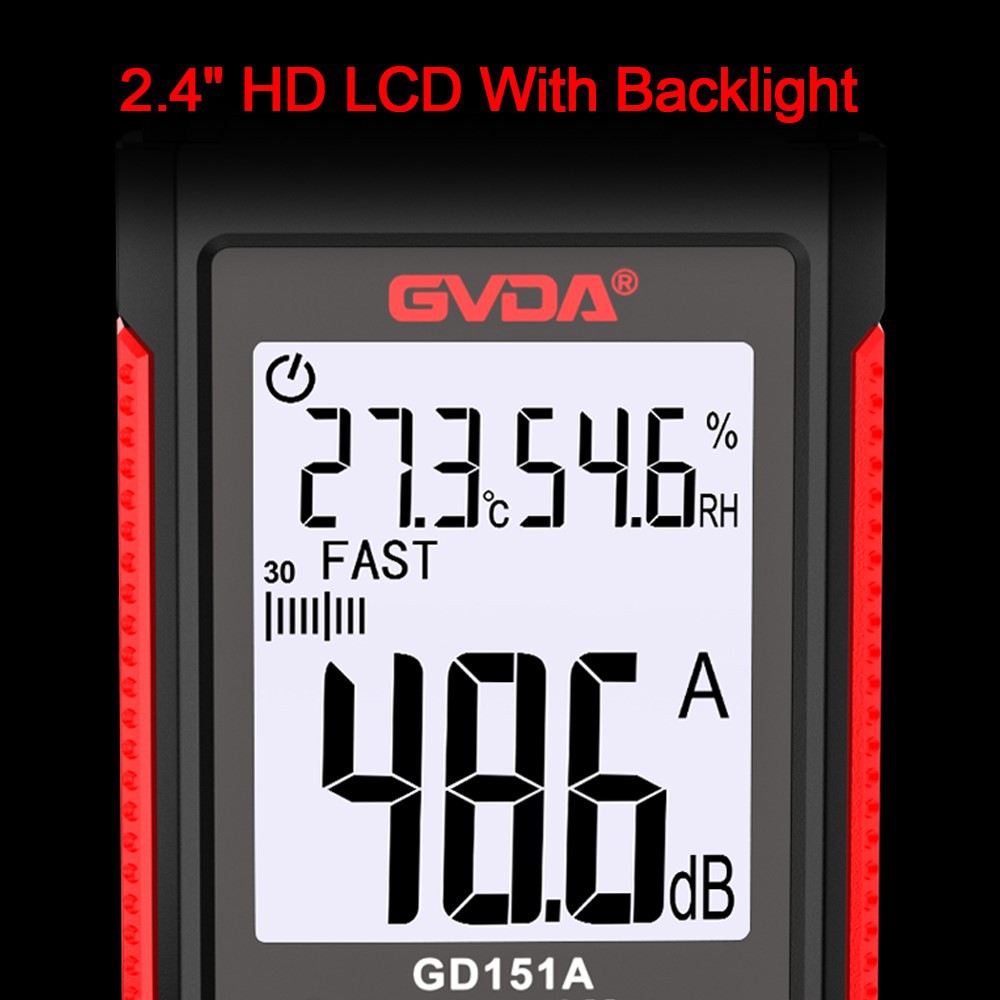
The meaning of the weighting in the noise level meter (sound level meter)
The Signal Noise Ratio (SNR), also known as the Signal to Noise Ratio or SNR, is a binary system
It refers to the ratio of useful signal power to useless noise power. Usually measured. Because power is a function of current and voltage, signal-to-noise ratio can also be calculated using voltage values, that is, the ratio of signal level to noise level, but the calculation formula is slightly different. Calculate signal-to-noise ratio by power ratio: S/N=10 log Calculate signal-to-noise ratio by voltage: S/N=10 log. Due to the logarithmic relationship between signal-to-noise ratio and power or voltage, to improve signal-to-noise ratio, it is necessary to significantly increase the ratio of output value to noise value. For example, when the signal-to-noise ratio is 100dB, the output voltage is 10000 times the noise voltage. In electronic circuits, this is not an easy task.
After the specification sheet data in the product manual, there is often an A word, meaning A-weight, which refers to the weighting of a certain value according to certain rules. As the human ear is sensitive to mid frequency objects, if the signal-to-noise ratio of an amplifier in the mid frequency band is large enough, even if the signal-to-noise ratio is slightly lower than that in the low and high frequency bands, it is not easy for the human ear to detect. It can be seen that if the weighting method is used to measure the signal-to-noise ratio, its value will definitely be higher than if the weighting method is not used. In terms of weighted A, its value is relatively high when not weighted.
In addition, in order to simulate the different sensitivities of human auditory perception at different frequencies, a network is installed in the sound level meter that can simulate the auditory characteristics of the human ear and correct the electrical signal to approximate the auditory perception. This network is called a weighted network. The sound pressure level measured through a weighted network is no longer an objective physical quantity of sound pressure level (called linear sound pressure level), but a sound pressure level corrected for auditory perception, called weighted sound level or noise level.
There are generally three types of weighted networks: A, B, and C. A-weighted sound level simulates the frequency characteristics of low-intensity noise below 55dB for the human ear, B-weighted sound level simulates the frequency characteristics of moderate intensity noise between 55dB and 85dB, and C-weighted sound level simulates the frequency characteristics of high-intensity noise. The main difference among the three is the degree of attenuation of low-frequency components of noise, with A experiencing more attenuation, followed by B, and C experiencing less attenuation. Due to its characteristic curve being close to the auditory properties of the human ear, A-weighted sound level is currently widely used in noise measurement worldwide, while B and C are gradually being phased out.