The normal use method and common troubleshooting method of electric soldering iron
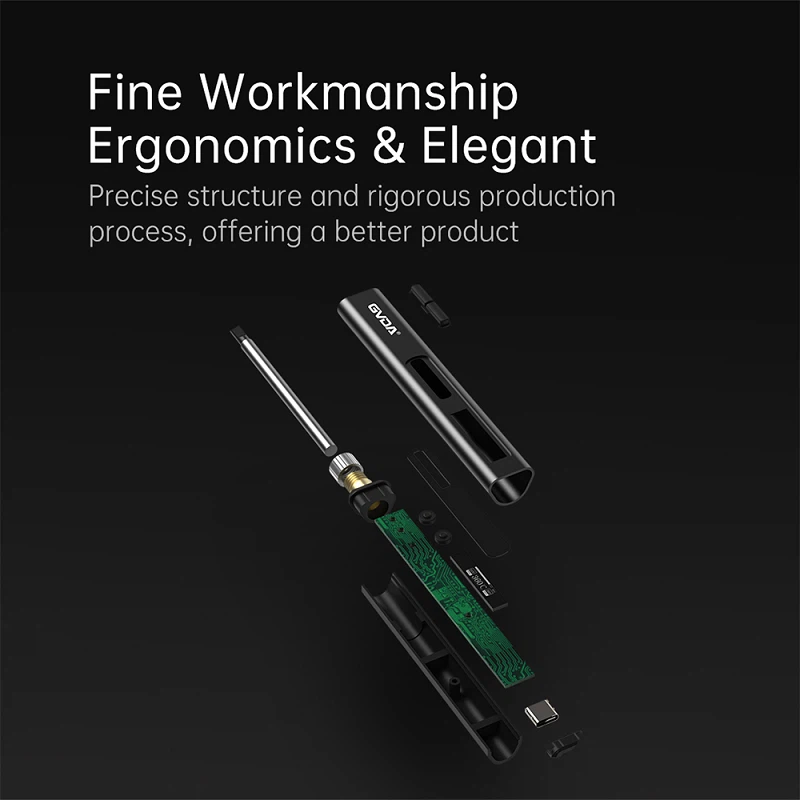
The external heating type electric soldering iron is generally composed of a soldering iron tip, a soldering iron core, a shell, a handle, a plug and other parts. The soldering iron tip is installed in the soldering iron core and is made of copper alloy material with good thermal conductivity copper as the matrix. The length of the soldering iron tip can be adjusted (the shorter the soldering iron tip, the higher the temperature of the soldering iron tip), and there are different shapes such as chisel, pointed cone, round surface, circle, pointed cone and semicircular groove to suit The need for different welding surfaces.
The internal heating electric soldering iron consists of five parts: connecting rod, handle, spring clip, soldering iron core, and soldering iron tip (also called copper head). The soldering iron core is installed inside the soldering iron head (heating is fast, and the thermal efficiency is as high as 85%~%%). The soldering iron core is made of nickel-chromium resistance wire wound on a porcelain tube. Generally, the resistance of a 20W electric soldering iron is about 2.4kΩ, and that of a 35W electric soldering iron is about 1.6kΩ. The working temperature of the commonly used internal heating electric soldering iron is listed in the table below Soldering iron power/W20254575100 Tip temperature/°C350400420440455 Generally speaking, the greater the power of the electric soldering iron, the greater the heat, and the higher the temperature of the soldering iron tip. Welding integrated circuits, printed circuit boards, and CMOS circuits generally use 20W internal heating electric soldering iron. The power of the soldering iron used is too high, it is easy to scald the components (generally, when the junction temperature of the diode and triode exceeds 200°C, it will burn out) and the printed wires will fall off the substrate; the power of the soldering iron used is too small, and the solder cannot be fully melted , The flux cannot be volatilized, the solder joints are not smooth and firm, and it is easy to produce false welding. If the welding time is too long, the device will also be burned out. Generally, each solder joint is completed within 1.5-4S.
3. Other soldering irons
1) Constant temperature electric soldering iron The iron head of the constant temperature electric soldering iron is equipped with a magnet-type temperature controller to control the power-on time and achieve the purpose of constant temperature. When the soldering temperature should not be too high and the soldering time should not be too long, a constant temperature electric soldering iron should be used, but it is expensive.
2) Tin-absorbing soldering iron Tin-absorbing soldering iron is a desoldering tool that integrates a piston-type tin absorber and an electric soldering iron. It has the characteristics of convenient use, flexibility, and wide application range. The disadvantage is that only one solder joint can be desoldered at a time.
3) Steam soldering iron is a soldering iron that burns flammable gases such as liquefied petroleum gas and methane to heat the soldering iron tip. It is suitable for occasions where the power supply is inconvenient or cannot supply AC power.