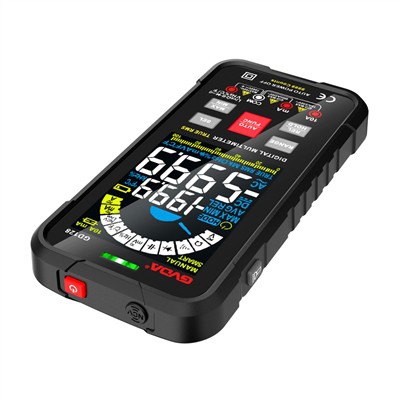
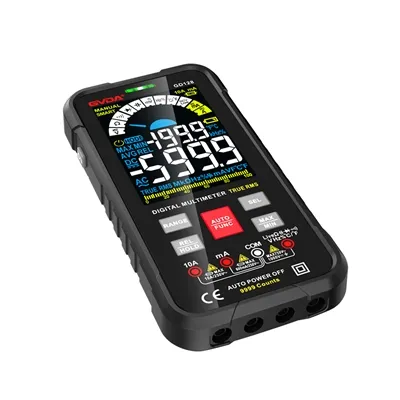
Luminometer - Calibration of Luminometers:
Calibration principle:
Let Ls irradiate the photocell vertically → E=I/r2, change r to obtain the photocurrent value under different illuminance, and convert the current scale to the illuminance scale according to the corresponding relationship between E and i.
Calibration method:
Using the light intensity standard lamp, at a working distance similar to a point light source, change the distance l between the photocell and the standard lamp, record the readings of the galvanometer at each distance, and calculate the illuminance E by the inverse square law of distance E=I/r2, by A series of photocurrent values i with different illuminance can be obtained, which can be used as the change curve of photocurrent i and illuminance E, which is the calibration curve of the illuminometer.
Factors that affect the calibration curve:
The photocell and galvanometer need to be re-calibrated when they are replaced; the illuminometer should be re-calibrated after a period of use (generally 1-2 times within a year); high-precision illuminometers can be calibrated with light intensity standard lamps; The calibration range of the illuminance meter can change the distance r, and different standard lamps can also be used, and a small range current meter can be selected.
Illuminance Meter - Steps to use the illuminance meter:
①Turn on the power.
②Open the photodetector cover and place the photodetector horizontally in the measurement position.
③Choose the suitable measurement gear.
If only "1" is displayed at the left end of the display, it means that the illumination is excessive, and you need to press the range key (⑧ key) to adjust the measurement multiplier.
④The illuminance meter starts to work and displays the illuminance value on the display screen.
⑤ The data displayed on the display screen changes constantly. When the displayed data is relatively stable, press the HOLD key to lock the data.
⑥ Read and record the observations displayed in the reader. The observed value is equal to the number displayed in the readout multiplied by the span value.
For example: 500 is displayed on the screen, the display status in the lower right corner is "×2000", and the illuminance measurement value is 1000000lx, ie (500×2000).
⑦Press the lock switch again to cancel the reading lock function.
⑧ During each observation, three consecutive readings are taken and recorded.
⑨ After each measurement is completed, press the power switch key to cut off the power.
⑩ Close the photodetector cover and put it back in the box.
Light Meter - Light Meter General Requirements:
● Small size and light weight (Compact Size, Light Weight)
Opportunities for illuminance meters to be used are very extensive, and they are often used in different places. Therefore, portable illuminance meters with small size and light weight are the prerequisites for illuminance meters.
● Accuracy﹝Accuracy﹞
Whether the illuminance meter is good or bad is closely related to its accuracy. Of course, it is also closely related to its price. Therefore, it is necessary to buy a high-accuracy illuminometer at a reasonable price. Generally, the error should not exceed ±15%.
● Color Compensation ﹝Color Compensation﹞
The types of light sources are all-encompassing, some prefer red high-pressure lamps with longer wavelengths, or blue-violet lamps with shorter wavelengths such as Daylight fluorescent lamps; there are also more evenly distributed series such as incandescent bulbs, the same illuminometer may have slightly different sensitivity to different wavelengths. Different, so appropriate compensation is necessary.
● Cosine Compensation﹝Cosine Compensation﹞
We all know that the brightness of the illuminated surface is related to the incident angle of the light source. For the same reason, when measuring with an illuminometer, the sensor (Sensor) and the incident angle of the light source will naturally affect the reading value of the illuminometer. So whether a good illuminometer has the function of cosine compensation cannot be ignored.