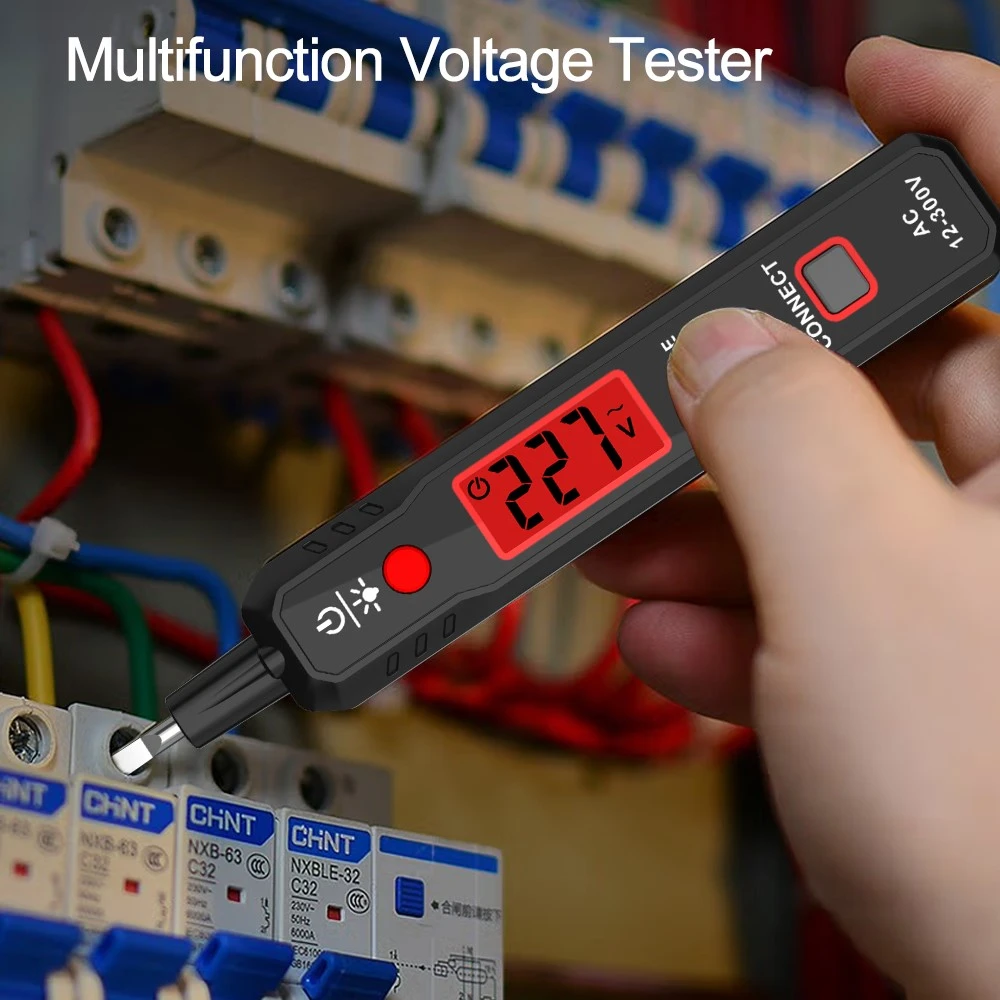
The purpose and usage method of the test pen
1. It can be used for low-voltage nuclear phase measurement to determine whether any wires in the circuit are in phase or out of phase. The specific method is to stand on an object that is insulated from the ground, hold a measuring pen in each hand, and then test on the two wires to be tested. If the two measuring pens light up very bright, then these two wires are out of phase; On the contrary, it is in phase, which is judged based on the principle that the voltage difference between the two electrodes of the neon bubble in the measuring pen is directly proportional to its luminous intensity.
2. It can be used to distinguish between alternating current and direct current. When using a test pen for testing, if both poles in the neon bubble of the test pen emit light, it is an alternating current; If only one of the two poles emits light, it is direct current.
3. It can determine the positive and negative terminals of direct current. Connect the test pen to a DC circuit for testing. The electrode where the neon bubble lights up is the negative electrode, and the electrode where it doesn't light up is the positive electrode.
4. Can be used to determine whether the DC is grounded. In a DC system with ground insulation, you can stand on the ground and use a measuring pen to contact the positive or negative pole of the DC system. If the neon bubble of the measuring pen is not lit, there is no grounding phenomenon. If the neon bubble lights up, it indicates grounding. If it lights up correctly, it indicates that the positive electrode is grounded. If it lights up at the fingertip, it is negative ground. However, it must be pointed out that in DC systems with grounding monitoring relays, this method cannot be used to determine whether the DC system is grounded.
How to use a test pen:
1. Before testing whether electrical appliances and circuits are live, it is necessary to first test in a ground with electricity to see if the test pen is intact, in order to prevent judgment errors and electric shock.
2. When holding the pen, hold the end of the measuring pen with your fingers, and hold the pen body with the remaining fingers.
3. When measuring electricity, the pen tip touches the test body and the hand touches the tail of the measuring pen. If the test body is charged, the neon tube of the test pen will emit light; If the neon tube does not emit light, it indicates that the test body is not charged.
4. The insulation voltage of the test pen is less than 1 megaohm and cannot be used.