The purpose of the noise meter's (sound level meter's) weighted weighting
Signal Noise Ratio (Signal Noise Ratio) referred to as SNR or SNR
It is the ratio of the useful signal power to the unwanted noise power. Usually measured in shells. Because power is a function of current and voltage, the signal-to-noise ratio can also be calculated using the voltage value, that is, the ratio of the signal level to the noise level, but the calculation formula is slightly different. Calculate the signal-to-noise ratio by power ratio: S/N=10 log Calculate the signal-to-noise ratio by voltage: S/N=10 log Since the signal-to-noise ratio and power or voltage have a logarithmic relationship, if you want to increase the signal-to-noise ratio, you must greatly increase the ratio of the output value to the noise value.
If an amplifier has a high signal-to-noise ratio, it means that the North View is quiet. Because the noise level is low, many weak details covered by the noise will appear, which will increase the floating sound, enhance the sense of air, and increase the dynamic range. There is no strict judgment data to measure whether the signal-to-noise ratio of the amplifier is good or bad. Generally speaking, it is better to be above 85dB. If it is lower than the value, it is possible to hear obvious "noise" in the music gap under certain high-volume listening situations. In addition to the signal-to-noise ratio, the concept of noise level can also be used to measure the noise of the amplifier. This is actually a signal-to-noise ratio value calculated by voltage, but the denominator is a fixed number: 0.775V, and the numerator is the noise voltage. Therefore, the difference between the noise level and the signal-to-noise ratio is: the former is an absolute number, and the latter is a relative number.
After the data in the specification sheet in the product manual, there is often a word A, which means A-weight, that is, A-weighting. Weighting means that a certain value has been modified according to certain rules. Since the human ear is sensitive to mid-frequency objects, if the signal-to-noise ratio of an amplifier in the mid-frequency band is large enough, even if the signal-to-noise is slightly lower than the low-frequency and high-frequency bands, the human ear will not be able to detect it. It can be seen that if the weighting method is used to measure the signal-to-noise ratio, the value will be higher than that without the weighting method. In terms of A-weighting, its value is higher than that of non-weighting.
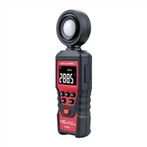
In addition, in order to simulate the different sensitivities of human hearing at different frequencies, a sound level meter is equipped with a network that can simulate the auditory characteristics of the human ear and correct the electrical signal to an approximate value of the sense of hearing. This network is called a weighting network. The sound pressure level measured through the weighting network is no longer the sound pressure level of the objective physical quantity (called linear sound pressure level), but the sound pressure level corrected by the sense of hearing, called the weighted sound level or noise level.
There are generally three types of weighting networks: A, B, and C. The A-weighted sound level simulates the frequency characteristics of the human ear for low-intensity noise below 55dB, the B-weighted sound level simulates the frequency characteristics of moderate-intensity noise from 55dB to 85dB, and the C-weighted sound level simulates the frequency characteristics of high-intensity noise. The main difference between the three is the degree of attenuation of the low-frequency components of the noise. A attenuates the most, followed by B, and C the least. A-weighted sound level is the most widely used one in noise measurement in the world because its characteristic curve is close to the physical properties of the human ear, and B and C have been gradually used.