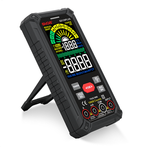
Things to note when using infrared thermometers for equipment fault diagnosis
The impact of atmospheric attenuation: The infrared radiation energy on the surface of the tested electrical equipment is transmitted through the atmosphere to the infrared detection instrument, which is affected by the absorption attenuation of gas molecules such as water vapor, carbon dioxide, and carbon monoxide in the atmosphere, as well as the scattering attenuation of suspended particles in the air. The attenuation of equipment radiation energy transmission decreases with the distance between the detection instrument and the tested equipment, so its attenuation increases with the increase of distance. Reducing the radiation contrast between the faulty and normal parts of the tested equipment can also cause the temperature displayed by the infrared instrument to be lower than the actual temperature value of the tested fault point due to a decrease in the target energy received by the instrument, resulting in missed detection or misdiagnosis, especially when detecting equipment faults with low temperature rise. As the detection distance increases, the influence of atmospheric composition will become increasingly significant. In order to obtain the accuracy of the target temperature, it is necessary to choose a relatively dry and clean environment for measurement; Minimize the detection distance as much as possible without affecting it, and at the same time, make reasonable distance corrections to the temperature measurement results in order to obtain the actual temperature value.
The impact of meteorological conditions: Adverse weather conditions such as rain, snow, fog, and strong winds can have an adverse effect on equipment temperature detection, often resulting in false fault phenomena. In order to minimize the impact of meteorological conditions, testing should be conducted on nights with no rain, no fog, no wind, and relatively stable ambient temperature.
The impact of environmental and background radiation: When conducting infrared detection of outdoor power equipment, the infrared radiation received by the detection instrument includes not only the radiation emitted by the corresponding parts of the tested equipment itself, but also the reflection of other parts of the equipment and the background, as well as direct sunlight. These radiations will interfere with the temperature of the tested parts of the equipment and cause errors in fault detection. In order to reduce the impact of environmental and background radiation, outdoor electrical equipment on-site infrared testing should be conducted on cloudy days or during sunset evenings when there is no light. This can prevent the direct impact, reflection, and scattering of solar radiation; For indoor equipment, turning off the lighting and avoiding the influence of other radiation can be used. For highly reflective equipment surfaces, appropriate measures should be taken to reduce the impact of solar radiation and radiation from surrounding high-temperature objects, or to change the detection angle and find the best angle to avoid reflection for detection. In order to reduce the influence of solar radiation and surrounding high-temperature background radiation, appropriate shielding measures should be taken during detection, or appropriate infrared filters should be installed on infrared measuring instruments to filter out solar and other background radiation. Select instruments and detection distances with appropriate parameters for detection, so that the tested equipment is within the field of view of the instrument, thereby reducing the interference of background radiation.