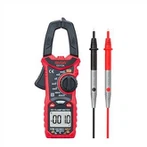
Three Tips for Using a Multimeter
1. Use a multimeter to measure whether the wires are connected or not
Firstly, confirm that there is no voltage at both ends of the wire, and that DC or AC voltage may damage the multimeter. Then, measure the resistance of the wire using a multimeter resistance range. Some multimeters have on/off measurement ranges, which can directly measure whether the wire is on or off.
Using the on/off range or minimum ohm range of a multimeter, if a "beep" sound is heard at both ends of the measuring wire or the ohmmeter indicates zero, it is considered to be on. Otherwise, it won't work. If the measured line is long, one line can be used as a common line, and the rest can be measured.
If the multimeter has a buzzer, use the buzzer range. If it does not have a buzzer, use the resistance range; The buzzer sounds or the resistance value is infinite, indicating that the wire is connected, otherwise it is disconnected.
2. The multimeter detects whether the wires are connected or not
Usually, two conductors are measured together. If the measured value is zero, it indicates a path, and if there is a resistance value, it indicates a short circuit; Measure the insulation performance of two conductors and separate the other end. If there is a resistance value, it indicates good insulation performance (the size of the resistance value depends on the insulation material, cable length, environment, or cable temperature). If there is no resistance value, it indicates cable path or grounding.
3. Use a multimeter to check if the line is unobstructed
Insert the red and black probes into the resistance hole and COM hole respectively, turn on the power of the multimeter, and set it to the minimum resistance position. The pen tips of the two meters touch each other to check whether the meter is normal. It is normal if the meter shows zero or zero. Then insert the pen tip of the meter into both ends of the tested line, and the meter displays zero or a few tenths as the line is connected. If there are resistors or other electrical appliances in the circuit, adjust the resistance range appropriately to continue measuring. Reading varies depending on the resistance value connected. Remember to cut off the power supply of the tested circuit before measuring.