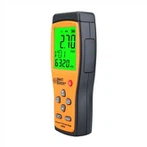
Summary of the Universal Measurement Function of Digital Multimeters
Measurement of voltage
1. Measurement of DC voltage
Such as battery, Personal stereo power supply, etc. Firstly, insert the black pen into the "com" hole and the red pen into the "V Ω" hole. Select the knob to a range larger than the estimated value (note: the values on the dial are all the maximum range, "V -" represents the DC voltage range, "V~" represents the AC voltage range, and "A" is the current range), and then connect the probe to the power supply or both ends of the battery; Maintain stable contact. The numerical value can be directly read from the display screen. If it shows "1.", it indicates that the range is too small, so a large range needs to be added before measurement. If a "-" appears to the left of the value, it indicates that the polarity of the probe is opposite to the actual power supply polarity, and the red probe is connected to the negative electrode.
2. Measurement of AC voltage
The probe socket is the same as the measurement of DC voltage, but the knob should be set to the required range at the AC gear "V~". There is no difference between positive and negative AC voltage, and the measurement method is the same as before. Whether measuring AC or DC voltage, it is important to pay attention to personal safety and not touch the metal part of the pen with your hands.
Measurement of current
1. Measurement of DC current
Insert the black pen into the "COM" hole first. If measuring a current greater than 200mA, insert the red probe into the "10A" socket and turn the knob to the DC "10A" position; If measuring a current less than 200mA, insert the red probe into the "200mA" socket and turn the knob to a suitable range within 200mA DC. After adjustment, you can measure it. String the multimeter into the circuit and maintain stability to read. If it displays "1.", then the range needs to be increased; If a "-" appears to the left of the value, it indicates that the current flows from the black probe into the multimeter.
2. Measurement of AC current
The measurement method is the same as 1, but the gear should be set to the AC gear. After the current measurement is completed, the red pen should be inserted back into the "V Ω" hole. If you forget this step and directly measure the voltage, haha! Your watch or power supply will soar into the sky in a wisp of smoke - scrapped!
Measurement of resistance
Insert the probe into the "COM" and "V Ω" holes, turn the knob to the required range in "Ω", and connect the probe to the metal parts at both ends of the resistor. During measurement, you can touch the resistor with your hand, but do not touch both ends of the resistor with your hand at the same time. This will affect measurement accuracy - the human body is a conductor with high but limited resistance. When reading, it is necessary to maintain good contact between the probe and the resistor; Attention unit: In the "200" gear, the unit is "Ω", in the "2K" to "200K" gear, the unit is "K Ω", and in the "2M" or above gear, the unit is "M Ω".
Measurement of diodes
A digital multimeter can measure light-emitting diodes, rectifier diodes... When measuring, the position of the probe is the same as that of the voltage measurement. Turn the knob to the "" position; Connect the red lead to the positive pole of the diode and the black lead to the negative pole, and the forward voltage drop of the diode will be displayed. The voltage drop of Schottky diodes is about 0.2V, ordinary silicon rectifier tubes (1N4000, 1N5400 series, etc.) are about 0.7V, and light-emitting diodes are about 1.8-2.3V. If the probe is replaced and the display shows "1.", it is normal because the reverse resistance of the diode is very high, otherwise the tube has been broken down.
Measurement of triodes
The insertion position of the pen is the same as above; Its principle is the same as that of a diode.
Assuming that pin A is the base, connect it with a black pen, and the red pen contacts the other two feet separately; If both readings are around 0.7V, then connect the A pin with a red pen and the other two pins with a black pen. If both readings show "1", then the A pin is the base electrode. Otherwise, it needs to be re measured, and this tube is a PNP tube.