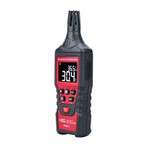
Tips for Picking a Multimeter That Meets Your Requirements
Before making a selection, first determine the quantities you need to measure. Do you require the 7th or 8th digit for precision metrology work? If yes, choose a high-accuracy benchtop digital multimeter, as it offers excellent stability. For integration into custom systems, a 6½-digit digital multimeter compatible with PXI and VXI is an option.
Generally, many digital multimeters deliver high accuracy and resolution, yet your measurement results may not require such high specifications. Although resolution is an inherent design characteristic, achieving high-accuracy measurements ultimately depends on the quality of measurement techniques. For example, measurements taken with an 8½-digit digital multimeter demand great care and experience; merely owning a high-grade digital multimeter does not guarantee good measurement results.
On the other hand, many low-cost digital multimeters can also be appropriate choices. If only 5% measurement accuracy and a small set of measurement functions are required, select a low-end digital multimeter. Basic measurable quantities common to all digital multimeters include AC/DC voltage, current and resistance.
Some users' measurement requirements fall between these two extremes, making it difficult to decide which digital multimeter to purchase. They want relatively high measurement accuracy and resolution at a low cost. To make the best choice, it is recommended to carefully read the datasheet and relevant footnote information. Fine-print footnotes cover many high-accuracy benchtop digital multimeters and low-cost handheld digital multimeters.
However, the technical specification notations of different digital multimeters are inconsistent. For instance, DC voltage accuracy may be expressed in several ways: percentage of reading plus percentage of full scale, percentage of reading plus a number of counts, or percentage of reading plus a number of microvolts. For a specific digital multimeter, you can convert between these notations if you know how many counts correspond to its full-scale value. These three forms of expression are all widely used.
But under what test conditions can the specified accuracy be achieved? As stated in the datasheet, the specified accuracy is valid within one year after calibration of the digital multimeter, at an ambient temperature of 23 °C ±5 °C. There are also accuracy specifications with time limits of 90 days and 24 hours.
Digital multimeters feature a wide range of accuracy grades and cannot be directly compared unless evaluated within the same valid time period. In addition, the meter must warm up for a specified period after power-on to meet the stated accuracy requirements.