Two uses of microscopes:
A biological microscope: Generally speaking, microscopes can be divided into two categories: stereomicroscopes and biological microscopes. Due to different purposes and requirements, many branches have emerged, but the basic principles remain the same. Polarization, phase contrast, transmission, and falling light are still classified as biological microscopes.
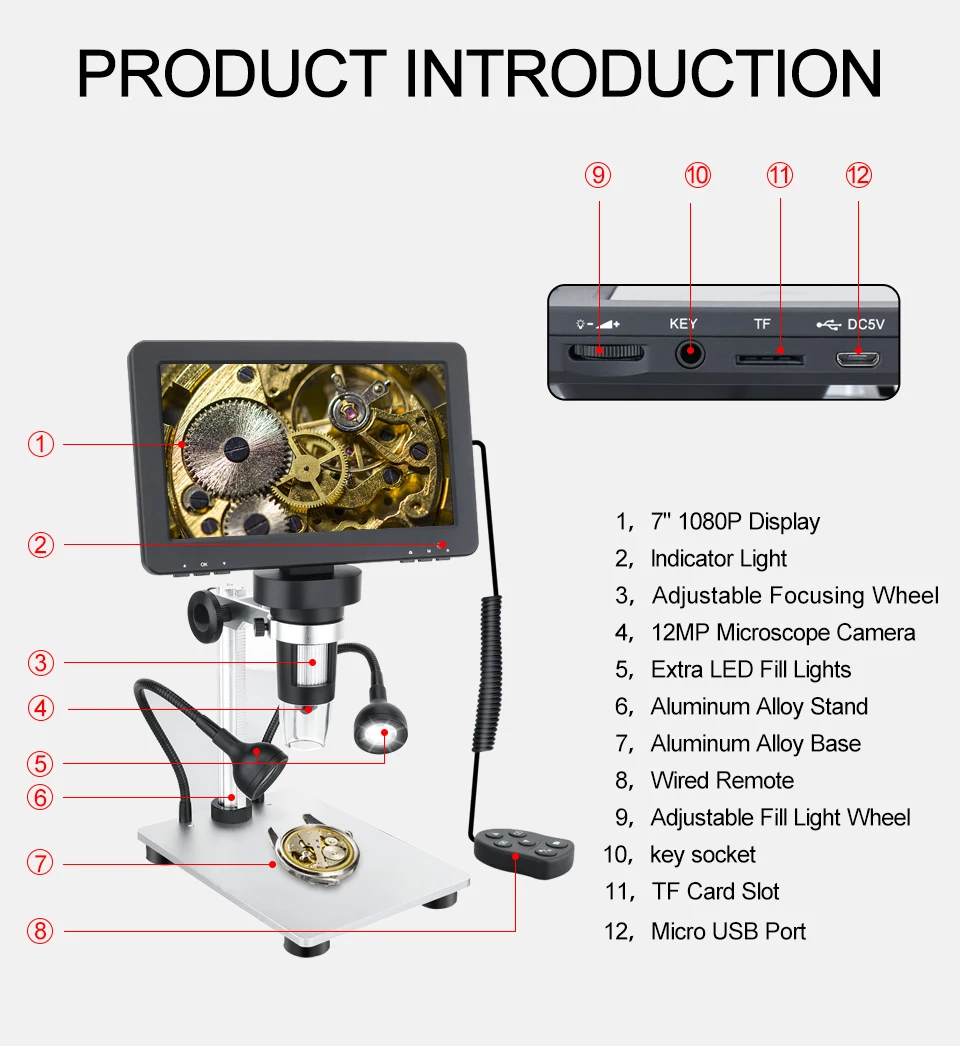
Stereoscopic microscope: also known as dissecting microscope, solid microscope, and stereomicroscope, it is a microscope with many uses. It is easy to operate, does not require high standards for specimens, has a long working distance, and has a strong sense of three dimensionality during observation. It can observe physical objects and perform some operations on specimens while observing. Unlike biological microscopes that require slicing of specimens, slicing requires corresponding techniques and equipment. Therefore, stereomicroscopes have a wide range of applications in microelectronics, precision instrument assembly and maintenance, micro carving, and other fields. Widely used in the fields of biology and medicine for anatomical operations and microsurgery (currently classified as surgical microscopes), its light source can only use cold light sources (optical fibers) in the fields of biology and medicine; Used in industry for the observation, assembly, inspection, and other work of small components and integrated circuits.
Metallographic microscope: Many people like to write it as "golden microscope". Metallographic microscope is a microscope specifically used to observe the metallographic structure of opaque objects such as metals and minerals. These opaque objects cannot be observed in a regular transmission microscope, so the main difference between them is that the former uses reflected light while the latter uses transmitted light for illumination. In a metallographic microscope, the illumination beam is directed from the objective lens towards the surface of the observed object, reflected by the object surface, and then returned to the objective lens for imaging. This reflective lighting method is also widely used in the detection of integrated circuit silicon wafers.