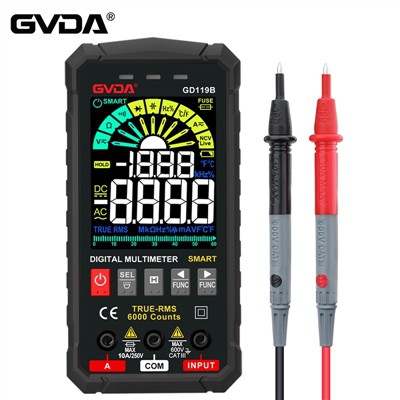
Using a multimeter to measure whether a circuit is short circuited or grounded
A multimeter measures the current of the ground wire, and if there is current in the ground wire, it indicates that the phase wire is grounded. If there is no obvious current value detected in the ground wire, check whether there is current in the zero wire after confirming that there is no electrical equipment working. If there is current, it is a phase to phase short circuit or a phase to zero short circuit.
This measurement method is the most direct. If the power has been cut off and the current cannot be detected, you can consider using the resistance range of a multimeter to check the resistance between the zero and live wires, the resistance between the zero and ground wires, and the resistance between the live and zero wires. Of course, if it is a 380V power supply, you also need to check the phase to phase resistance between the live wires.
Of course, different power supply methods lead to different conclusions. In the TT power supply system, the neutral wire needs to be grounded separately before entering the household, and the metal casing of electrical equipment also needs to be grounded separately. At this time, measuring the resistance between the neutral wire and the ground wire is usually relatively low, which means that the resistance between the neutral wire and the ground wire is short circuited to the live wire. The result of your inspection is that the resistance between the neutral wire and the live wire, as well as between the ground wire and the live wire, is relatively low. You can remove the grounding of the neutral wire when entering the household and conduct an inspection again.
In the TN-S power supply system, it is a three-phase five wire system with three live wires, ground wires, and zero wires. At this time, there will be a certain resistance value between the zero wire and ground wire when checking. When using the same method to check, it is necessary to cut off the ground wire or zero wire, and then use a multimeter to check the resistance values between the zero wire and live wire, ground wire and live wire, and live wire phase to phase, in order to determine where the short circuit is.
If it is a TN-C system, it is relatively simple. The zero wire and ground wire are one wire PEN, and you only need to check the resistance between the live wires and between the PEN wires.
Additionally, it should be noted that the most effective tool for checking short circuits is not a multimeter. Instead, a shaking table of the corresponding voltage level should be used for inspection.