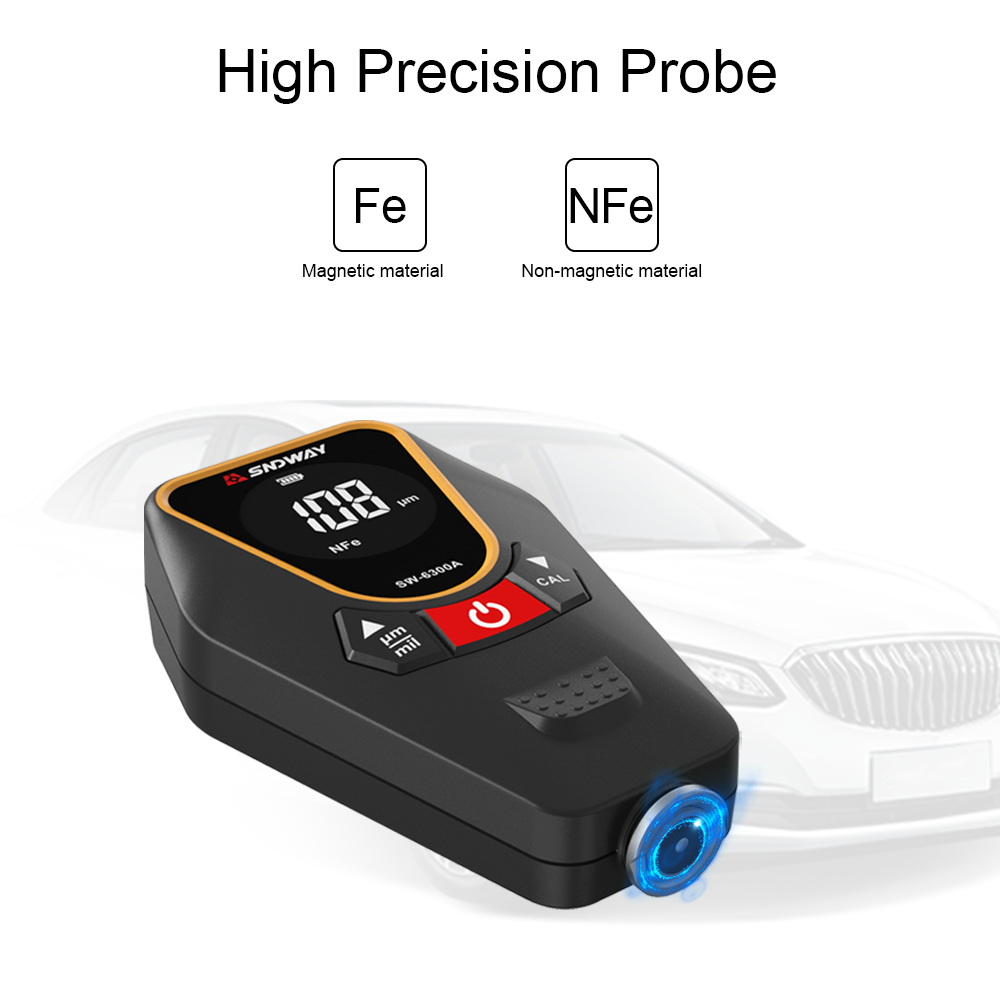
What are the characteristics of coating thickness gauge
zero stability
All coating thickness gauges are required to calibrate the zero position before measurement, which can be calibrated on the zero calibration plate accompanying the instrument or on the uncoated workpiece. The stability of the zero position of the instrument is the premise to ensure accurate measurement. After a good thickness gauge is zeroed, it can keep the zero position without drifting for a long time to ensure accurate measurement.
No calibration required
In addition to zero calibration, most thickness gauges also need to be calibrated with standard sheets. To measure a certain range of thickness, it is necessary to use a certain range of standard sheets for calibration. The main reason is that it cannot meet the linear accuracy in the whole range. Not only is the operation cumbersome, but it will also fail due to the rough surface of the standard sheet, which will increase the system error.
Temperature compensation
The measurement of coating thickness is greatly affected by temperature. The measurement of the same workpiece at different temperatures will give a large error. Therefore, a good thickness gauge should have ideal temperature compensation technology to ensure measurement accuracy at different temperatures.
Influencing factors of thickness gauge
Base Metal Properties
For the magnetic method, the magnetic properties and surface roughness of the base metal of the standard piece shall be similar to those of the test piece base metal.
Base Metal Thickness
Check whether the base metal thickness exceeds the critical thickness, if not, after calibration, it can be measured.
edge effect
Measurements should not be made close to sudden changes in the test piece, such as edges, holes and inner corners.
curvature
Measurements shall not be made on curved surfaces of test pieces.
Number of readings
Often several readings must be taken within each measurement area since each reading from the instrument is not identical. Local variations in overburden thickness also require multiple measurements in any given area, especially if the surface is rough.
surface cleanliness
Before measurement, any attached substances on the surface should be removed, such as dust, grease and corrosion products, etc., but do not remove any covering substances.
magnetic field
The magnetic field generated by various electrical equipment around will seriously interfere with the magnetic thickness measurement work.
Probe Orientation
The placement of the probe affects the measurement, and it should be kept perpendicular to the workpiece during measurement.
Choice of thickness gauge
When purchasing some industrial materials such as reinforced aluminum, is there any tool that can measure the thickness of the coating on the surface?